Last updated: August 12, 2026
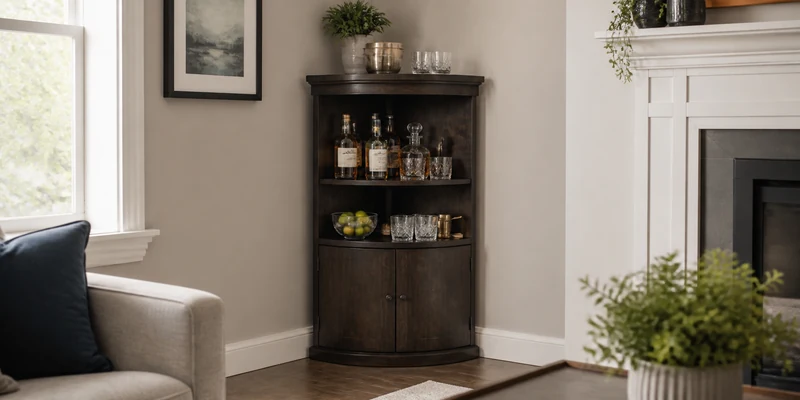
A bar cabinet for a corner turns the least useful spot in the room into the most talked-about one. Almost every living and dining room has that dead corner: too cramped for a chair, too visible to ignore, home to a plant that never thrived. A corner bar cabinet claims that wasted triangle and gives your bottles, glassware, and tools a dedicated station that stays out of every walkway.
The corner format has its own physics, though. Wedge-shaped interiors store differently than rectangles, door access is tighter, and a badly proportioned corner unit can loom over the seating it sits behind. This guide covers how to measure a corner properly, which corner formats exist, and our picks among units that owners report actually using rather than merely filling the spot.
This article contains affiliate links. If you buy through them, we may earn a commission at no extra cost to you. Learn more.
Quick Answer
What should you look for in a corner bar cabinet?
- True corner geometry: a wedge or L-shaped back that sits flush into the corner, not a rectangle awkwardly angled across it.
- Reachable storage: shallow shelves and door openings wide enough that the back of the wedge does not become a graveyard.
- Proportion: tall corner units store the most, but need anchoring and enough visual air around the seating.
What to Check Before You Buy
Corners punish guesswork more than any flat wall. Every row here is checkable against the listing and a tape measure.
| What to check | Why it matters | What to look for |
|---|---|---|
| Wall lengths from the corner | Both walls need clear length for the cabinet’s sides | Measure each wall to the nearest window, vent, or outlet; compare to the listed side widths |
| Corner geometry | Wedge, L-shape, and angled-front units fit corners differently | A listed back angle or corner-fit note, plus a top-view diagram in the listing |
| Reach depth | Deep wedges swallow bottles you will never see again | Shallow shelves, lazy-susan style trays, or a rack layout that keeps every bottle visible |
| Door opening width | Corner doors are narrower than the cabinet is wide | An opening that admits your hand plus a bottle comfortably |
| Height and anchoring | Corner units often go tall to compensate for the footprint | Anti-tip hardware and a height that suits the ceiling and sightlines |
| Baseboard clearance | Baseboards push cabinets out of the corner and leave a gap | A recessed base or back cutout, or plan for a small standoff |
If your corner turns out to be unusable, a compact flat-wall unit may serve better; our small bar cabinet guide covers those, and the main bar cabinet guide maps every format by situation.
Corner Formats: Wedge, Tall, and Improvised
True corner cabinets have a wedge or five-sided footprint that nests into the ninety-degree angle. They use the corner most efficiently and look built-in, but their deep center point demands smart shelving to stay reachable. Tall corner units stack that wedge vertically, which is how a two-foot corner ends up holding a whole bar’s worth of storage.
The improvised route also works: a narrow rectangular cabinet placed diagonally across the corner. You lose the triangle behind it, but you gain normal rectangular storage and far more product choice. In generous rooms the diagonal placement can even look deliberate and grand, especially with a taller unit; in tight rooms it wastes space you cannot spare. Owners report both routes working well, provided the choice matches the room rather than fighting it.
Our Top Picks at a Glance
How we chose: we compared corner-friendly bar cabinets on corner fit, reachable storage, build quality, and how consistently owner reviews describe them as stable and genuinely usable in the corner rather than decorative. Selections lean on manufacturer specifications and recurring review themes rather than any hands-on trial of our own.
Because true wedge bar cabinets are a small niche, the strongest options mix purpose-built corner units with narrow cabinets that excel in diagonal placement. Both are represented below.
🏆 Best Overall
A purpose-built corner bar cabinet with layered shelves, a barn-door lower cabinet, and a glass rack that nests flush into the corner and keeps every bottle within reach.

💛 Best Value
A compact corner shelf-and-cabinet unit that covers display and organized bottle storage at an entry price, ideal for a starter setup in an apartment corner.

📏 Best Tall Corner
A tall corner unit that stacks display shelving over closed storage, turning two feet of floor into a full-height bar station. Anchor it and it disappears into the architecture.

Picks for the Diagonal Route
If your corner will not take a wedge, these narrow flat-wall units handle diagonal placement gracefully and give you far more choice in style and fittings.
🔀 Best for Diagonal Placement
A narrow industrial-style cabinet with bottle rack and glass rails whose slim footprint sits across a corner without swallowing the room, while offering normal rectangular storage inside.

🧱 Also Great
A compact rustic cabinet with a usable top surface that works angled across a dining-room corner as a serving point, with closed storage below for the working set.

Placement, Lighting, and Daily Use
Corners are naturally dim, which flatters bottles on display but frustrates actual use. A small plug-in picture light, a puck light under a shelf, or an LED strip inside a glass-front unit transforms a corner bar from shadowy to showpiece for very little money. Route the cable down the corner seam and it vanishes.
Practically, keep the working zone at hand height and resist filling the deep center of a wedge with anything you care about reaching. Rotate seasonal bottles to the back, keep the weekly set at the front edge, and give tools one tray. Our guide on how to organize a bar cabinet covers the full system, which applies to wedges with one extra rule: nothing important goes in the deep point.
Common Mistakes to Avoid
- Measuring only one wall. A corner unit occupies two walls. Measure both, including outlets, vents, and window trim.
- Forgetting the baseboard. Without a recessed base, the cabinet stands off the corner and leans visually. Check the base detail.
- Buying a deep wedge with fixed shelves. The center point becomes unreachable dead storage. Favor shallow or rotating storage.
- Blocking a walkway with the diagonal route. A cabinet angled across a corner projects further into the room than its width suggests. Tape it out first.
- Skipping the anchor on tall corner units. Corner placement does not prevent tipping. Use the anti-tip kit on both walls if provided.
- Leaving the corner dark. An unlit corner bar reads as clutter. One small light fixes it.
Where to Go From Here
If the corner experiment convinces you to go bigger, a tall bar cabinet on a flat wall is the natural upgrade path, and design-led rooms may prefer the sideboard formats in our modern bar cabinet guide. For the room-planning view, small home bar ideas shows corner setups in context alongside carts, wall units, and closet bars.
Frequently Asked Questions
Do they make bar cabinets specifically for corners? Yes, though the selection is smaller than for flat-wall cabinets. Wedge-back and L-shaped units nest into the corner; many buyers alternatively place a narrow standard cabinet diagonally across the corner.
How do I measure a corner for a bar cabinet? Measure along both walls from the corner to the first obstruction, note baseboard height, and compare with the listed side widths and back geometry. Then tape the footprint on the floor, including door swing.
Are corner bar cabinets practical or just space fillers? Practical, if the storage stays reachable. Shallow shelves, visible bottle slots, and a door opening wide enough for hand plus bottle are what separate a working corner bar from decor.
Should a corner bar cabinet be tall or counter height? Tall units store the most and suit corners, which read visually as vertical slots. Counter-height units suit rooms where sightlines matter, like behind a sofa. Both need anchoring if tall and narrow.
Can I put a wine fridge in a corner bar setup? A compact fridge can sit beside or beneath some corner arrangements if ventilation clearances are respected. Cabinets designed for it are covered in our bar cabinet with wine fridge space guide.
The Bottom Line
A corner bar cabinet converts dead space into a working bar, provided the geometry fits and the storage stays reachable. Measure both walls, mind the baseboard, and choose between a true wedge unit and a narrow cabinet placed diagonally. Add one small light and the forgotten corner becomes the best-looking spot in the room.