Last updated: August 12, 2026
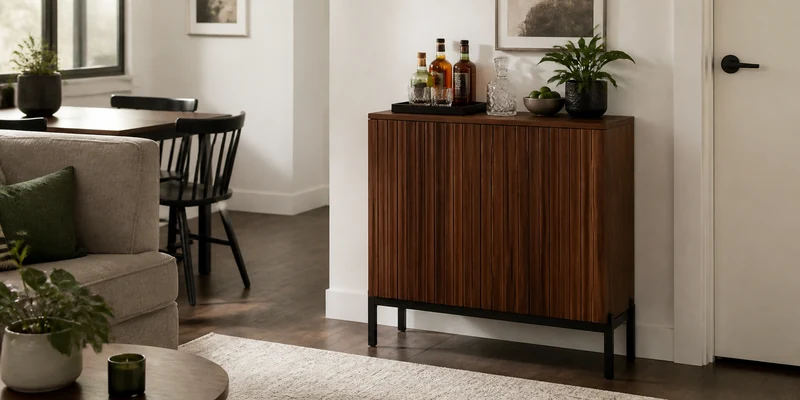
A small bar cabinet proves that a real home bar does not require a real amount of space. In an apartment, a townhouse living room, or a corner of the dining area, a compact cabinet gives bottles and glassware a dedicated, closed home, which instantly looks more intentional than the same collection lined up on a kitchen counter. Small does not mean makeshift; it means edited.
The challenge with compact furniture is that every design decision matters more. A wasted inch in a big cabinet is a rounding error; in a small one it is a glass that no longer fits. This guide covers how to judge a small cabinet’s actual usable storage, which formats work in which rooms, and our picks among compact cabinets that owners report punching above their footprint.
This article contains affiliate links. If you buy through them, we may earn a commission at no extra cost to you. Learn more.
Quick Answer
What makes a good small bar cabinet?
- Interior fittings over raw size: bottle slots, a stemware rail, and an adjustable shelf make a compact cabinet outstore a bigger empty box.
- A usable top: counter-height cabinets double as a mixing surface, which a tiny footprint badly needs.
- Honest dimensions: check interior measurements against your tallest bottle and glasses before buying.
What to Check Before You Buy
Small cabinets hide their compromises in the listing details. This checklist surfaces them before checkout.
| What to check | Why it matters | What to look for |
|---|---|---|
| Interior height per shelf | Spirits bottles vary a lot in height; many compact shelves cut it close | Adjustable shelf pins, or listed clearance taller than your tallest bottle |
| Stemware storage | Wine glasses stored upright eat shelf height and gather dust | Hanging rails under a shelf, or enough clearance to rack glasses upside down |
| Top surface height | A counter-height top doubles as your mixing station | Roughly kitchen-counter height with a wipeable finish |
| Footprint and door swing | Tight rooms punish doors that need open floor in front | Listed depth plus door swing that clears walkways; sliding doors in very tight spots |
| Material and weight | Small cheap cabinets can feel like display props | Thick panels, metal hardware; shipping weight is an honest clue |
| Back panel finish | Small cabinets often float mid-room or beside seating | A finished back if the cabinet will be seen from behind |
Not sure a cabinet is the right format at all for your square footage? Our overview of small home bar ideas compares cabinets, carts, wall setups, and closet conversions for tight floor plans.
Compact Formats: Cabinet, Console, or Wall Unit?
The classic small bar cabinet is a two-door unit at roughly counter height: closed storage below, mixing surface on top, sometimes a rack or rail inside. It is the most flexible format because it works against a wall, behind a sofa, or in a dining corner, and it hides everything when the doors close.
Slim consoles and accent cabinets trade depth for wall presence, useful in hallways and narrow rooms, while wall-mounted cabinets lift storage off the floor entirely, a strong play in studios where floor space is the scarcest resource. If even a compact cabinet is too much commitment, a rolling cart may fit better; our guide to the bar cart for small spaces covers that route, and the broader bar cabinet guide maps every format by situation.
Our Top Picks at a Glance
How we chose: we compared compact bar cabinets on usable interior storage, fittings like racks and rails, build quality relative to their weight class, and how consistently owner reviews describe them as sturdy rather than flimsy. Selections lean on manufacturer specifications and recurring review themes rather than any hands-on trial of our own.
One expectation to set: at this size, no cabinet holds everything. The winners are the ones that hold the right things, a working set of bottles, the glasses you actually use, and your tools, without wasted air.
🏆 Best Overall
A compact industrial-style cabinet that squeezes bottle storage, adjustable shelves, and a usable top into a footprint that fits apartment walls, with a rustic-industrial build that keeps it solid.

💛 Best Value
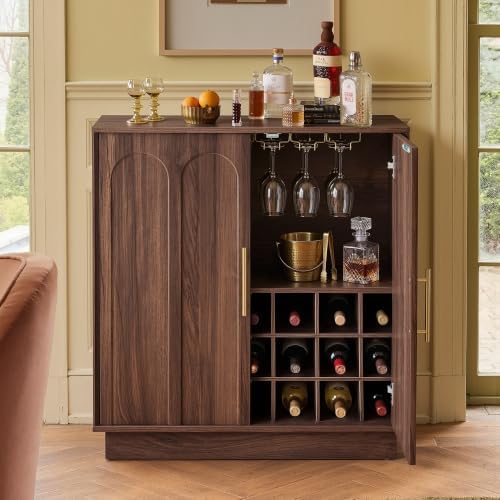
A budget-friendly compact cabinet with closed storage and a wine rack that covers the essentials for a starter bar without dominating the room or the budget.

🎨 Best for Style
A small cabinet with personality, clean mid-century lines and an arched walnut profile, for renters and first apartments where the bar should feel like decor, not storage.
Picks for Specific Small-Space Problems
Two more formats earn a place for specific constraints: floors too full for any footprint, and rooms where the cabinet doubles as an accent piece.
🪝 Best Wall-Mounted
A wall-hung bar cabinet with a fold-down or open front that stores a working bottle-and-glass set on zero floor space. The studio apartment solution.

🧱 Also Great
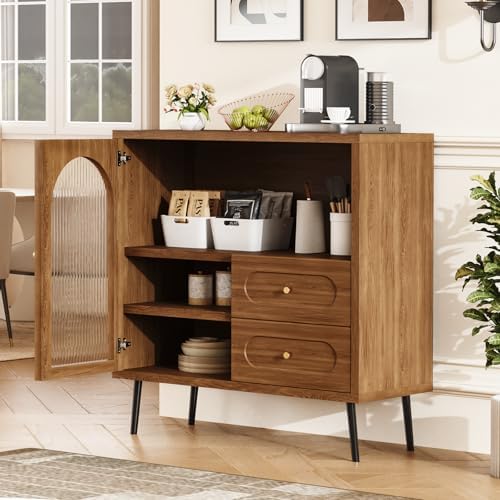
A small wood sideboard with storage and drawers, sized between a nightstand and a sideboard, for dining corners where the bar should read as furniture first.
Making a Small Cabinet Work Harder
Ruthless editing is the real capacity upgrade. Keep a working set inside the cabinet, the bottles you reach for in a normal month, one glass type per drink style, and a single tray of tools, and store backups elsewhere. Vertical helpers earn their space: shelf risers double stacking height for short bottles, under-shelf stemware racks reclaim dead air, and a slim tray on top corrals the pieces you use daily.
Placement multiplies usefulness too. A counter-height cabinet beside the dining table becomes a serving station at dinner; near the sofa it becomes the drinks stop that keeps hosting out of the kitchen. Our step-by-step on how to organize a bar cabinet applies directly here, just with tighter editing at every step.
Common Mistakes to Avoid
- Buying on footprint alone. Two cabinets with identical footprints can differ hugely in usable storage. Count fittings, not just inches.
- Ignoring bottle height. Plenty of compact shelves will not clear a tall spirits bottle upright. Check interior clearance first.
- Storing glasses upright on open shelves. They collect dust and waste height. Rails or upside-down racking solve both.
- Blocking the door swing. A cabinet you cannot fully open in place becomes a shelf with extra steps. Map the swing before ordering.
- Treating it as overflow storage. The moment board games and chargers move in, the bar function dies. Small cabinets need a strict job description.
- Skipping wall anchoring on tall-narrow variants. Compact but tall units still tip. Use the included kit.
Where to Go From Here
If your only free space is an unused corner, a purpose-built corner bar cabinet stores more than you would guess from the footprint. If you have vertical room to spare, a tall bar cabinet multiplies capacity on the same patch of floor. And once the cabinet is in place, our home bar essentials checklist keeps the contents as edited as the furniture.
Frequently Asked Questions
How small can a bar cabinet be and still be useful? A cabinet the size of a nightstand can hold a working set: a handful of bottles, four to six glasses, and tools, if it has smart fittings. Below that, wall-mounted units and trays make more sense than floor furniture.
Is a small bar cabinet better than a bar cart for an apartment? A cabinet hides clutter and feels more permanent; a cart is mobile and usually cheaper. If you host in one spot, choose the cabinet. Our bar cabinet vs bar cart comparison covers the tradeoffs.
Can I put a small bar cabinet in the dining room? It is one of the best placements: serving distance from the table, and the top doubles as a landing zone at dinner. Keep it out of direct sun and away from radiators.
What should I store in a small bar cabinet? Your monthly rotation, not your whole collection: everyday bottles, the glasses you actually use, one tool set, and shelf-stable mixers. Backups live elsewhere.
Can you store wine in a small bar cabinet? Short-term, yes, ideally horizontal and away from heat. For longer storage, room-temperature furniture is not ideal; our wine storage temperature guide explains the commonly recommended conditions.
Do small bar cabinets come in nice finishes? Increasingly yes: the compact tier now spans industrial steel-and-wood, painted modern colors, and warm veneer looks. The finish quality varies more than in larger cabinets, so lean on customer photos to confirm what arrives matches what was rendered.
The Bottom Line
A small bar cabinet succeeds through editing: smart interior fittings, honest interior dimensions, and a usable top matter far more than raw size. Pick the format that matches your constraint, compact cabinet for most rooms, wall-mounted for zero floor space, and keep a strict working set inside. Done well, two square feet runs a genuinely good bar.