Last updated: August 12, 2026
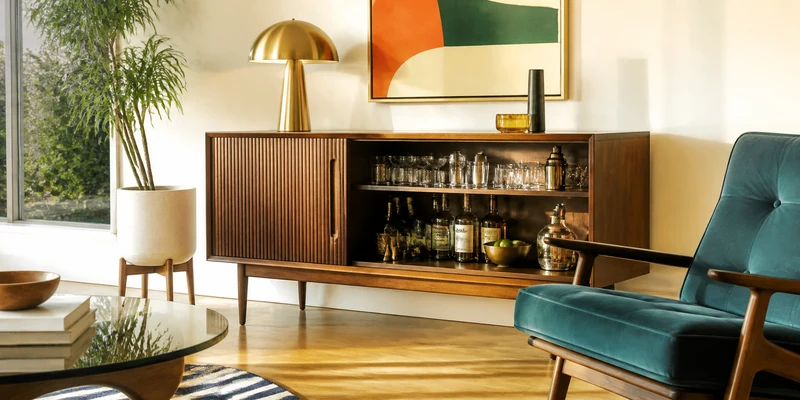
A mid century bar cabinet is arguably the most natural pairing of style and function in home furniture. The original mid-century designers built for exactly this ritual: hosting at home, a cabinet that opens into a small ceremony, warm wood and clean lines that make even an ordinary evening feel considered. That is why the format never really left, and why a good mid-century piece anchors a living room the way few other cabinets can.
It is also why the market is flooded with cabinets that borrow the label without the substance: tapered legs glued to a featureless box, orange-tinted foil pretending to be walnut. This guide covers what actually makes a cabinet read as mid-century, how to judge quality at this price level, and our picks among widely available pieces that owners report looking the part in real rooms, not just in listings.
This article contains affiliate links. If you buy through them, we may earn a commission at no extra cost to you. Learn more.
Quick Answer
What makes a good mid century bar cabinet?
- The real design cues: tapered or splayed legs, warm walnut or teak tones, clean door fronts, and restrained hardware.
- Sideboard proportions: counter-height with a usable top, which is both period-correct and the most practical mixing surface.
- Honest materials: quality veneer over sturdy board is fine and period-authentic; thin foil finishes are not.
What to Check Before You Buy
Mid-century styling is easy to fake in photos. These checks separate convincing pieces from costume jewelry.
| What to check | Why it matters | What to look for |
|---|---|---|
| Leg construction | Legs carry the whole silhouette; wobbly legs ruin the look and the cabinet | Solid wood legs that bolt into metal plates or corner blocks, not screw-in dowels alone |
| Finish honesty | Foil and photo-print finishes chip and read fake up close | Real wood veneer or lacquered finishes; listings that name the surface material |
| Color tone | Orange-heavy fake walnut clashes with real wood furniture | Medium warm brown tones; customer photos are more truthful than product renders |
| Interior fittings | Period looks with modern function is the goal | Bottle storage, stemware rails or clearance, at least one adjustable shelf |
| Door mechanism | Sliding and tambour doors are period-typical but vary in quality | Doors that run smoothly in their tracks; hinged doors with metal hardware |
| Top surface | The top is your mixing station and takes the abuse | A sealed, wipeable finish; plan coasters and a tray regardless |
If mid-century turns out to be the wrong flavor for your room, our main bar cabinet guide maps every style and situation, including sleeker contemporary looks.
What Actually Reads as Mid-Century
Four cues do most of the work. Legs: tapered, often splayed, lifting the cabinet visibly off the floor so light passes underneath. Wood: walnut and teak tones, matte to satin rather than glossy. Fronts: flat, clean door faces, sometimes with sliding or tambour doors, free of applied molding. Hardware: minimal, recessed pulls or slim wooden handles. A cabinet with those four traits reads as mid-century even at a modest price; a cabinet missing them does not, no matter what the listing title says.
Proportions matter as much as details. The period format is the low sideboard or credenza, long and horizontal, which happens to be the most functional bar shape as well: closed storage below, generous mixing surface on top. Tall mid-century-styled cabinets exist and can work, but the horizontal silhouette is the safer bet in most rooms.
Our Top Picks at a Glance
How we chose: we compared widely available mid-century style bar and storage cabinets on design fidelity, leg and panel construction, interior usefulness, and how consistently owner photos and reviews confirm the finish looks right in person. Selections lean on manufacturer specifications and recurring review themes rather than any hands-on trial of our own.
A word on expectations: at mass-market prices you are buying veneer or laminate over engineered wood, which is fine, the originals used veneer too. The picks below are chosen for getting the look and the build right at their level.
🏆 Best Overall
A mango wood sideboard-style cabinet with clean fronts and practical interior storage that reads convincingly mid-century and doubles as a serving surface.

💛 Best Value
A budget-friendly cabinet with period-correct lines and a compact footprint, the accessible entry into the look for first apartments and rentals.
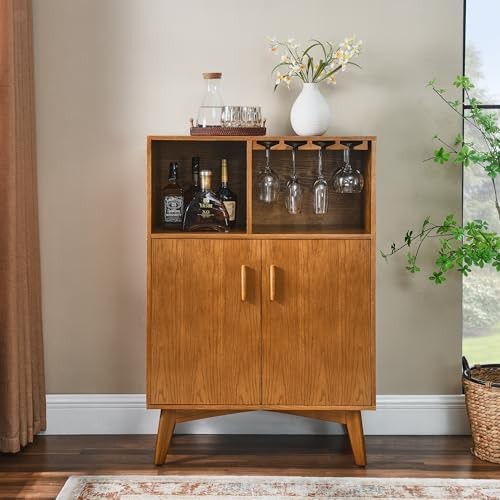
🎶 Best Retro Character
A cabinet from a brand with roots in record consoles, with a gold-accented frame and a warm retro presence that leans harder into the era than the minimalist picks.

Picks for Specific Rooms
Two more formats round out the style: a long credenza for generous walls, and a slim vertical piece for tight ones.
📺 Best Credenza Format
A long, low mid-century credenza with wine storage in one bay and general storage in the rest, doing triple duty as bar, sideboard, and media cabinet along a full wall.

🛋️ Also Great: Slim Vertical
A narrow mid-century styled cabinet for rooms without credenza wall space, keeping the walnut mid-century look on a footprint closer to an accent table.
Styling It Without Overdoing It
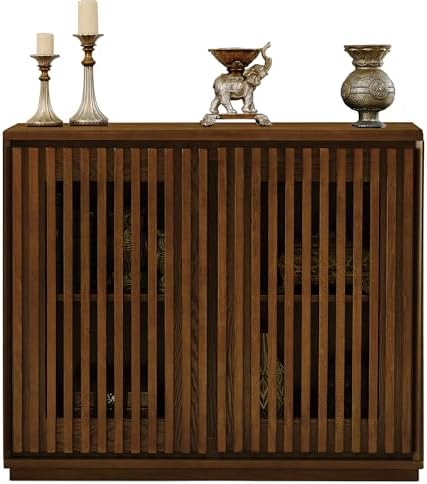
Mid-century pieces reward restraint. On top: a tray, a couple of good glasses, one bottle worth seeing, and a lamp or plant, and that is enough. The cabinet is the statement; crowding it with barware turns a credenza into a shelf. Inside, use the closed storage exactly as the designers intended, everything working hidden, everything beautiful visible.
The style also mixes better than its reputation suggests. Warm walnut tones sit comfortably next to modern sofas, rustic tables, and even industrial shelving, as long as tones stay warm and lines stay clean. If your taste runs more playful and mobile, the same era produced the rolling drinks trolley; our best bar cart guide covers those, including brass-and-glass pieces that pair well beside a wood credenza.
Common Mistakes to Avoid
- Trusting render-orange walnut. Product renders exaggerate warmth. Check customer photos for the real tone before committing.
- Buying legs-last construction. Screw-in dowel legs on a heavy cabinet loosen and wobble. Look for bolted plates or corner blocks.
- Ignoring interior function. A period-perfect box with one fixed shelf is a missed opportunity. Racks and adjustable shelves make it a bar.
- Mixing too many wood tones. A walnut cabinet beside honey oak and gray-wash floors gets noisy. Repeat the cabinet tone somewhere else in the room.
- Skipping felt pads and coasters. Warm-toned finishes show rings and scratches clearly. Protect the top from day one.
- Forcing the style into the wrong room. If nothing else in the space is warm-toned or leggy, a single mid-century piece can float. Anchor it with a rug, art, or lighting from the same family.
Where to Go From Here
If you like the leggy warmth but want current rather than retro, our modern bar cabinet guide covers the contemporary end of the spectrum. Purists chasing real wood throughout should read the solid wood bar cabinet guide, which explains what solid construction costs and buys you. And for organizing whatever you put inside, how to organize a bar cabinet keeps the beautiful exterior matched by a functional interior.
Frequently Asked Questions
What defines a mid century bar cabinet? Tapered or splayed legs, warm wood tones like walnut and teak, flat clean door fronts, minimal hardware, and usually low horizontal proportions. Function-wise it is simply a bar cabinet wearing those design cues.
Are affordable mid-century cabinets real wood? Mostly engineered wood with veneer or laminate surfaces, which is period-authentic in spirit since the originals used veneer over substrates too. The line to avoid is thin foil or printed finishes that chip and photograph poorly.
Is vintage better than new for this style? Vintage credenzas can be wonderful but need hunting, restoration budget, and luck. New pieces offer modern fittings like stemware rails and adjustable shelves. Many owners mix: vintage case piece, modern barware inside.
What colors go with a walnut bar cabinet? Warm neutrals, olive and forest greens, mustard, navy, and brass accents all sit comfortably with walnut. Cool grays are the hardest pairing.
Does a mid-century cabinet work in a small apartment? Yes, the leggy silhouette actually helps, since visible floor under furniture makes rooms feel larger. Compact options exist; our small bar cabinet guide includes size-appropriate picks.
The Bottom Line
A mid century bar cabinet earns its place through four honest cues: tapered legs, warm wood, clean fronts, and restrained hardware, on a well-built body with useful fittings inside. Verify the finish in customer photos, insist on solid leg construction, and keep the styling spare. Get those right and the cabinet elevates the whole room, not just the bar.