Last updated: August 12, 2026
A bar cart is the easiest way to give a home bar a real address without giving up a wall. It rolls into the corner your living room can spare, holds the bottles, glassware, and tools you actually use, and doubles as a piece of decor that guests notice the moment they walk in. The catch is that “bar cart” covers everything from a glam gold trolley with mirrored shelves to a plain kitchen cart with a rail, and buying the wrong one for your room or your habits is a common story in owner reviews.
This guide sorts the category the way people actually shop it: by style first, gold and glass, acrylic, rattan, or wood, and then by space, because a cart that works in a dining room can be wrong for a studio apartment or a patio. You will find our picks across those situations, the construction details that separate a sturdy cart from a wobbly one, and links to our deeper guides wherever your situation deserves a full article of its own.
This article contains affiliate links. If you buy through them, we may earn a commission at no extra cost to you. Learn more.
Quick Answer
Which bar cart should you buy?
- Pick the style your room already speaks: gold and glass for glam, wood for warmth, acrylic for small modern rooms, rattan for boho and coastal spaces.
- Then check the space: measure the spot, and go slim or round if the room is tight. Outdoor use needs weatherproof materials, not an indoor cart wheeled outside.
- Whatever the style, insist on locking casters, a stated weight capacity, and shelves with a lip or gallery rail so bottles cannot slide off in motion.
Find Your Bar Cart by Style and Space
Start here: match your situation to the row that fits, and you will know what to look for before you compare a single product. The rows link to our dedicated guides where a situation has enough depth to deserve one.
| Your situation | What to look for | Where to dig deeper |
|---|---|---|
| Classic glam living room | Gold or brass finish metal frame, tempered glass or mirrored shelves, two tiers | Our top picks below |
| Small room or studio | Slim or round footprint, vertical storage, a cart that doubles as a side table | Bar carts for small spaces |
| Modern space that feels full | Clear acrylic, which holds bottles without adding visual weight | Acrylic bar carts |
| Boho, coastal, or japandi room | Rattan, cane, or woven resin over a stable frame | Rattan bar carts |
| Patio or deck hosting | Powder coated steel, outdoor hardwood, or resin; rust resistance and big casters | Outdoor bar carts |
| Coffee station instead of cocktails | A solid top rated for machine weight, storage for mugs and beans, outlet nearby | Coffee bar carts |
| Big collection, kids, or lockable storage | A cabinet, not a cart: doors, drawers, and far more capacity | Bar cabinets |
If you are torn between the open, mobile format of a cart and the closed storage of a cabinet, our comparison of the bar cabinet vs bar cart question settles it in a few minutes.
What Actually Matters in a Bar Cart
Strip away the styling and a bar cart is a shelf on wheels that carries heavy, breakable, expensive things. Four construction details decide whether it does that job calmly or nervously. First, the casters: at least two should lock, and reviews consistently mention that carts without locking wheels drift on hard floors every time someone leans on them. Second, the shelf edges: a raised lip, gallery rail, or bottle well is what keeps glass on board when the cart rolls over a rug edge or a threshold.
Third, weight capacity. A modest collection of full bottles plus glassware adds up faster than people expect, so look for a stated capacity per shelf and treat thin, rattly frames as a warning sign. Fourth, shelf clearance: the gap between tiers must actually fit your tallest bottles, and product photos are famously optimistic about this. Check the listed dimensions for the space between shelves, not just the overall height, and compare them to the bottles you own.
Choosing a Style: Gold, Wood, Acrylic, or Rattan
The honest answer on style is that the cart should follow the room, not the other way around. Gold and glass is the classic for a reason: it reads festive, reflects light, and photographs well, but it also shows fingerprints and demands a little upkeep. Wood and industrial metal carts are warmer and more forgiving, and they blend into farmhouse, rustic, and transitional rooms where a gilded trolley would feel like a costume.
The two design-forward lanes deserve their own guides. Acrylic carts are the small-room specialists, because a transparent cart holds a full bar setup while barely registering as furniture. Rattan carts pull in texture and warmth that metal cannot, and they bridge indoor rooms and covered porches. And if what you really want is a styled piece of furniture with closed storage below, you may be shopping the wrong category: a bar cabinet gives you doors, drawers, and roughly triple the capacity in the same floor space.
Our Top Picks at a Glance
How we chose: we compared widely available bar carts on frame stability, shelf material and edge design, caster quality, real interior clearance, and how consistently owners report them surviving assembly and daily use. Selections lean on manufacturer specifications and recurring themes in customer reviews rather than any hands-on trial of our own.
One note before the list: nearly every cart in this category ships flat, and reviews suggest the difference between a solid cart and a squeaky one is usually assembly care, so square the frame before final tightening. And if your ceiling priority is a tight footprint, jump ahead to the small-space pick or the full small spaces guide.
🏆 Best Overall
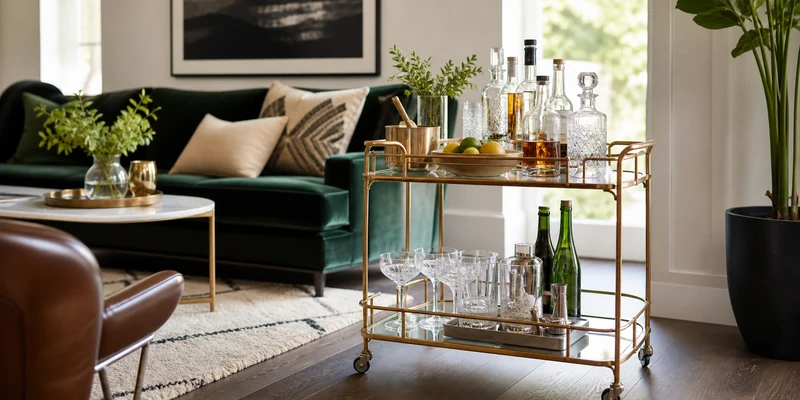
A gold finish two tier cart with tempered glass shelves and locking casters. The classic formula executed well: festive enough to style, sturdy enough to load, and neutral enough to survive a redecorating cycle.

💛 Best Value
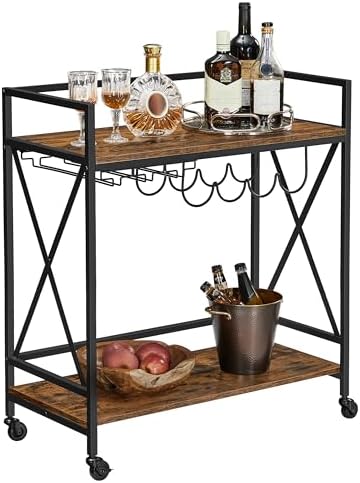
An industrial style serving cart with wood look shelves on a steel frame. It skips the glam finish and glass, which is exactly why it costs less and shrugs off daily knocks. A strong first cart for rustic and transitional rooms.
🛋️ Best for Small Spaces
A slim three tier cart that stores vertically what it cannot store in footprint, with wine and glass holders to keep bottles honest. Narrow enough to live beside a sofa or in a kitchen gap and still hold a complete starter bar.

More Good Carts for Specific Rooms
Beyond the top three, the right cart often comes down to the room it will live in. These picks cover the situations we see most often in reader questions, and each one has a full guide behind it if you want the complete comparison.
🌿 Best Rattan Look
A woven natural fiber cart on a stable frame, warm where metal carts are cold, and equally at home in boho, coastal, and japandi rooms. See our full rattan bar cart guide for the field.

☀️ Best for Outdoor
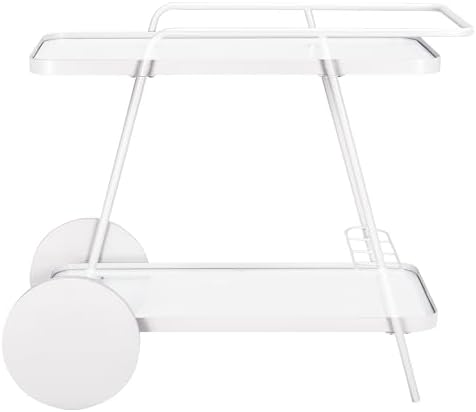
A weather resistant patio cart on a durable steel frame, with wheels sized for pavers rather than parquet. Built to be left on a covered patio, which no indoor cart should be. The full field is in our outdoor bar cart guide.

✨ Also Great
A modern glam cart from a furniture brand rather than a housewares brand, with glass shelves and a finish that reads a step above the entry level. For rooms where the cart is meant to be looked at as much as used.
Placement, Setup, and Everyday Use
A bar cart earns its keep when it lives where you host: near the seating, not in the kitchen, and against a wall or in a corner where traffic will not clip it. Keep it out of direct sun, which is unkind to both finishes and whatever is stored on it, and off the route children use at a run. Load it bottom heavy, with full bottles and bulk on the lower shelf and glassware and tools up top, which keeps the center of gravity low and the cart stable in motion.
Rolling deserves a habit of its own: lock the casters whenever the cart is parked, and unload the top shelf, or at least the glassware, before wheeling it any real distance over rugs and thresholds. Wipe glass shelves with a lint free cloth, tighten the frame bolts once after the first month, and the cart stays as solid as the day it was squared. For what belongs on it, our bar cart essentials checklist covers the tools and glassware worth the shelf space.
Common Mistakes to Avoid
- Buying style-first, size-second. Measure the spot, then check the cart’s footprint and the clearance between shelves against your tallest bottles.
- Ignoring the casters. No locking wheels means a cart that drifts every time someone leans on it. Two locking casters is the floor, four is better.
- Loading it top heavy. Heavy bottles up top make a tippy cart. Bulk goes low, glassware goes high.
- Wheeling an indoor cart onto the patio. Indoor finishes rust and swell outside. Outdoor use needs an outdoor build.
- Treating it as unlimited storage. A cart holds a curated setup, not a collection. If you own more than the cart can carry gracefully, a bar cabinet is the honest answer.
- Skipping the shelf lip. Flat, edgeless shelves and rolling furniture is a combination you only need to see fail once.
Where to Go From Here
Once the cart is chosen, the fun part starts. Our step by step guide on how to style a bar cart turns a loaded shelf into something that looks intentional, and the bar cart essentials checklist keeps the shopping list honest. If your cart is really going to be a coffee station, the requirements change enough that our coffee bar cart guide is the better read.
Frequently Asked Questions
What is the point of a bar cart? It gives your hosting setup a dedicated, mobile home: bottles, glassware, and tools in one styled place instead of scattered across kitchen cabinets. It also works as decor, which is why styling guides for them are a genre of their own.
What size bar cart do I need? Measure the spot first, then check the footprint and the clearance between shelves against your tallest bottles. Most standard carts run around counter height; slim and round formats exist for tight rooms, covered in our small spaces guide.
Is a bar cart or a bar cabinet better? A cart is mobile, open, and decorative; a cabinet holds far more and hides it behind doors. Small curated setup: cart. Growing collection, kids in the house, or a need to lock things away: cabinet. Our comparison guide walks through the full decision.
Are glass shelf bar carts safe? Quality carts use tempered glass, which is the detail to confirm on the listing. Beyond that, safety is mostly usage: lock the casters when parked, keep heavy bottles on the lower shelf, and do not roll a fully loaded cart over thresholds.
Can I use a bar cart outdoors? Only if it is built for it. Outdoor carts use powder coated steel, outdoor rated hardwood, or resin, and hardware that resists rust. An indoor cart on a patio deteriorates fast, which is why the outdoor category exists.
Do bar carts have to be for alcohol? Not at all. The same format works as a coffee station, a tea trolley, a plant stand, or serving storage for a dining room. The coffee bar cart is popular enough to have its own guide.
The Bottom Line
The right bar cart matches the style your room already has, fits the spot you measured, and passes the construction checks that matter: locking casters, edged shelves, real clearance between tiers, and a frame that does not rattle. Pick your lane, gold, wood, acrylic, rattan, outdoor, or coffee, and let the dedicated guide for that lane narrow the field. Get the boring details right and the styling takes care of the rest.