Last updated: August 12, 2026
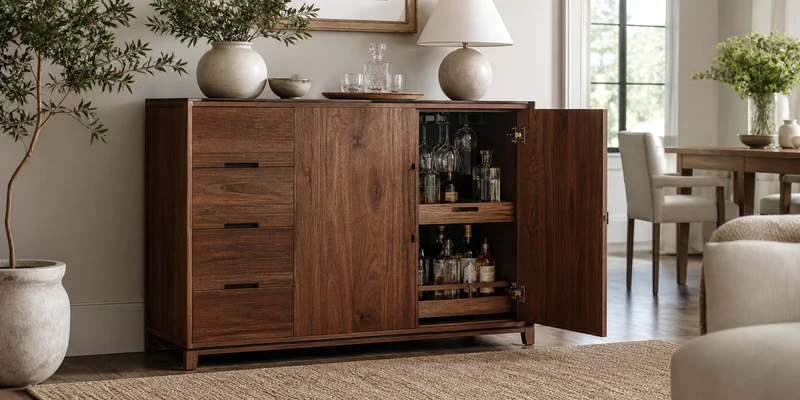
A solid wood bar cabinet is the buy-once answer in a category dominated by flat-pack board. Real wood takes decades of use, shrugs off the dings that expose brown core in laminate furniture, and can be sanded and refinished when tastes change. It is heavier, costs more, and demands slightly more care, but it is the difference between furniture you replace and furniture you keep.
The complication is that “solid wood” is one of the most abused phrases in furniture listings. Cabinets with solid legs and veneered everything else, rubberwood frames around MDF panels, and outright mislabeled board all wear the label. This guide explains what the material terms actually mean, how to verify claims from a listing, and our picks among genuinely wood-built cabinets that are actually available, not just aspirational.
This article contains affiliate links. If you buy through them, we may earn a commission at no extra cost to you. Learn more.
Quick Answer
What should you know before buying a solid wood bar cabinet?
- “Solid wood” often means partly solid: read the materials section for words like veneer, MDF, and engineered wood on tops, backs, and shelves.
- Species matters less than construction: well-joined acacia, mango, pine, or rubberwood beats badly joined anything.
- Weight is the honest signal: genuinely solid cabinets ship heavy, and listings show it.
Material Terms Decoded
This table is the vocabulary you need to read any listing critically. Every term appears constantly in bar cabinet listings, and they mean very different things for durability and price.
| Term | What it actually is | What it means for you |
|---|---|---|
| Solid wood | Boards cut from lumber, sometimes glued into panels | Durable, refinishable, heavy; verify which parts are actually solid |
| Veneer | A thin layer of real wood over engineered board | Real wood look at lower cost; fine quality-wise, but not refinishable like solid stock |
| MDF | Dense engineered fiberboard | Stable and paintable, but swells if soaked and cannot be repaired like wood |
| Particleboard | Coarser, lighter engineered board | The budget material; fine for backs, weak for shelves carrying bottles |
| Rubberwood | A real hardwood from plantation trees | Legitimate solid wood despite the odd name; common in affordable solid furniture |
| Acacia / mango wood | Dense tropical hardwoods, often with lively grain | The workhorses of affordable solid cabinets; durable with visible character |
For the broader picture of formats and styles beyond materials, our main bar cabinet guide maps the whole category by situation.
How to Verify a Solid Wood Claim
Start with the materials section of the listing rather than the title, because the title is marketing and the materials section has to be more specific. A trustworthy listing names the species and says which components are solid; a vague one says “wood” and moves on. Then check the shipping weight against similarly sized cabinets: solid wood is dramatically heavier than particleboard, and the difference shows up plainly in the numbers.
Customer reviews and photos close the case. Owners mention weight during assembly, show close-ups where grain wraps around edges (veneer stops at edges, solid grain continues), and complain loudly when a “solid wood” cabinet arrives smelling of laminate. Questions-and-answers sections on retail pages are also unusually honest here, since owners answer material questions from the object in their living room, not from the marketing copy.
Where partial solid construction is acceptable
Full solid construction is rare and expensive at mass-market prices, and partial builds are not a scam if they are honest. Solid frames, doors, and legs with an engineered back panel is a reasonable compromise; the back carries little load and is invisible. The parts that should be solid or at least thick and well-built are the shelves that carry bottles, the top you mix on, and the legs that carry everything.
Our Top Picks at a Glance
How we chose: we compared bar cabinets with substantial real-wood construction on material honesty, joinery and hardware, interior usefulness, and how consistently owners confirm the wood claims in reviews and photos. Selections lean on manufacturer specifications and recurring review themes rather than any hands-on trial of our own.
A note on the market: genuinely solid cabinets at accessible prices cluster around acacia, mango, pine, and rubberwood. Premium hardwood pieces from specialty makers exist above that tier, but the picks below stay in the widely available range.
🏆 Best Overall
A bar cabinet built from solid wood with visible grain, a drop-down serving shelf, and practical bottle and glass storage, the strongest mix of real material and real function in the accessible tier.
💛 Best Value
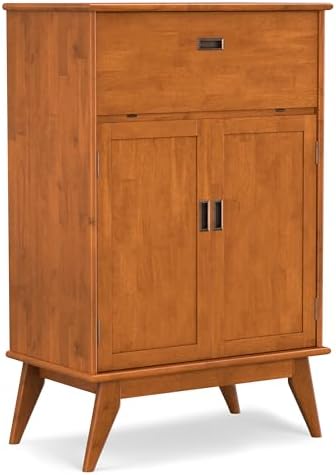
A solid rubberwood cabinet that keeps the price down by using a modest but genuine hardwood, easy to refinish or paint later, and a big step up in feel from any board build.

⭐ Upgrade Pick
A furniture-grade hardwood cabinet with glass doors and adjustable shelves in a traditional build, for buyers treating the bar cabinet as a decades-long keeper rather than a phase.

More Wood-Forward Options
Two adjacent formats deserve a mention: honest hybrids and rustic statement pieces.
🔩 Best Honest Hybrid
A cabinet with solid wood legs under an engineered body, openly specified, delivering some real-wood presence at a friendlier price.

🧱 Also Great: Rustic Statement
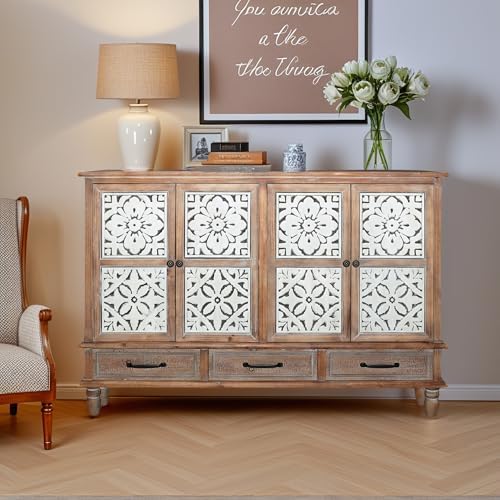
A solid wood farmhouse cabinet where the material is the decor, vintage French-country styling over real panels, for rooms that want texture over polish.
Living With Solid Wood
Real wood moves. It expands and contracts with humidity, which is normal and harmless in a well-built cabinet but means you should keep it away from radiators, vents, and direct sun, all of which dry and fade wood unevenly. Coasters and a tray on the mixing top are non-negotiable, since spirits and citrus are hard on finishes, and a quick wipe after hosting beats re-oiling later.
Maintenance is light but real: dust with a barely damp cloth, refresh oiled finishes occasionally per the maker’s advice, and tighten hardware once after the first months of use. The reward is a cabinet that ages instead of wearing out, and that can be sanded and refinished into a second life when your interior changes around it.
Common Mistakes to Avoid
- Trusting the listing title. “Solid wood” in a title with “MDF” in the materials section is common. The materials section wins.
- Paying solid prices for veneer. Veneer is legitimate but should cost less. Compare weight and materials before paying a premium.
- Ignoring the shelves. Solid doors over sagging particleboard shelves is a classic cost-cut. Bottle rows are heavy; check shelf material and limits.
- Parking it over a radiator or in the sun. Heat and light dry, crack, and fade real wood faster than anything else you will do to it.
- Skipping felt pads and coasters. Solid wood is repairable but prevention is cheaper. Protect the top and floors from day one.
- Assuming heavy means unmovable. Plan the final position before assembly; a solid cabinet is a two-person move at minimum.
Where to Go From Here
Style-wise, solid wood plays across the spectrum: the rustic end is covered in our farmhouse bar cabinet guide, while warm veneer-era looks live in the mid-century bar cabinet roundup. And whichever cabinet you land on, how to organize a bar cabinet makes the inside worthy of the outside.
Frequently Asked Questions
Is solid wood worth the extra cost for a bar cabinet? If you plan to keep the piece for many years, generally yes: it survives dings, can be refinished, and holds its feel. For a first apartment or a look you may outgrow, a quality engineered cabinet is the pragmatic choice.
Is rubberwood real solid wood? Yes. Rubberwood is a genuine plantation hardwood, widely used in affordable solid furniture. The name puts people off; the material is legitimate.
How can I tell solid wood from veneer in photos? Look at edges and corners: solid wood grain continues around an edge, veneer stops in a hard line. Customer close-up photos reveal this far better than product renders.
Does solid wood warp in normal homes? Well-dried, well-built cabinets stay stable in normal indoor conditions. Problems come from extremes: radiators, sunny windows, damp basements. Placement solves most of it.
Can I store wine long-term in a solid wood cabinet? The cabinet material is not the issue; room temperature is. For short-term storage a rack in any cabinet is fine, but for keeping bottles months to years, see our wine storage temperature guide for the conditions that matter.
The Bottom Line
A solid wood bar cabinet rewards buyers who read past the title: verify which parts are solid, weigh the shipping numbers, and let customer photos confirm the claims. Acacia, mango, pine, and rubberwood deliver genuine wood at accessible prices, and honest hybrids cover the middle ground. Buy verified, place it away from heat and sun, and it will outlast every flat-pack around it.