Last updated: August 12, 2026
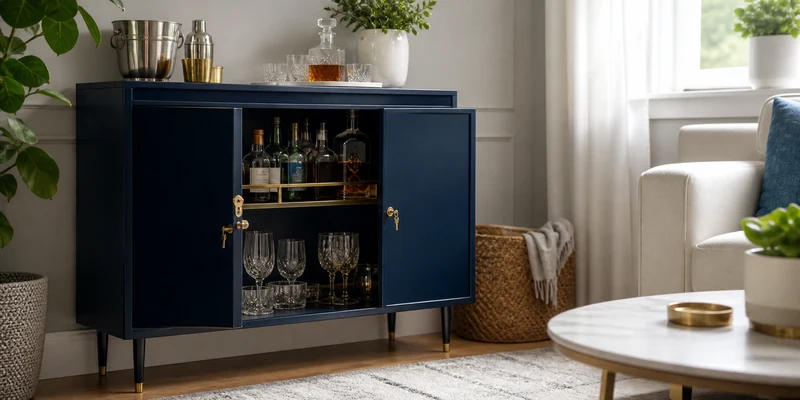
A locking bar cabinet answers a practical question that comes up in more households than talk about it: how do you keep bottles stored responsibly when kids, teenagers, roommates, guests, or short-term renters share the space? A keyed door turns an open invitation into deliberate, adult-controlled storage, without banishing the collection to a closet or making the living room feel like a vault.
The catch is that most furniture locks are gestures rather than security. A flimsy cam lock on a particleboard door stops a curious toddler and nobody else, while genuinely secure cabinets can look institutional. This guide covers what furniture locks realistically do, which lock and cabinet combinations make sense for which household, and our picks among lockable cabinets that still look like furniture you chose on purpose.
This article contains affiliate links. If you buy through them, we may earn a commission at no extra cost to you. Learn more.
Quick Answer
What should you look for in a locking bar cabinet?
- Match the lock to the threat: a basic cam lock deters small children; determined teens need a solid cabinet body, hidden hinges, and no pry gaps.
- The body matters as much as the lock: a locked door on a thin back panel locks nothing.
- Keep it livable: choose a cabinet you would buy anyway, with racks, stemware storage, and a finish that suits the room.
What to Check Before You Buy
Locks are only one line in a listing, so this checklist covers the whole chain that makes a cabinet actually secure enough for its job.
| What to check | Why it matters | What to look for |
|---|---|---|
| Lock type | Cam locks, keyed handles, and hasp locks resist very different levels of effort | Metal keyed lock with a catch that engages the frame, not just the opposite door |
| Door and frame stiffness | Flexible doors pry open around an intact lock | Thick panels, tight door gaps, hinges that are not exposed screw heads |
| Back and floor panels | The classic bypass is removing a stapled hardboard back | Screwed or grooved-in back panel of real thickness |
| Glass doors | Glass shows the collection but is only a visual barrier | Glass for display households, solid doors where the lock genuinely matters |
| Spare key situation | Furniture keys are small and get lost | Two keys included; a defined home for the spare that is not on top of the cabinet |
| Everything a normal cabinet needs | You still live with it daily | Bottle rack, stemware storage, adjustable shelf, stable base, decent finish |
For the non-locking fundamentals that still apply, from materials to placement, our main bar cabinet guide covers the category in full.
Who Actually Needs the Lock?
Be honest about the scenario, because it decides how much lock you need. For young children, almost any keyed door works: the goal is preventing accidental access to bottles that are genuinely hazardous to small kids, and a basic lock plus a high shelf achieves it. For households with teenagers, the calculus changes: the lock needs a solid body around it, and the spare key needs a genuinely private home, because the weak point is rarely the mechanism.
Shared living situations, roommates, house sitters, frequent guests, home offices that host clients, and short-term rental hosts locking an owner’s closet-equivalent, sit in between. There the lock is less about defeating effort and more about drawing a clear, respectful boundary: this is not communal. Owners in reviews consistently describe that boundary-setting, not burglar-proofing, as the real value.
Our Top Picks at a Glance
How we chose: we compared lockable bar cabinets on lock and hardware quality, body stiffness, everyday storage function, and how consistently owners report the locks aligning and working smoothly over time. Selections lean on manufacturer specifications and recurring review themes rather than any hands-on trial of our own.
One expectation to set: furniture locks on any mainstream cabinet deter and delay; they are not safes. If you need actual security for rare bottles, that is a different product category entirely.
🏆 Best Overall
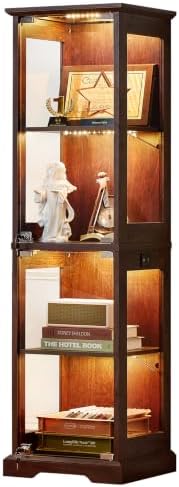
A wooden display cabinet with a locking glass door, shelf space for bottles and glasses, and a walnut farmhouse look that reads as living-room furniture rather than a safe.
💛 Best Value
A compact lockable cabinet that covers the child-safety scenario at an entry price, with locking doors over basic bottle storage and a footprint that fits apartments.

📏 Best Tall Lockable
A full-height cabinet with locking glass doors and adjustable display shelving, for households that want vertical storage capacity and a locked core in one footprint.

Picks for Specific Scenarios
Two formats serve narrower needs: zero floor space, and locking just part of a larger setup.
🪝 Best Wall-Mounted
A wall-hung locking cabinet that puts bottles at adult height behind locking glass doors, combining the lock with the strongest child-safety measure there is: elevation.

🧱 Also Great: Lockbox Inside
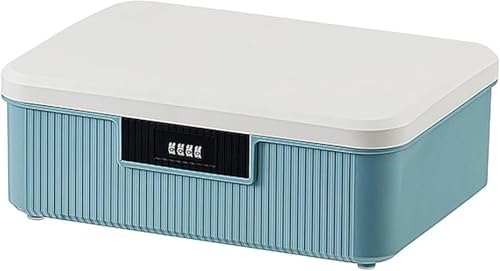
A generic combination lockbox sized for a few bottles, dropped inside any cabinet you already own, the retrofit route when replacing furniture is not on the table.
Living With a Locking Cabinet
The lock only works if locking is effortless, so build the habit around convenience: keys on your main keyring or in a spot only adults use, lock as part of the tidy-up after hosting, and keep the everyday working set organized so you are not opening the cabinet ten times an evening. A tray of tools and glasses outside the locked section keeps daily friction low while the bottles stay behind the door.
Maintain the hardware like any furniture: tighten hinge screws after the first months, keep the strike aligned as the cabinet settles, and if a key gets stiff, address it before it snaps. Inside, the usual zoning applies, working bottles at hand height, display up top if there is glass, bulk below; our how to organize a bar cabinet guide covers the system.
Common Mistakes to Avoid
- Buying the lock and ignoring the body. A keyed door on a stapled hardboard back is theater. Check the whole enclosure.
- Leaving the spare key on top of the cabinet. The most common bypass in family homes is not force, it is the obvious spare.
- Assuming glass means secure. Glass-door lockable cabinets set a boundary and stop small children; they do not resist determined effort.
- Letting the lock replace conversations. In homes with teens, the cabinet supports house rules; it does not substitute for them.
- Choosing security over livability. A cabinet you resent using ends up unlocked. Pick one you would want anyway.
- Skipping wall anchoring on tall lockable units. A locked cabinet still tips. Use the anti-tip kit.
Where to Go From Here
If capacity matters as much as control, the full-height formats in our tall bar cabinet guide include lockable options with far more storage. Buyers who want the lock in a piece built to last decades should read the solid wood bar cabinet guide, since a solid body is half of what makes a lock meaningful.
Frequently Asked Questions
Do locking bar cabinets actually keep people out? They reliably stop young children and set a clear boundary for everyone else. Against a determined adult or teen with time alone, furniture locks delay rather than prevent, which is why the cabinet body and key storage matter as much as the lock.
Can I add a lock to a bar cabinet I already own? Often yes. Cam locks, hasp locks, and surface-mounted keyed latches retrofit onto most wooden cabinets with basic tools, and a locking box inside the cabinet is an even simpler route.
What happens if I lose the keys? Most furniture locks can be opened and replaced by a locksmith or swapped with a matching cam lock without damaging the cabinet. Photograph the key code when the cabinet is new; it makes replacements simple.
Are locking cabinets required for short-term rental hosts? Requirements vary by platform and locality, but many hosts lock personal items including bottles as standard practice. A keyed cabinet or owner’s closet is the common solution.
Do locking cabinets look institutional? Not anymore. Current lockable cabinets span farmhouse, industrial, and modern styles, and the keyhole is usually the only visible clue. Choose the furniture first, the lock second.
The Bottom Line
A locking bar cabinet is about matching the lock to the household: basic keyed doors for child safety, solid bodies and disciplined key habits where teens are the concern, and clear boundaries for shared spaces. Judge the whole enclosure, not the keyhole, and choose a cabinet you would want even without the lock. Control and good furniture are not in conflict.