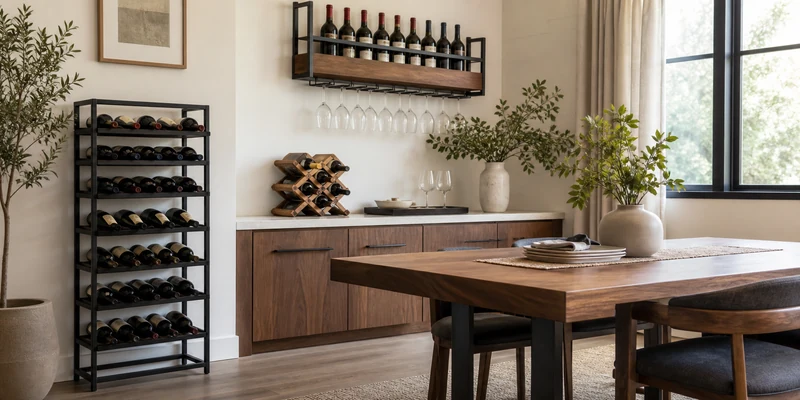
Last updated: August 12, 2026
A wine rack is one of those purchases that looks simple until you stand in your kitchen wondering where the bottles will actually go. The right rack depends far more on your space than on the wine: a narrow counter calls for a different solution than an empty dining room wall, and a growing collection has different needs than the six bottles you keep for weeknights and guests.
This guide sorts the category by placement, wall, floor, countertop, and modular, explains what materials and construction details matter, and gives you our picks for each situation. By the end you should know exactly which format fits your home and which specific racks are worth your money.
This article contains affiliate links. If you buy through them, we may earn a commission at no extra cost to you. Learn more.
Quick Answer
Which wine rack should you buy?
- Match the rack to the space, not the other way around: countertop for a handful of bottles, freestanding for a real collection, wall mounted when floor space is gone or you want the bottles on display.
- Store natural-cork bottles horizontally. Racks that hold bottles flat, or angled with the neck level or slightly down, keep the cork in contact with the wine, which is the commonly recommended way to prevent it from drying out.
- A rack stores bottles, it does not cool them. For wines you plan to keep longer, read our wine storage temperature guide first.
Wine Rack Types at a Glance
Every rack on the market falls into one of four placement families. Start here, because the family decides everything else: capacity, budget, and how much of your room the wine ends up claiming.
| Type | Best for | Typical capacity | Watch out for |
|---|---|---|---|
| Countertop | Everyday drinkers, small kitchens, gifts | Roughly 4 to 12 bottles | Counter depth and clearance under upper cabinets |
| Freestanding | Growing collections, dining rooms, basements | A dozen to 100+ bottles | Stability when half empty; load the bottom shelves first |
| Wall mounted | Display, tight floor plans, that gallery look | A few bottles to full bottle walls | Must be anchored into studs or proper anchors; full bottles are heavy |
| Stackable / modular | Collections that keep growing, cellar corners | Expands as you add tiers | Mixing brands later; check the system stays available |
If your bottles are worth aging rather than just storing, temperature and light matter more than the rack itself. Our wine storage temperature guide explains when an open rack is fine and when you should consider a wine fridge instead.
Why Horizontal Storage Matters
The classic advice to lay wine on its side exists for a reason: bottles sealed with natural cork are commonly stored horizontally so the wine stays in contact with the cork. A cork that stays moist keeps its seal; one that dries out can shrink and let air creep in, which is exactly what slowly ruins a bottle you were saving. That is why nearly every serious rack design holds bottles flat or angled with the neck level or slightly downward.
The exception is convenience wine. Screw-cap bottles do not care which way they stand, and anything you will open within a few weeks is in no real danger upright on the counter. So a small upright display rack is fine for the rotation you actually drink, while the bottles you are keeping belong on their sides, somewhere dark and reasonably cool.
Materials: Wood, Metal, and What to Avoid
Wood is the traditional choice for good reason: it is warm, quiet, and gentle on labels, and a solid wood rack can last decades. The honest caveat is that “wood” on a product page can mean anything from solid pine or acacia to thin MDF with a printed veneer, and the difference shows up the first time you load thirty full bottles. Our wood wine rack guide digs into how to tell them apart from the listing alone.
Metal racks trade warmth for strength and slimmer profiles. Steel wall systems such as VintageView hold bottles label-forward on thin rails, and metal floor towers pack more bottles into a smaller footprint than wood usually can. Whatever the material, check how the bottle actually rests: cradles should support the bottle body without stressing the neck, and nothing should scrape the label every time you slide a bottle out.
Our Top Picks by Situation
How we chose: we compared widely available racks on stability, material honesty, how the bottles rest, and how consistently owner reviews report them surviving real households. We lean on manufacturer specifications and recurring themes in customer feedback rather than any hands-on testing of our own.
One note before the list: capacity numbers on listings assume standard Bordeaux-shaped bottles. Champagne, Pinot Noir, and other wide-shouldered bottles take more room, so if your collection leans that way, size up or look for racks that advertise wide-bottle spacing.
🏆 Best Overall
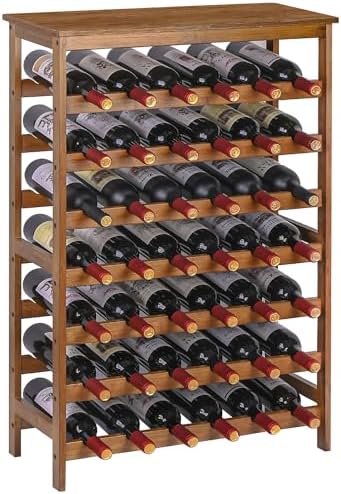
A freestanding solid wood rack with multiple horizontal rows: the format that suits the most homes, holds a real collection, and needs no drilling. Load it once and it simply works.

💛 Best Value
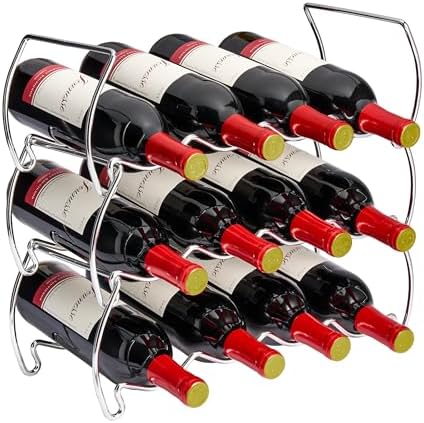
A compact countertop rack from Sorbus that stores a starter collection horizontally without claiming more than a slice of counter. An easy first rack and a reliable gift.
🖼️ Best for Wall Display
VintageView’s label-forward metal rails turn bottles into wall art while still storing them horizontally. The rack most people are picturing when they say they want a “wine wall”.

More Good Racks for Specific Homes
The three picks above cover most situations, but a few formats deserve their own recommendation. Each of these links to a deeper guide where we compare the whole sub-category.
🧩 Best Modular
A stackable wooden system that grows tier by tier as the collection does. Buy two modules now, add more later, and the rack never becomes the reason you stop buying wine.

🗼 Best for Large Collections
A tall floor rack that stores several dozen bottles in a bookcase-sized footprint. The practical choice for a dining room corner or a cool basement wall.
🥂 Also Great
A hanging-style rack that combines bottle storage with stemware slots underneath, so glasses and wine live in one place. Handy above a bar cart or sideboard.

Find Your Format
Once you know your placement family, the dedicated guides go deeper on each one. Renters and display lovers should read our wall mounted wine rack guide, which covers the stud-finding and anchoring part nobody mentions on the product page. If the rack will stand on the floor, the freestanding wine rack roundup compares towers, shelves, and consoles. Small-kitchen readers will find the sweet spot in our countertop wine rack guide, and collectors who keep outgrowing their storage should start with stackable wine racks.
And if you have an awkward triangle of dead space under a staircase, you are sitting on the most photogenic wine storage spot in the house. Our under stairs wine storage guide shows how to turn it into the room’s centerpiece.
Placement: Where a Rack Should and Should Not Live
Open racks expose wine to the room, so the room matters. The commonly recommended conditions for keeping wine are cool, stable, and dark: away from radiators, ovens, and dishwashers, and out of direct sunlight, which is hard on wine and fades labels besides. A dining room wall, a hallway, or a basement corner usually beats the kitchen, where temperatures swing every time you cook.
Vibration is the quieter enemy. The top of a refrigerator looks like a natural spot and is one of the worst: it is warm, it hums constantly, and grabbing bottles down from head height gets old fast. If most of your wine is opened within weeks, none of this needs to be perfect. If you are starting to keep bottles for years, that is the point where a temperature-controlled wine fridge earns its plug socket.
Common Mistakes to Avoid
- Buying for the collection you wish you had. A half-empty 90-bottle rack looks sadder than a full 12-bottle one. Buy for today plus a little growth, or go modular.
- Ignoring bottle shape. Slots sized for Bordeaux bottles can refuse Champagne and Pinot bottles entirely. Check slot dimensions if your taste runs wide-shouldered.
- Putting the rack above a heat source. The wall above a radiator or the top of the fridge quietly cooks your wine.
- Storing corked keepers upright. Fine for this month’s bottles, risky for anything you are aging. Horizontal is the commonly recommended default for natural cork.
- Skipping the stability check. Tall, narrow racks want to be loaded bottom-first and kept away from door swings and dog tails.
- Trusting bare drywall. Wall racks full of bottles are heavy. Anchor into studs or use fixings rated well beyond the loaded weight.
Frequently Asked Questions
Does a wine rack keep wine good? A rack organizes and positions bottles; it does not control temperature or humidity. For bottles you drink within weeks or months, a rack in a cool, dark spot is fine. For long-term aging, see our wine storage temperature guide.
Should wine racks hold bottles horizontally? For natural-cork bottles, yes, horizontal storage is the commonly recommended practice because it keeps the cork wet and swollen against the glass. Screw-cap bottles can stand any way you like.
How many bottles should my first wine rack hold? Most people do well starting around 12 to 24 slots: enough for a case plus the everyday rotation, small enough to stay full. Modular systems let you grow without replacing anything.
Are metal or wood wine racks better? Neither is better across the board. Wood brings warmth and a classic look, metal brings strength, slim profiles, and display-friendly designs like label-forward wall rails. Match the material to the room and the mounting situation.
Can I put a wine rack in the kitchen? You can, but pick the coolest corner, away from the oven, dishwasher, and window sun. For bottles that turn over quickly it is perfectly fine; for keepers, choose a calmer room.
Is it safe to hang a wine rack on drywall? Only with proper anchors rated well above the loaded weight, and into studs whenever possible. A full bottle weighs around three pounds, so even a small rack carries real load. Our wall mounted wine rack guide covers installation step by step.
The Bottom Line
The best wine rack for you is the one that fits the space you actually have: countertop for a few bottles, freestanding for a collection, wall mounted for display, modular for growth. Insist on horizontal storage for corked bottles, honest materials, and a spot away from heat and sun. Get the format right and the specific rack almost chooses itself.