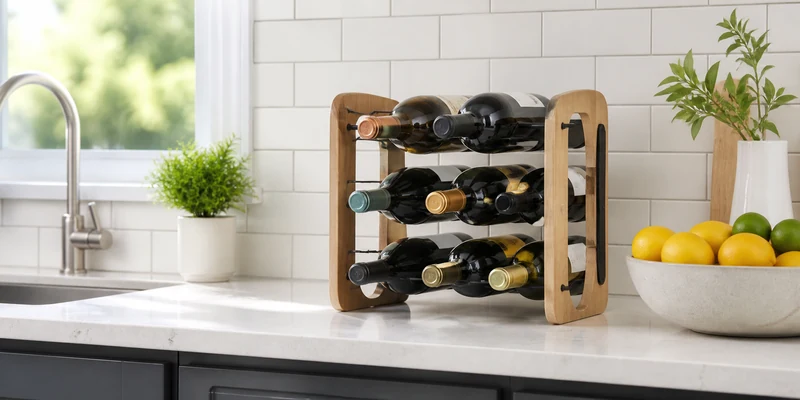
Last updated: August 12, 2026
A countertop wine rack is the honest answer for how most people actually keep wine: a handful of bottles in rotation, opened within a few weeks, living where the cooking and pouring happen. No installation, no floor space, no commitment, just the bottles handsome and within reach.
Small does not mean thoughtless, though. The difference between a rack that earns its counter space and one that ends up in a closet comes down to bottle position, clearance under your cabinets, and materials that can live next to a sink without complaint. This guide covers all three, plus the countertop racks we would actually give shelf space.
This article contains affiliate links. If you buy through them, we may earn a commission at no extra cost to you. Learn more.
Quick Answer
What makes a good countertop wine rack?
- Horizontal bottle slots for anything with a natural cork, since flat storage is the commonly recommended way to keep corks from drying out.
- A footprint and height that clear your upper cabinets and leave working counter in front, so measure the spot before you shop.
- A cool corner away from the oven, dishwasher, and window sun. The counter is fine for rotation wine; keepers belong somewhere calmer.
Countertop Rack Styles at a Glance
Counter racks cluster into a few styles, each with a natural bottle count and audience. Start with how many bottles you really keep on hand.
| Style | Typical capacity | Best for | Keep in mind |
|---|---|---|---|
| Horizontal cradle rack | 4 to 12 bottles | The everyday rotation; corked bottles | The correct default; check width against your counter run |
| Tiered / X-shaped wood rack | 6 to 12 bottles | Warm kitchens, open shelving looks | Wood or bamboo handles kitchen life well; avoid flimsy veneer |
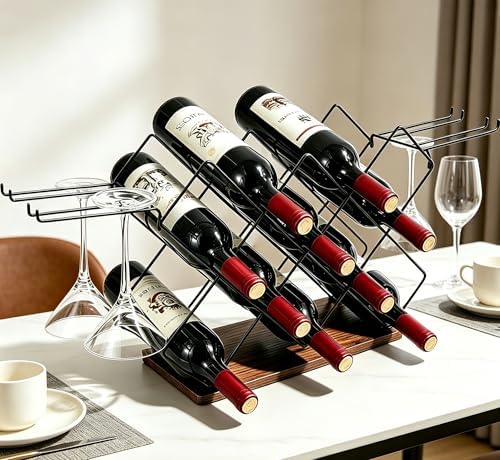
| Rack with stemware slots | A few bottles plus glasses | Coffee-corner-style wine stations | Adds height; measure under-cabinet clearance |
| Upright / decorative holder | 1 to 6 bottles | Display, gifts, bottles opening this week | Upright is fine short-term only for corked wine |
If your on-hand collection is creeping past a dozen bottles, the counter is no longer the right tool. A freestanding rack holds more without crowding your prep space.
Materials deserve one extra thought on a counter, because this is the only rack location that lives with steam, splashes, and daily wipe-downs. Metal and bamboo shrug all of that off; sealed hardwood does fine with prompt wiping; thin veneered board bubbles and peels at the edges within a year of kitchen life. If two racks look identical in photos, the honest material is the one that mentions what it is made of by name.
Horizontal or Upright: Does It Matter on a Counter?
For bottles you will open within a few weeks, position genuinely does not matter much; a screw-cap bottle does not care at all. That is why upright display holders are not wrong, they are just short-term tools. The commonly recommended practice of storing natural-cork bottles horizontally exists for bottles that wait: a cork kept in contact with the wine stays moist and swollen, while a cork that dries can shrink and let air in.
Since a countertop rack usually holds a mix, the practical rule is simple: choose a rack with horizontal slots as the base, and let the one bottle standing upright be tonight’s. If some of your bottles are starting to be next year’s rather than next week’s, read our wine storage temperature guide before the counter quietly ruins them.
Our Top Countertop Picks
How we chose: we compared widely available countertop racks on bottle position, stability with a full load, material quality around moisture, and the fit-and-finish themes that repeat in owner reviews. We work from specifications and review patterns, not hands-on trials.
One measuring note before the picks: standard upper cabinets leave roughly 18 inches of working height above the counter in many US kitchens, but yours may differ. Check the rack’s listed height against your actual clearance, especially for tiered and stemware designs.
🏆 Best Overall
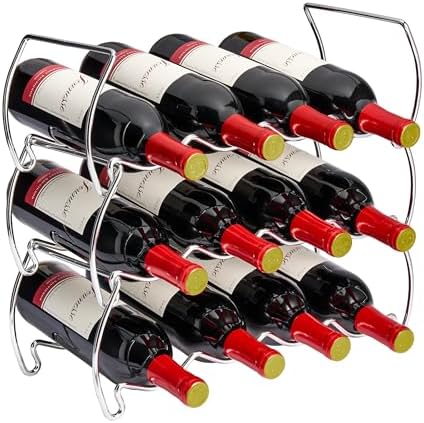
A Sorbus horizontal countertop rack: tidy rows, honest capacity for an everyday rotation, and a footprint that leaves the counter usable. The category’s sensible default from a brand built on exactly this kind of piece.
💛 Best Value
A simple metal cradle rack that holds a starter set of bottles flat for pocket money. Nothing to assemble, nothing to go wrong, and it disappears politely behind the bottles it holds.

🌳 Best in Wood
A bamboo countertop rack that brings warmth to the counter and shrugs off kitchen humidity better than cheap veneer ever will. The natural match for cutting boards and open shelving.

One More Setup Worth Considering
If the counter corner is becoming a small wine station rather than plain storage, combine bottles and glasses in one footprint and the corner starts pouring for itself.
A tray under the rack pulls the whole corner together: it defines the station visually, catches drips before they reach the counter, and lets you move the entire setup in one lift when you need the workspace back. Add a corkscrew and a stopper on the same tray and guests can help themselves without opening a single drawer. If that idea appeals and keeps growing, the natural next step is a rolling cart, and our guide on how to style a bar cart shows where that road leads.
🥂 Also Great
A countertop rack with hanging stemware slots beneath the bottles, so glasses stop migrating around the kitchen. Measure your under-cabinet clearance first; the glasses need hanging room.
Where on the Counter: Placement and Care
The counter is the warmest, busiest place wine ever lives, so pick the calmest corner of it. Keep the rack away from the oven, stovetop, and dishwasher, all of which cycle heat, and out of window sun, which is hard on wine and labels alike. The corner nearest an exterior wall or the coolest end of the kitchen run is usually the winner. The top of the refrigerator, tempting as it looks, combines warmth and constant vibration and is best skipped entirely.
Care is mostly about water. Wipe drips and bottle sweat promptly, especially on wood and bamboo, and lift the rack occasionally rather than sliding it, which grinds crumbs into the finish and scratches stone counters. That is the whole maintenance manual.
Common Mistakes to Avoid
- Buying before measuring under-cabinet clearance. Tiered racks and stemware designs need vertical room; check the listed height.
- Parking it next to the oven. The most convenient corner is often the hottest. Choose cool over close.
- Using upright display holders for keepers. Fine for this week’s bottles, not for corked wine that waits.
- Overloading decorative racks. A rack styled for six bottles is not a rack for twelve. Respect the intended capacity.
- Ignoring bottle shape. Compact cradles sized for Bordeaux bottles can reject Champagne shapes; check slot spacing if you drink bubbles.
- Letting the counter become the cellar. When bottles start staying for months, move them somewhere cool and dark and keep the counter for rotation.
Frequently Asked Questions
Is it OK to store wine on the kitchen counter? For bottles you will open within a few weeks, yes, provided the rack sits away from heat and direct sun. For longer keeping, kitchen warmth works against the wine; see our wine storage temperature guide for what those bottles prefer.
How many bottles fit on a countertop rack? Most counter racks hold between four and twelve bottles. Past that point the footprint starts crowding your prep space, and a freestanding rack becomes the better answer.
Should countertop racks hold bottles horizontally? For natural-cork bottles, horizontal is the commonly recommended position because it keeps the cork wet against the glass. Screw caps are indifferent, and any bottle opening this week can stand upright without harm.
What material is best for a kitchen wine rack? Bamboo and sealed hardwood handle kitchen moisture gracefully, and metal is nearly indestructible. Thin veneered board is the one to avoid next to sinks and steam; our wood wine rack guide explains how to spot it.
Is a countertop rack a good gift? It is one of the safest wine gifts there is: no sizing, no installation, and every wine drinker has a counter. Pair it with a bottle and the gift explains itself.
Countertop rack or small wine fridge? Different jobs. The rack organizes room-temperature rotation wine; a small wine fridge protects bottles worth keeping at a controlled temperature. Many kitchens sensibly end up with both.
The Bottom Line
A countertop wine rack should hold your rotation flat, clear your cabinets, and survive kitchen life without fuss. Measure the spot, favor horizontal slots and honest materials, and give it the coolest corner of the counter. It is a small purchase that gets handled daily, which is exactly why the good ones feel worth it.