Last updated: August 12, 2026
Shopping for the best wine fridge starts with a question most product pages skip: what is wrong with your kitchen refrigerator? The honest answer is that a kitchen fridge is too cold for most wine, too dry for corks over the long haul, and constantly jostled by the door swinging open. A dedicated wine fridge holds a steady, wine-friendly temperature so bottles are ready to pour and worth keeping.
This guide walks through the decisions that actually matter: compressor versus thermoelectric cooling, single zone versus dual zone, capacity, and where the unit will physically live. Along the way it points to the models that come up again and again in owner feedback, from compact countertop coolers to cabinets that hold a serious collection.
This article contains affiliate links. If you buy through them, we may earn a commission at no extra cost to you. Learn more.
Quick Answer
Which wine fridge should you buy?
- For most homes, a compressor-cooled unit in the 24 to 50 bottle range is the sweet spot: steady temperatures, room to grow, and a footprint that still fits a kitchen or bar corner.
- Choose dual zone if you regularly drink both red and white, so each can sit at its own serving range instead of a compromise setting.
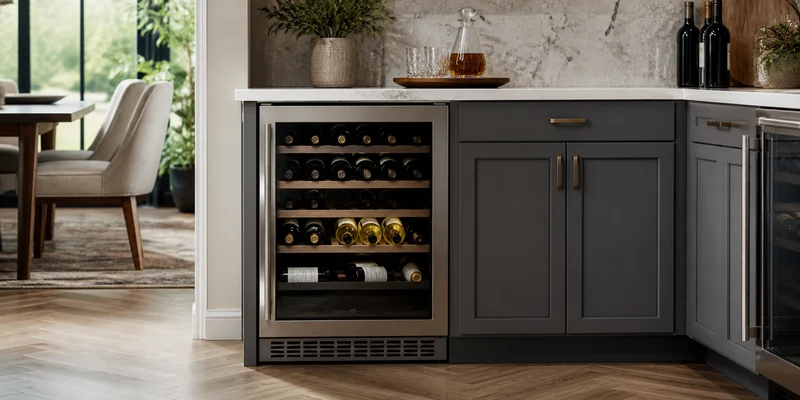
- Buy for placement first. Freestanding units need breathing room around the back, while built-in and under-counter models vent through the front and can slide flush into cabinetry.
What to Check Before You Buy
Every row below is something you can verify from a product listing before you commit. Get these five right and the rest is preference.
| What to check | Why it matters | What to look for |
|---|---|---|
| Cooling type | Determines noise, power, and where the unit can live | Compressor for reliable cooling in real kitchens; thermoelectric only for small units in cool, quiet rooms |
| Zones | Red and white are served at different temperatures | Dual zone if you drink both regularly; single zone if you mostly store one style |
| Capacity | Bottle counts are rated with standard Bordeaux bottles | Buy roughly a third more capacity than your current collection; wide bottles reduce real-world capacity |
| Ventilation | Freestanding units vent from the back or sides | Front-venting models for built-in installs; clearance on all sides for freestanding ones |
| Door and light | UV exposure is a known enemy of stored wine | Tinted or UV-resistant dual-pane glass, or a solid door if the fridge sits in direct light |
| Shelving | Cheap wire racks scratch labels and waste space | Sliding wood or metal-and-wood shelves that extend far enough to read labels |
If you want the reasoning behind the temperature numbers themselves, our wine storage temperature guide covers serving and storage ranges in depth. And if you are not yet sure the category is for you, start with whether you need a wine fridge at all.
Compressor or Thermoelectric: The Honest Trade-Off
Compressor units cool the same way your kitchen refrigerator does. They pull temperatures down quickly, hold them steadily even in a warm kitchen, and handle larger cabinets without strain. The trade-off is a soft hum and a faint vibration when the compressor cycles on, which quality brands dampen with mounted compressors and rubber bushings.
Thermoelectric units cool with an electric plate instead of a compressor, so they run nearly silent and vibration-free, which sounds ideal for wine. The catch is real: they can typically only cool a limited number of degrees below room temperature, so in a warm room they may never reach the setting on the display. They suit small collections in climate-controlled spaces, and struggle almost everywhere else. For most buyers, a compressor unit from a brand that takes vibration damping seriously is the safer bet.
Single Zone or Dual Zone
A single zone fridge holds everything at one temperature, which is perfect if you mostly drink one style or if the fridge is primarily long-term storage, where a steady cellar-like setting around the commonly recommended 55 degrees Fahrenheit serves reds and whites alike.
A dual zone fridge splits the cabinet into two compartments with independent controls, usually a cooler zone for whites and sparkling and a warmer zone for reds. If your household pours both colors in a normal week, the convenience is hard to give back. Our dual zone wine fridge guide ranks the standouts and explains how to set each zone.
Our Top Picks at a Glance
How we chose: we compared widely available wine fridges on temperature stability, build and shelving quality, noise, and how consistently owners report units holding their set temperature over time. Selections lean on manufacturer specifications and recurring themes in customer reviews rather than any hands-on trial of our own.
One reassurance before the list: every pick here uses compressor cooling and UV-resistant glass, because those two features are the baseline for a fridge you will not want to replace in two years.
🏆 Best Overall
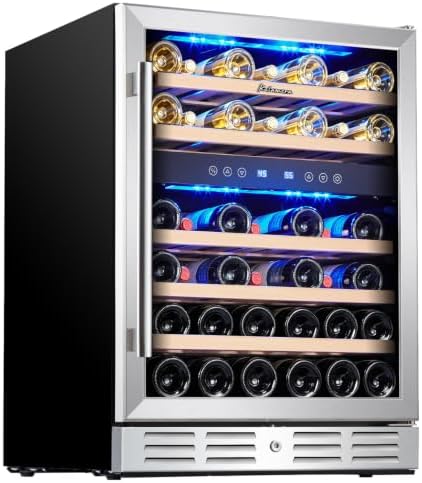
A 24 inch dual zone compressor unit that can run freestanding or built in, with wood-trimmed sliding shelves and the mid-capacity range most households actually need. Owners consistently mention quiet operation and steady temperatures.
💛 Best Value
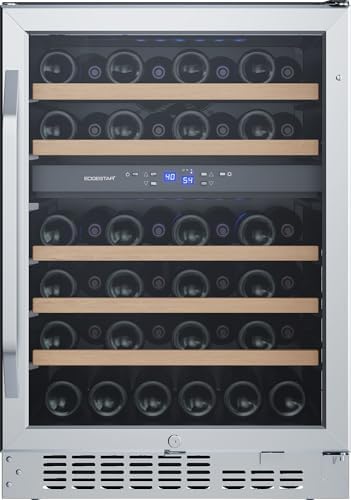
A compressor-cooled cabinet in the same capacity class for noticeably less, with a digital control panel and quiet running that reviews mention more often than the price would suggest.

⭐ Upgrade Pick
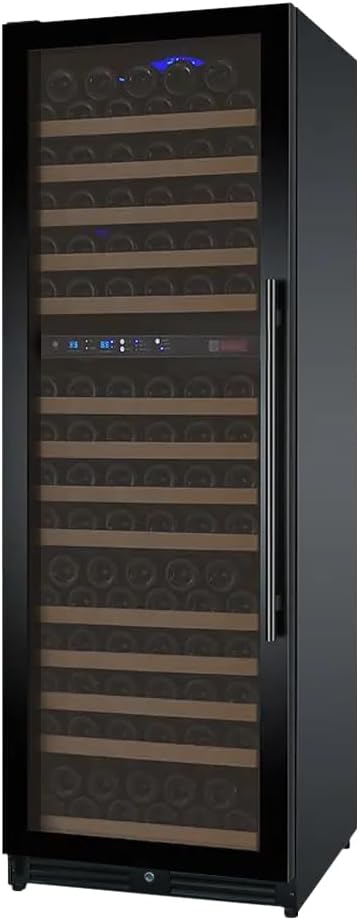
A tall high-capacity cabinet from the brand serious collectors cross-shop, with space-efficient shelving designed to fit more bottles per inch and a dual zone layout for mixed collections.
Picks by Space: Small Corners, Counters, and Cabinets
Not every home has room for a full-size cabinet, and the small end of the market has matured nicely. These three cover the most common space problems; each links to a dedicated guide if the situation matches yours.
🍷 Best Small Fridge
A compact compressor unit in the 12 to 18 bottle class that fits a bar corner or apartment kitchen without giving up steady cooling. The category is covered in depth in our small wine fridge guide.

🧊 Best for Countertops
A slim, quiet cooler sized for a kitchen counter or the top of a bar cabinet, ideal for keeping a week of bottles at serving temperature. More options in our countertop wine fridge roundup.

🔧 Best Built-In
A front-venting 24 inch unit designed to slide flush under a counter or into cabinetry, the configuration our under counter wine fridge guide is built around.
Placement, Settings, and Living With It
Placement decides more than looks. Freestanding units need a few inches of clearance behind and above to shed heat, and pushing one flush into a cabinet alcove makes it work harder and die younger. If flush is the goal, buy a front-venting model on purpose; the differences are laid out in our explainer on freestanding versus built-in wine fridges. Keep any unit out of direct sunlight and away from ovens and radiators, since a cooler fighting a hot wall runs constantly.
For settings, a commonly recommended starting point is the mid 50s Fahrenheit for storage, with whites chilled further before serving. Resist the urge to keep adjusting; wine prefers a boring, stable temperature over a technically perfect but fluctuating one. If you are planning the fridge as part of a larger bar wall, our guide to the bar cabinet with fridge space shows how furniture and cooler fit together.
Common Mistakes to Avoid
- Buying exactly the capacity you own today. Collections grow, and rated bottle counts assume slim standard bottles. A third more capacity than you think you need is the rule that ages best.
- Putting a thermoelectric unit in a warm room. It will run nonstop and still miss its target. Warm kitchen, garage, or sunroom means compressor, full stop.
- Building in a freestanding model. Blocked rear vents shorten the unit’s life and void some warranties. Check the venting direction before the cabinetry is planned.
- Ignoring noise placement. Even quiet compressors cycle. In an open studio or a bedroom wall install, check what owners say about noise before buying.
- Treating it like a beverage fridge. Cans and snacks want colder air than wine. Mixing them in one single zone unit means one of them is always at the wrong temperature.
Where to Go From Here
If capacity is your open question, the wine fridge size guide translates bottle counts into real dimensions and helps you avoid the too-small regret. If you are weighing a specific brand, our reviews of NewAir, Kalamera, and Allavino dig into where each one earns its reputation. And if your bottles are mostly for display and short-term storage, a well-chosen wine rack may be the simpler answer.
Frequently Asked Questions
What temperature should a wine fridge be set to? For mixed storage, a setting around the commonly recommended 55 degrees Fahrenheit works for most wine. For serving, whites are usually poured cooler than reds, which is exactly what dual zone units are for. Our temperature guide has the full ranges.
Is a wine fridge worth it for casual drinkers? If you keep more than a handful of bottles around and care how they taste when opened, yes. If you buy a bottle the day you drink it, a fridge adds little; our honest look at who actually needs one walks through the cases.
Can I just use my regular refrigerator? For a bottle of white you will open this week, of course. For anything longer, a kitchen fridge is colder and drier than wine likes, and the constant door traffic works against stable storage.
Compressor or thermoelectric, which is quieter? Thermoelectric is quieter and vibration-free, but it can only cool a limited amount below room temperature. A well-damped compressor unit is the more practical choice for most homes, and modern ones are quieter than their reputation.
How accurate are bottle capacity ratings? They are measured with standard Bordeaux bottles. Pinot, Champagne, and other wide bottles take more room, so real capacity for a mixed collection is usually lower than the rating. Size up accordingly.
The Bottom Line
The best wine fridge for most homes is a compressor-cooled unit in the 24 to 50 bottle range, dual zone if you drink both red and white, and front-venting if it will live inside cabinetry. Buy more capacity than today’s collection needs, keep it out of the sun, and set it once at a steady mid-50s Fahrenheit. Everything above that is refinement.