Last updated: August 12, 2026
A dual zone wine fridge solves the oldest argument in a mixed-wine household: the reds want to sit warmer than the whites, and a single compartment forces a compromise neither side loves. Two independently controlled zones let sauvignon blanc chill for tonight while the cabernet next to it rests at its own temperature, in one cabinet and one footprint.
This guide explains when two zones genuinely earn their premium over a single zone, how to set each compartment, and which dual zone models owners recommend most consistently, from compact units to collector-scale cabinets.
This article contains affiliate links. If you buy through them, we may earn a commission at no extra cost to you. Learn more.
Quick Answer
Is a dual zone wine fridge worth it?
- Yes, if your household regularly pours both red and white. Each zone holds its own serving range, so every bottle comes out ready instead of compromised.
- Skip it if you drink mostly one style or use the fridge purely for long-term storage, where one steady mid-50s Fahrenheit setting serves everything.
- Look for compressor cooling, a sensible split between the zones, and UV-resistant glass; those matter more than the bottle count on the box.
How the Two Zones Are Commonly Set
The table below shows the setup most owners land on. Treat the numbers as commonly recommended ranges rather than laws; consistency matters more than hitting a figure to the degree. The full reasoning lives in our wine storage temperature guide.
| Zone | Commonly recommended range | What goes there |
|---|---|---|
| Cooler zone | Roughly 45 to 55 degrees Fahrenheit | Whites, rosé, and sparkling, held at or near serving temperature |
| Warmer zone | Roughly 55 to 65 degrees Fahrenheit | Reds, served cooler than room temperature and warmer than fridge-cold |
| Both zones for storage | Around 55 degrees Fahrenheit | If aging matters more than serving, set both zones alike and steady |
Note the physics behind most designs: in many dual zone cabinets the zones are stacked, and which zone runs cooler is fixed by the layout, so check which compartment is which before loading shelves.
When Dual Zone Beats Single Zone
The case for two zones is a serving-temperature case. If Tuesday night in your house can mean either a chilled albariño or a rioja, a dual zone unit means never planning ahead: both styles wait at their own range. It also suits entertaining, since sparkling and whites can sit ready at the cooler end while reds stay poised above.
The case against is simpler than the marketing suggests. For long-term keeping, a commonly recommended single temperature around 55 degrees Fahrenheit suits red and white alike, which is why traditional cellars have one climate. If your fridge is a cellar substitute rather than a serving station, a single zone unit buys more capacity per dollar of build quality. Our honest look at whether you need a wine fridge helps place you on that spectrum.
Our Top Dual Zone Picks
How we chose: we compared widely available dual zone models on temperature stability in both zones, shelving and build quality, noise, and how consistently owners report the two zones holding their settings independently. We rely on manufacturer specifications and long-term owner feedback, not hands-on testing of our own.
Every pick uses compressor cooling; dual zone thermoelectric units exist, but they struggle to hold two targets in anything but a cool room.
🏆 Best Overall
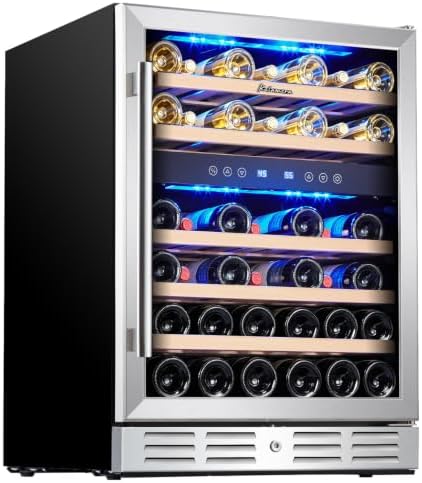
A 24 inch, roughly 46 bottle unit that runs freestanding or built in, with wood-trimmed shelves and zone controls owners describe as steady and accurate. The default answer for most mixed collections, reviewed fully in our Kalamera review.
💛 Best Value
A compact dual zone cooler in the 18 to 30 bottle class that brings two-temperature convenience to apartments and bar corners without the full-cabinet price.

⭐ Upgrade Pick
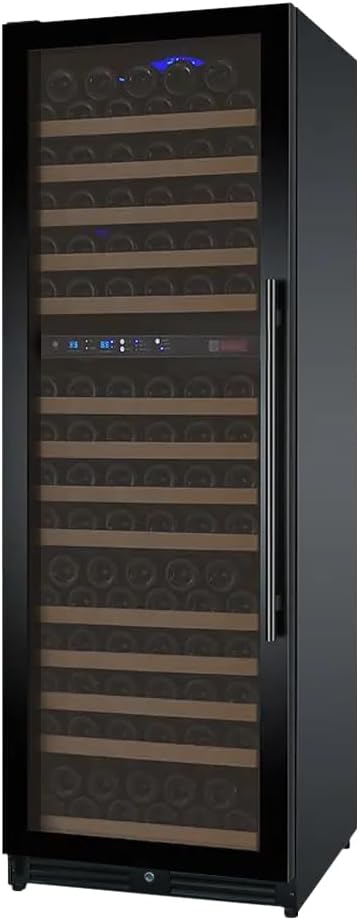
A tall two-door cabinet built around space-efficient shelving, holding a serious mixed collection with a full zone for each color. The step up when the collection outgrows kitchen-scale units; see our Allavino review.
Which Configuration Fits Your Space
Dual zone models come in the same bodies as the rest of the market, so the placement rules carry over. A freestanding tower needs clearance to vent; a front-venting unit can slide under a counter, the scenario our under counter guide covers in detail. In furniture installs, mind that two compressor zones make slightly more heat to shed than one.
Capacity math changes with two zones as well. A 46 bottle dual zone unit is really two compartments of roughly 23, and the split between them is fixed by the cabinet design. If your collection runs heavily to one color, check that the corresponding zone actually holds it; plenty of owners discover after delivery that the red zone is the smaller of the two.
🍷 Best Built-In Dual Zone
A front-venting 24 inch dual zone unit designed for flush installation, for kitchens and bar walls where the cooler disappears into cabinetry.

👍 Also Great
A freestanding dual zone tower with a clean glass front for dining rooms and bar corners where the fridge is meant to be seen rather than hidden.

Setting Up and Loading the Zones
Load by the design, not by habit. Check the manual for which zone is the cooler one, set whites and sparkling there, and give reds the warmer compartment. Keep each zone reasonably full; bottles hold cold better than air, so a well-stocked zone recovers faster after the door opens. Leave new bottles a day to settle to temperature before judging the fridge.
Resist chasing perfect numbers. A zone that quietly holds 47 degrees when you asked for 45 is doing its job; stability beats precision in wine storage. If a bottle needs to be colder for serving, a short spell in the kitchen freezer door or an ice bucket is the tool, not cranking the whole zone down and back every weekend.
Common Mistakes to Avoid
- Buying dual zone for a single-style collection. If nine bottles in ten are red, a single zone unit gives you more capacity and simpler operation for the same money.
- Setting the zones to extremes. Pushing one zone near its coldest limit while the other sits at its warmest makes the unit work hardest at the boundary between them. Moderate, steady settings age better.
- Ignoring which zone is which. In stacked designs the cooler zone position is fixed. Loading whites into the warmer compartment defeats the whole purchase.
- Trusting bottle counts for mixed bottles. Ratings assume slim Bordeaux bottles; Champagne and pinot bottles eat capacity. Our size guide covers the honest math.
- Choosing thermoelectric dual zone for a warm room. Two zones are harder to hold than one, and thermoelectric cooling has the least headroom to do it.
Where to Go From Here
If two zones feel like more machine than you need, the broader field is ranked in our main wine fridge guide, and small-space alternatives live in the small wine fridge roundup. If you are planning the fridge into a larger bar build, the bar cabinet with fridge space guide shows how the furniture side comes together.
Frequently Asked Questions
What temperatures should a dual zone wine fridge be set to? A commonly recommended setup is the cooler zone around 45 to 55 degrees Fahrenheit for whites and sparkling, and the warmer zone around 55 to 65 for reds. For pure storage, set both zones alike around 55.
Which zone is for red and which for white? White wine goes in the cooler zone, red in the warmer. In stacked designs, check the manual for which physical compartment runs cooler, since it varies by model and is not adjustable.
Can I set both zones to the same temperature? Yes, within the overlap of each zone’s range. That effectively turns the unit into a single zone cellar, a sensible mode when storage matters more than serving.
Do dual zone fridges use more electricity? Slightly more than an equivalent single zone, since the unit manages two targets. In practice, placement out of sunlight and away from heat sources influences running cost as much as the zone count.
Are dual zone wine fridges good for long-term aging? They can be, if the unit holds temperatures steadily and stays free of vibration and light. For aging, run both zones at one steady setting; the details are in our temperature guide.
The Bottom Line
A dual zone wine fridge earns its place in households that pour both colors: whites wait in the cooler zone, reds rest in the warmer one, and nothing needs planning ahead. Buy compressor-cooled, check which zone is which before loading, and set moderate, steady temperatures. If your collection is one style deep, spend the same money on a better single zone instead.