Last updated: August 12, 2026
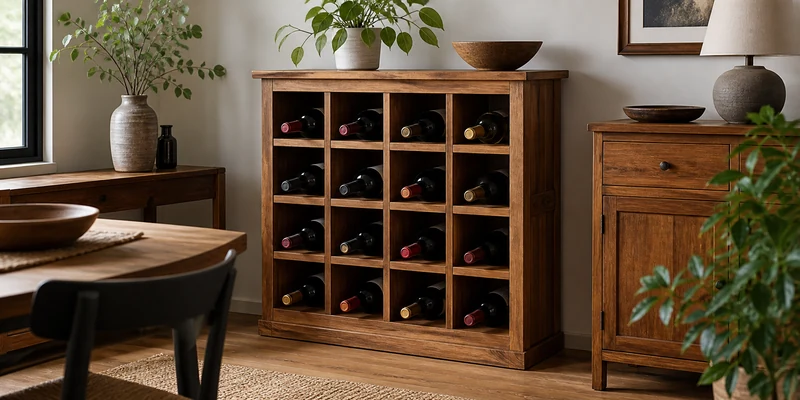
There is a reason the picture in your head of a wine cellar is made of wood. A wine rack in wood does what metal never quite manages: it makes bottle storage feel like furniture, warm against a dining room wall, at home next to a sideboard, and quiet in a way wire racks are not.
The catch is that “wood” is the most abused word in furniture listings. It can mean solid acacia that will outlive your house, or a printed paper veneer over particleboard that swells the first time a bottle sweats on it. This guide shows you how to tell the difference from the product page, which wooden formats suit which rooms, and the racks we would actually order.
This article contains affiliate links. If you buy through them, we may earn a commission at no extra cost to you. Learn more.
Quick Answer
What makes a good wood wine rack?
- Solid wood or honestly labeled engineered wood, not vague “wood finish” language. Shipping weight is the tell: solid racks are noticeably heavy for their size.
- Horizontal bottle cradles, since laying corked bottles flat is the commonly recommended way to keep the cork from drying out.
- A format that fits the room: stackable modules for growing collections, a floor rack for dining rooms, countertop pieces for kitchens.
Wood Types and What Listings Really Mean
Use this table to decode the materials line before you fall for the photos. Every term below appears constantly in wine rack listings, and they are not equals.
| Listing says | What it usually is | How it holds up |
|---|---|---|
| Solid pine / fir | Real softwood, often unfinished or lightly stained | Sturdy and repairable; dents easier than hardwood but ages well; the classic modular-cellar material |
| Acacia / rubberwood / oak | Real hardwood | The durable end of the market; heavier, stronger joints, takes stain beautifully |
| Bamboo | Laminated grass, technically, but performs like light hardwood | Strong for its weight, moisture-tolerant, common in countertop racks |
| Engineered wood / MDF | Fiberboard, usually veneered | Fine for light decorative racks; sags under heavy loads and swells if it gets wet |
| “Wood finish” / “wood-look” | Particleboard with printed foil, or not wood at all | The phrase to walk away from in a rack meant to carry glass |
A quick reality check that works on any listing: divide the shipping weight by the bottle capacity. Solid wood racks carry real mass per slot; a suspiciously light “wooden” rack is telling you what it is made of.
Joinery is the second tell. Racks assembled with wooden dowels, interlocking slots, or bolts into embedded metal inserts tighten up solid and stay that way; racks held together by short screws driven straight into particleboard edges loosen with every season of loading and unloading. Product photos rarely show the joints, but assembly instructions in the listing gallery often do, and owner reviews mention stripped screw holes with unmistakable bitterness when they happen.
Why Choose Wood Over Metal?
Wood wins on warmth, quiet, and kindness to bottles. Cradles cut from wood have no sharp edges to scrape labels, nothing rattles when the dishwasher runs, and a wooden rack beside a dining table reads as furniture rather than equipment. Wood is also easy to live with long-term: it can be sanded, re-stained, or repaired, which no powder-coated wire rack offers.
Metal counters with strength per inch: slimmer profiles, higher capacity in tight footprints, and the label-forward wall systems wood cannot really imitate. If your heart is set on a display wall, that comparison is covered in our wall mounted wine rack guide. For everything standing on a floor or counter, wood remains the default for good reason.
Our Favorite Wood Wine Racks
How we chose: we compared widely available wooden racks on material honesty, joint construction, cradle shape, and the durability themes that repeat across owner reviews. Judgments rest on specifications and consistent review patterns, not hands-on testing.
Two buying notes first. Unfinished pine modular racks look basic out of the box but stain to match any room in an afternoon. And with any flat-pack wood rack, the difference between wobbly and rock solid is usually just patient assembly: snug every joint, square the frame, then tighten fully.
🏆 Best Overall
A freestanding solid wood rack with several horizontal rows, the piece that anchors a dining room or kitchen corner and swallows a real collection. Buy once, load it, forget it.

💛 Best Value
Unfinished stackable pine modules, the cellar classic. Cheap per slot, expandable forever, and happy to be stained, waxed, or left raw. The smart buy for a collection that keeps growing.

🍞 Best for Countertops
A bamboo countertop rack that keeps a week’s bottles horizontal beside the fruit bowl. Light, moisture-tolerant, and neat enough for open shelving.

Wood Racks for Specific Spots
Two more formats round out the wooden family: one for the wall, one that moonlights as furniture. Both keep the same rule, real wood and horizontal cradles.
🖼️ Best for the Wall
A solid wood wall-hung rack for rooms where metal rails would feel cold. Mount it into studs like any loaded shelf; wood racks are not lighter than metal ones once the bottles are in.
🥃 Also Great
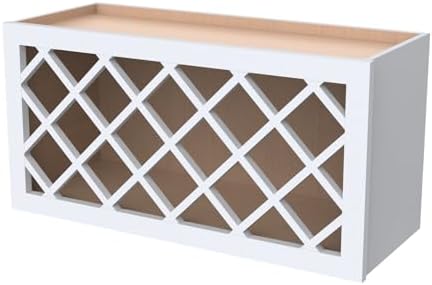
A wine rack console or side table in wood: bottle cradles below, a usable top for decanting and pouring above. A neat bridge between a plain rack and a full bar setup.

Care: Keeping a Wood Rack Beautiful
Wood asks for almost nothing, but the little it asks matters. Keep the rack out of direct sun, which fades finishes as surely as it harms the wine inside the bottles, and wipe up drips promptly; even sealed finishes dislike standing moisture, and unfinished pine will stain. A twice-yearly wipe with a barely damp cloth and a check of the joints covers maintenance entirely.
Position matters more than polish. The commonly recommended storage conditions, cool, stable, and dark, suit the wood as much as the wine, so a dining room wall or basement corner serves both. If bottles are starting to stay in the rack for years rather than months, that is your cue to read our wine storage temperature guide and consider whether the keepers deserve a wine fridge.
Common Mistakes to Avoid
- Trusting the word “wood” without reading further. Solid wood, named species, or honest engineered-wood labeling are fine; “wood-look finish” is not.
- Judging by photos instead of shipping weight. Staged photos flatter particleboard. Mass does not lie.
- Placing wood racks against damp basement walls. Leave an air gap; trapped moisture warps racks and molds labels.
- Overloading decorative MDF racks. Light display pieces are for a few bottles, not a case. Check the intended capacity.
- Skipping felt pads on hard floors. A loaded rack is heavy furniture; protect the floor before you fill it.
- Forgetting bottle diameter. Wooden cradles are less forgiving than wire; wide Champagne bottles may not seat in tight Bordeaux-sized slots.
Frequently Asked Questions
Is wood good for wine racks? Yes. Wood is strong, gentle on bottles and labels, and visually at home in living spaces. The only real requirements are honest construction and keeping the rack away from heat, sun, and damp.
Which wood is best for a wine rack? Hardwoods like acacia and oak lead on durability, pine leads on price and stainability, and bamboo punches above its weight in countertop sizes. Any of them beats vague “engineered wood” for a heavily loaded rack.
Should wooden wine racks hold bottles on their side? For natural-cork bottles, horizontal is the commonly recommended position: it keeps the cork in contact with the wine so it stays swollen and sealed. Upright display slots are fine only for bottles you will open soon.
Do wooden wine racks need to be sealed? Not necessarily. Unfinished pine modules live happily in cellars for decades. In kitchens, a stained or sealed finish makes wiping easier and resists drips; either way, avoid standing moisture.
How do I make a cheap wood rack look built-in? Stain matching your trim, a snug alcove fit, and stacking modules floor to ceiling go a long way. For the full showpiece treatment, see our under stairs wine storage guide.
How many bottles can a wooden rack safely hold? A well-built solid wood rack holds its advertised capacity with ease; the failures come from overloading lightweight decorative pieces. When in doubt, check the manufacturer’s stated capacity and the shipping weight, and load the bottom rows first.
The Bottom Line
A wood wine rack earns its place by being furniture first: warm, quiet, and honest about its materials. Read past the word “wood” to the species and the shipping weight, insist on horizontal cradles for corked bottles, and match the format to the room. Do that and the rack will still look right long after this year’s bottles are gone.