Last updated: August 12, 2026
Home bar essentials lists have a way of ballooning into thirty-item shopping sprees written by people who seem to host a cocktail competition every weekend. Real home bars are simpler. Most evenings call for a handful of tools, the right glass, something cold, and a surface that is not the kitchen counter. Everything past that is enthusiasm, which is welcome, but optional.
This checklist takes the honest route: the genuinely essential core that covers almost every pour, the worth-it second tier that makes hosting smoother, and the specialty gear you should only buy when your habits ask for it. It covers tools, glassware, furniture, and cold storage together, because a bar is a system, and the furniture half gets skipped by most lists entirely.
Quick Answer
What are the true home bar essentials?
- Tools: a shaker, jigger, bar spoon, strainer, and a decent ice routine cover nearly every drink a home bar serves.
- Glassware: start with two versatile types, rocks glasses and stemmed wine glasses, and add styles only as your pours demand them.
- A home: dedicated storage, whether cart, cabinet, or shelf, plus cold storage sized to your habits, is what turns supplies into a bar.
The Home Bar Checklist
Save this table and shop it in order: the Core column first, the Next tier when hosting becomes regular, the Specialty column only when a habit demands it.
| Category | Core essentials | Next tier | Specialty |
|---|---|---|---|
| Tools | Shaker, jigger, bar spoon, strainer, bottle opener, corkscrew | Muddler, citrus press, fine strainer, paring knife and board | Smoking kit, atomizer, specialty molds |
| Glassware | Rocks glasses, all-purpose stemmed wine glasses | Highballs, coupes or martini glasses, beer glasses | Snifters, flutes, tiki mugs, specific varietal stems |
| Ice | Reliable trays or ice maker, an ice bucket with tongs | Large-cube molds for slow-melting serves | Clear-ice systems |
| Furniture | One dedicated storage piece: cart, cabinet, or shelf zone | Counter-height serving surface, stools if space allows | Full bar wall, wet bar with sink |
| Cold storage | Kitchen fridge space reserved for mixers and white wine | Compact beverage fridge near the bar | Wine fridge, kegerator |
| Serving extras | Tray, cocktail napkins, coasters | Carafe or pitcher, decanter for the whiskey shelf | Punch bowl, personalized barware |
Notice what the Core column does not include: novelty gadgets, twelve bottle styles, or anything electric. A complete, functional home bar is a shorter list than the gift guides suggest.
Tools: The Five-Piece Kit That Does Everything
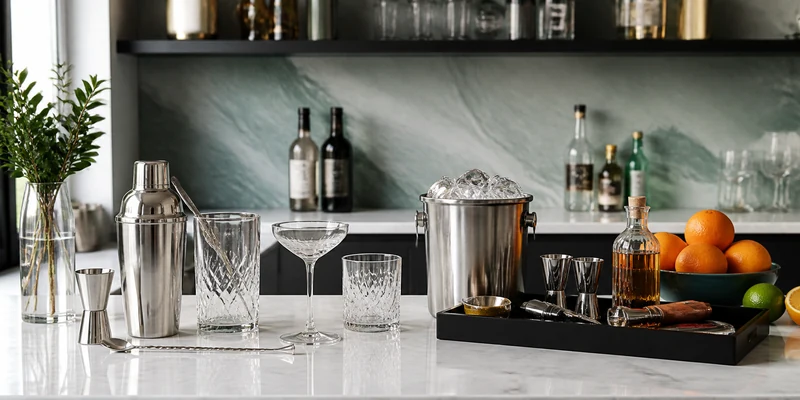
Almost every mixed drink made at home passes through the same five tools. A shaker, either the two-piece Boston style bartenders favor or the three-piece cobbler style that is friendlier to beginners. A jigger, because drinks built by eye drift sweet and strong, and consistency is what makes your version of a drink feel like a recipe rather than a gamble. A bar spoon for stirred drinks and gentle mixing, a strainer if your shaker does not build one in, and the humble openers: waiter’s corkscrew and bottle opener, which disappear exactly as often as they are needed, so buy two.
Buy these as decent mid-range pieces rather than either extreme. Bargain-bin shakers leak and pit; showpiece sets spend money on the box. Weighted stainless tools from established barware names last decades, and they are the rare category where the boring choice is the right one.
Glassware: Two Types First, Then Earn the Rest
Glassware is where home bars over-invest earliest. Start with two workhorses: rocks glasses, which handle spirits, short cocktails, and most casual pours, and all-purpose stemmed wine glasses, which serve red, white, and honestly most sparkling moments while the specialized stems stay theoretical. Six of each covers a dinner party with breakage insurance.
Add categories when your pours actually demand them: highballs when tall drinks become routine, coupes when someone starts shaking, proper beer glasses when the bottle-drinkers object. Decanters sit in an interesting middle spot, part function and part ceremony, and if a whiskey shelf is becoming your bar’s identity, our guide to the best whiskey decanter covers what separates the heirloom pieces from the props, including the lead-free question worth checking before anything stores spirits long-term.
Furniture: The Half of the Bar Most Lists Forget
Tools in a kitchen drawer are supplies. The same tools on a dedicated piece of furniture are a bar, and the psychology of that difference is the whole reason this site exists. The entry point is a bar cart: compact, mobile, and stylish, with the trade-off that everything lives in the open; our best bar cart guide covers the field. The settled choice is a bar cabinet, which adds closed storage, a working surface, and real furniture presence, compared across formats in our best bar cabinet hub. Shelf-and-tray setups fill the gap below both for tight spaces and renters.
Whichever piece anchors your bar, organization is what keeps it usable: daily bottles and tools at hand height, backup stock low, glasses up top, and one tray corralling the small stuff. If your storage has doors, how to organize a bar cabinet turns the interior from a jumble into a system.
Cold Storage: From Fridge Shelf to Dedicated Units
Every bar needs a cold plan, and the right size depends on honest habits. For many households, a reserved shelf in the kitchen refrigerator, mixers, white wine, a backup of whatever gets poured, is genuinely enough. Regular hosts graduate to a compact beverage fridge near the bar, which ends the party-night shuttle runs. Wine-forward households eventually meet the storage question properly: bottles kept for months care about temperature stability, light, and vibration, the science our wine storage temperature guide lays out, and a dedicated unit starts making sense at the point where your keeping pile outgrows your cool corners; the market for those lives in our best wine fridge guide.
Ice deserves its own line because it is the most-used ingredient in the entire operation and the most neglected. Reliable trays or an ice maker, a bucket with tongs for hosting, and large-cube molds for slow drinks cover the spectrum. Stale freezer ice that tastes like the freezer is the quietest way a good setup serves a mediocre drink.
Common Home Bar Mistakes
- Buying the 23-piece kit. Big sets bury five good tools under eighteen fillers. Buy the five well instead.
- Collecting glassware for drinks nobody makes. Six rocks glasses and six wine stems beat a cabinet of single-purpose glass. Earn each new style.
- Skipping dedicated storage. A bar scattered across kitchen drawers never feels like a bar and never gets used like one. One piece of furniture changes everything.
- Ignoring ice. Old trays and freezer-burned cubes undermine every drink they touch. Fresh ice is a free upgrade.
- Stocking for imaginary guests. Fill the bar with what your household and friends actually drink, not a magazine’s idea of completeness.
- Buying specialty before core. The smoking kit before the jigger is the classic gift-driven mistake. Core first, ceremony later.
Where to Go From Here
The natural next step is choosing the furniture anchor: the best bar cabinet guide covers the closed-storage route, while the best bar cart roundup handles the mobile one. And once the bottles start accumulating, the wine storage temperature guide explains how to keep the keepers in good shape.
Frequently Asked Questions
What should a beginner home bar have? Five tools (shaker, jigger, bar spoon, strainer, openers), two glass types (rocks and stemmed wine), fresh ice, and one dedicated storage piece. That kit covers the overwhelming majority of home pours.
Do I need a bar cart or cabinet for a home bar? You need some dedicated home for the gear; which format depends on space and style. Carts are mobile and open, cabinets are settled and closed; our best bar cabinet guide compares the anchor options.
What glassware is essential for a home bar? Rocks glasses and all-purpose wine stems, roughly six of each. Highballs and coupes join when tall drinks and shaken cocktails become regular, and specialty glasses only when a specific habit demands them.
Is a decanter necessary for a home bar? No, and that is part of its charm: a decanter is ceremony and presentation rather than necessity. If the whiskey shelf is your bar’s centerpiece, see the best whiskey decanter guide before buying one.
How do I keep a home bar organized? Daily items at hand height, backup stock low, glasses up top, small tools on one tray. Closed storage forgives more than open shelving; how to organize a bar cabinet covers the system in detail.
What is the biggest waste of money in home bar gear? Oversized tool sets and single-purpose gadgets bought before the core kit. Mid-range versions of the five essential tools outlast and outperform both the bargain and trophy ends of the market.
The Bottom Line
A real home bar is five tools, two glass types, fresh ice, a cold plan, and one piece of furniture that gives it all a home. Build that core first, let your actual habits justify each addition, and skip the thirty-item lists. The essentials are called that because everything else is optional.