Last updated: August 12, 2026
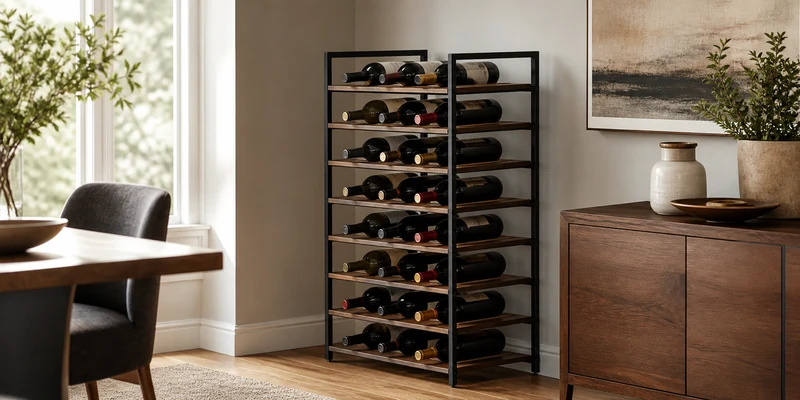
A freestanding wine rack is the no-excuses option: no drilling, no landlord conversations, no counter sacrificed. You set it down, load it, and the wine has a home. That simplicity is why floor racks remain the backbone of home wine storage even as wall systems get all the photos.
Freestanding covers a lot of ground, though, from slim six-bottle towers to shelving that holds a hundred bottles and change. This guide sorts the formats, explains the stability details that separate solid racks from tippy ones, and picks our favorites for small rotations and serious collections alike.
This article contains affiliate links. If you buy through them, we may earn a commission at no extra cost to you. Learn more.
Quick Answer
Which freestanding wine rack should you get?
- For most homes: a solid wood multi-row floor rack sized for your current collection plus a season of growth.
- For tight corners: a narrow vertical tower; for collections that will not stop growing, go modular or large-capacity shelving instead of replacing racks every year.
- Whatever the size, it should hold corked bottles horizontally, stand dead level, and live away from heat, sun, and constant vibration.
Freestanding Formats Compared
Floor racks come in four broad shapes. Match the shape to the spot you have in mind before comparing individual products.
| Format | Footprint | Best for | Keep in mind |
|---|---|---|---|
| Slim tower | About the size of a dining chair seat | Corners, ends of counters, small apartments | Tall and narrow means top-heavy when badly loaded; fill from the bottom |
| Multi-row shelf rack | Console-table sized | Dining rooms, kitchens, most collections | The all-round winner; check row spacing for wide bottles |
| Large-capacity shelving | Bookcase sized and up | Basements, pantries, serious collectors | Assembly quality decides everything; anchor tall units if kids are around |
| Console / table hybrid | Sideboard sized | Living rooms, entry walls, small bars | Fewer bottles per inch, but the top earns its keep for serving |
Row spacing is the spec people skip. Racks dimensioned around Bordeaux bottles can refuse Champagne and Pinot shapes, so if your case orders lean that way, look for wider cradle spacing or open shelf designs.
Measure the destination before you compare products, and measure like a mover, not an optimist: width between the baseboard and the door swing, height under any shelf or window sill, and depth so the loaded rack does not lean into a walkway. Baseboards matter more than people expect, since a flat-backed rack pushed against one tilts forward slightly, exactly the direction you do not want a hundred pounds of glass leaning. A rack that clears the baseboard or stands a couple of inches proud of the wall solves it.
Stability: The Freestanding Question That Matters Most
A loaded floor rack is heavier than it looks. At roughly 2.6 to 3 pounds per full bottle, a 24-bottle rack carries around 70 pounds of glass and wine, which is wonderful for stability when the weight sits low and a hazard when it does not. The rule is simple and worth repeating to everyone in the house: load the bottom rows first, empty the top rows first.
Before the first bottle goes in, check the rack stands level; a shim under one foot beats a wobble you learn to ignore. On slick floors, rubber or felt feet stop creep, and in homes with climbing-age children, treat a tall rack like any bookcase and use an anti-tip strap to the wall. That one screw does not make it “not freestanding”, it makes it furniture done right.
Our Top Freestanding Picks
How we chose: we compared widely available floor racks on stability, material honesty, cradle design, and how consistently owners report easy assembly and no wobble once loaded. Judgments rest on manufacturer specifications and recurring review themes rather than in-house testing.
A note on assembly, since every pick here ships flat: leave every bolt loose until the frame is square, then tighten in stages. Owner reviews make clear that most “wobbly rack” complaints are really “tightened in the wrong order” complaints.
🏆 Best Overall
A solid wood multi-row floor rack, roomy enough for a real collection, handsome enough for the dining room, and stable the way only low, wide furniture is. The default answer to “which rack should I get?”

💛 Best Value
A metal wine tower that stores a case and change on a chair-sized footprint for very little money. Plainer than wood, but strong, slim, and done assembling in minutes.

🗄️ Best for Large Collections
Bookcase-scale wine shelving that turns a basement wall or pantry into proper storage, with room to keep buying by the case. The per-bottle economics embarrass smaller racks.

Two Formats Worth a Detour
If neither a tower nor shelving quite fits, these two hybrids solve specific problems: growth you cannot predict, and a rack that has to pull furniture duty.
🧩 Best for Growing Collections
Stackable modules that behave like a freestanding rack today and twice the rack next year. If you have ever outgrown storage before, start modular; our stackable wine rack guide compares the systems.

🥂 Also Great
A wine rack console with a usable top: bottles and stemware below, a pouring and decanting surface above. Halfway between a rack and a bar cabinet, and often exactly enough.

Where to Put a Floor Rack
Freestanding means you choose the conditions, so choose kindly. The commonly recommended storage environment is cool, stable, and dark: a dining room wall away from windows, a hallway, a pantry, or a basement corner all beat the spot next to the oven or the sunny end of the kitchen. Keep an air gap behind the rack against exterior or damp walls, and skip locations that hum, like the top of or right beside the refrigerator.
Think about reach as well as climate. Bottles you drink weekly belong between knee and shoulder height where grabbing one is effortless; the top of a tall unit is for slow movers. If your keepers are starting to measure their stay in years, storage conditions matter more than any rack can deliver, and our wine storage temperature guide explains when a wine fridge becomes the better home for them.
Common Mistakes to Avoid
- Loading top rows first. A tall rack with its weight up high is a tip-over waiting for a bump. Bottom first, always.
- Buying exactly your current bottle count. Collections grow. Buy headroom or buy modular.
- Ignoring floor protection. Loaded racks are heavy furniture; felt pads on wood floors, level feet on tile.
- Parking it by the oven or a sunny window. Convenience placement is how good bottles get quietly cooked.
- Rushing flat-pack assembly. Square first, tighten second. Most wobble is self-inflicted.
- Forgetting the anti-tip strap in family homes. Tall plus climbable equals strap it, same as a bookcase.
Frequently Asked Questions
Are freestanding wine racks stable? Good ones are, provided they stand level and are loaded bottom-first. Low, wide formats are inherently steadier than tall towers; strap tall units to the wall in homes with children, exactly as you would a bookcase.
How many bottles do I need space for? Count your usual on-hand bottles, add a case for entertaining and gifts, and round up. Most households land comfortably in the 16 to 36 slot range; collectors should think in shelving or modules instead.
Is freestanding better than wall mounted? They solve different problems. Freestanding wins on capacity, zero installation, and renter-friendliness; wall racks win on floor space and display. Our wall mounted wine rack guide covers the other side of that trade.
Do freestanding racks store wine properly? The rack’s job is position: corked bottles horizontal, which is the commonly recommended practice for keeping corks moist. Temperature and light are up to where you place it, so choose a cool, dark spot.
Wood or metal for a floor rack? Wood reads as furniture and suits living spaces; metal is slimmer and cheaper per bottle. If you are leaning wooden, our wood wine rack guide shows how to spot honest construction.
Can I put a freestanding rack in the basement? Often that is the best spot in the house: cool, dark, and stable. Just keep the rack off damp floors and walls, leave an air gap, and check for musty corners before committing a collection.
The Bottom Line
A freestanding wine rack is the simplest good home your bottles can have: no drilling, real capacity, and full control over where it stands. Pick the format that fits the spot, insist on level footing and bottom-first loading, and place it cool and dark. It is the rack category where doing everything right costs nothing extra.