Last updated: August 12, 2026
A kegerator earns its place in a home bar the day you host your first real gathering with it: fresh draft beer, poured properly, with no tower of cans in the recycling bin afterward. It is one of the few home bar upgrades that changes both the experience and the logistics, because a keg stays fresh for weeks under CO2 where an opened growler fades in days.
The catch is that “kegerator” covers a wide range of machines: freestanding full-size units, undercounter models built to breathe through the front, outdoor-rated cabinets for the patio, and homebrew rigs with ball lock fittings instead of a standard coupler. This guide sorts the category by situation first, so you can skip straight to the type that fits your space, and then covers the checks that separate a reliable draft system from a foamy disappointment.
This article contains affiliate links. If you buy through them, we may earn a commission at no extra cost to you. Learn more.
Quick Answer
Which kegerator should you buy?
- For most homes: a freestanding full-size unit that fits a half barrel and ships as a complete package with CO2 tank, regulator, and coupler.
- Match the type to the location: undercounter models need front ventilation, outdoor models need an outdoor rating, and homebrew setups need ball lock fittings for Cornelius kegs.
- Check interior clearance against the keg sizes you actually plan to use, since not every cabinet that fits a half barrel also fits two sixtels side by side.
Which Kegerator Type Fits Your Situation?
Start with where the unit will live and what you plan to tap. Those two answers narrow the field faster than any spec sheet.
| Situation | What to buy | Key check before buying |
|---|---|---|
| Living room, basement, or garage bar | Freestanding full-size kegerator, single or dual tap | Fits a full half barrel; casters for moving; complete kit with tank and coupler |
| Built into cabinetry or a wet bar | Undercounter kegerator with front ventilation | Explicitly listed as built-in capable; rear-venting units overheat in an enclosure |
| Patio or outdoor kitchen | Outdoor-rated kegerator, stainless exterior | Outdoor rating from the manufacturer, not just a stainless finish |
| Homebrewing | Homebrew kegerator with ball lock fittings | Sized for Cornelius kegs; dual tap if you ferment more than one batch at a time |
| Small apartment or occasional use | Compact unit sized for a sixtel, or a mini fridge conversion | Interior height with the coupler attached; see our conversion comparison |
| Two beers on draft at once | Dual tap kegerator | Interior fits two sixtels or two Cornelius kegs side by side |
If keg dimensions are new territory, our kegerator size guide explains sixtel, quarter, and half barrel formats and which cabinets fit which kegs.
What Separates a Good Kegerator From a Foamy One
Temperature stability matters more than any other spec. Most pouring problems that get blamed on the tap are really temperature problems: a cabinet that cycles warm lets CO2 break out of the beer, and the first pours come out as foam. Look for a compressor-based unit with a thermostat range that comfortably reaches typical draft serving temperatures, and give the cabinet time to chill the keg fully before the first pour, which for a warm half barrel can take the better part of a day.
After temperature, look at the dispensing hardware. A complete package should include a CO2 tank, a dual gauge regulator so you can see both tank level and serving pressure, a standard American Sankey coupler, and a faucet with a removable spout for cleaning. Serving pressure is adjustable at the regulator, and the right setting depends on the beer style, the length of the beer line, and the cabinet temperature; most manufacturers include a starting recommendation in the manual, and small adjustments from there settle most systems. Treat the regulator as a tool you will actually use, not a set-and-forget dial.
Build details that show up later
Owners report the same weak points across cheap units: flimsy plastic faucets that stick, guardrails that arrive bent, and thermostats that swing widely. Metal faucet hardware, a stainless or at least well-finished tower, and a drip tray that removes for rinsing are the small details that make the difference between a unit you enjoy and one you tinker with. A CO2 tank that mounts outside the cabinet is a quiet bonus, because it frees interior space and keeps the regulator at room temperature.
Our Top Kegerator Picks by Situation
How we chose: we compared widely available kegerators on temperature stability, included dispensing hardware, interior keg clearance, and how consistently owners report trouble-free pouring after setup. Selections lean on manufacturer specifications and recurring themes in customer reviews rather than any hands-on trial of our own.
One note before the list: almost every kegerator ships with the tower unmounted and needs an evening of assembly plus a full chill-down before the first keg. Plan the delivery a few days before you plan the party.
🏆 Best Overall
A full-size single tap kegerator sold as a complete package: CO2 tank, dual gauge regulator, Sankey coupler, and a cabinet that swallows a half barrel with room to spare. The sensible default for a first draft setup.
💛 Best Value
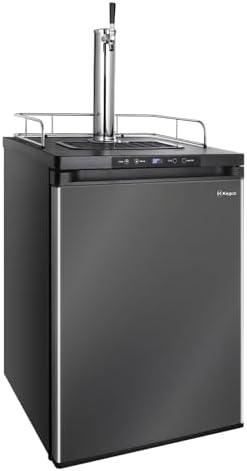
A straightforward full-size kegerator at the accessible end of the category, shipped with a single tap kit and a 5 lb CO2 tank. Fewer frills than the specialist brands, but everything a first draft setup needs in one box.

🧱 Best for Built-In
A front-venting undercounter kegerator designed to slide into cabinetry without overheating. The pick if your draft setup should look like part of the bar rather than an appliance standing next to it.

Outdoor, Homebrew, and Multi-Tap Setups
Beyond the standard indoor formats, three situations deserve their own hardware. A patio bar needs a unit rated for outdoor temperature swings and moisture, which is a genuine engineering difference and not just a stainless shell; our outdoor kegerator guide covers what that rating actually protects. Homebrewers need ball lock fittings for Cornelius kegs instead of a commercial coupler. And anyone who wants variety on draft should look at a dual tap kegerator, which typically trades half barrel capacity for two smaller kegs side by side.
🌤️ Best for Outdoor
An outdoor-rated stainless kegerator built to hold temperature through warm afternoons on a covered patio. Heavier and pricier than indoor units, but the only responsible way to keep draft beer outside.

🧪 Best for Homebrew
A kegerator configured for Cornelius kegs with ball lock disconnects, so your own batches go from fermenter to tap without adapter juggling. Dual fittings let two batches pour side by side.

🍺 Also Great
A dual tap full-size unit for households that want two styles on draft at once. Runs two sixtels or, in most configurations, one half barrel with the second tap capped for later.

Setup, First Pour, and the Maintenance Rhythm
Give a new kegerator a calm first day: let it stand upright for several hours after delivery so the compressor oil settles, assemble the tower and lines without over-tightening the plastic fittings, and chill the empty cabinet before the keg goes in. Tap the keg, set the regulator to the manufacturer’s starting pressure, and resist the urge to crank the pressure up when the first pours foam; a warm keg is almost always the culprit, and patience fixes it.
From there, draft beer is a system you maintain rather than an appliance you ignore. Beer lines need cleaning on a regular rhythm, commonly recommended between every keg or every couple of weeks, because residue builds up inside the line and shows up as off flavors and wild foam. It takes fifteen minutes with a simple cleaning kit, and our step-by-step guide to cleaning kegerator lines walks through the whole routine, including the faucet disassembly most people skip.
Common Mistakes to Avoid
- Building a rear-venting unit into cabinetry. Freestanding kegerators exhaust heat out the back and cook themselves in an enclosure. Built-in spots need a front-venting undercounter model.
- Ignoring interior clearance. The coupler and beer line add height above the keg. Check the listed interior dimensions against the keg format you plan to use, with the coupler attached.
- Chasing foam with pressure changes. Most foam is temperature. Verify the cabinet is holding a steady serving temperature before touching the regulator.
- Skipping line cleaning. Old lines make fresh kegs taste stale. Put cleaning on the calendar rather than waiting for the taste to remind you.
- Putting an indoor unit on the patio. Compressors are rated for a temperature range, and outdoor swings outside that range shorten the unit’s life and spoil the pour.
- Buying before measuring the doorway. Full-size kegerators are bulky. Measure the route to the bar, not just the bar itself.
Where to Go From Here
If a full purpose-built unit feels like more machine than you need, converting a fridge with a kegerator conversion kit is a satisfying weekend project, and our comparison of a kegerator versus a mini fridge conversion settles which route fits your budget and patience. And if the kegerator is the first piece of a larger project, our basement bar ideas show how a draft setup anchors a full bar room.
Frequently Asked Questions
What size keg fits in a standard kegerator? Most full-size units accept a half barrel, and by extension the smaller quarter barrel and sixtel formats. Compact units are usually limited to sixtels or Cornelius kegs. Always compare listed interior dimensions with the keg format; our kegerator size guide has the numbers.
How long does a keg stay fresh in a kegerator? Under CO2 at a steady serving temperature, commercially filled kegs commonly stay in good condition for several weeks to a few months, with pasteurized beers lasting longer than unpasteurized ones. A clean line and a consistent temperature are the biggest factors you control.
Do kegerators come with everything you need? Complete packages include the CO2 tank, regulator, coupler, lines, and faucet, but the tank usually ships empty and needs a fill or exchange at a local welding gas or homebrew supplier. Budget units sometimes sell the dispensing kit separately, so read the listing carefully.
What pressure should I set my kegerator to? There is no single correct number: serving pressure depends on beer style, line length, and temperature. Start with the manufacturer’s recommendation in the manual and adjust in small steps, giving the system time to settle between changes.
Can I use a kegerator for homebrew? Yes, if it fits Cornelius kegs and you swap the commercial Sankey coupler for ball lock disconnects. Purpose-built homebrew kegerators come configured that way out of the box.
Is a kegerator hard to maintain? The routine is simple but real: clean the lines regularly, rinse the drip tray, and check the CO2 level before hosting. Our guide to cleaning kegerator lines covers the full rhythm.
The Bottom Line
The best kegerator is the one matched to its location: a complete full-size package for a freestanding bar, a front-venting model for cabinetry, an outdoor-rated unit for the patio, and ball lock fittings for homebrew. Buy a complete kit, verify interior clearance against your keg format, and commit to the line cleaning rhythm. Do that and draft beer at home becomes the easy, repeatable centerpiece of every gathering you host.