Last updated: August 12, 2026
Basement bar ideas tend to arrive in two flavors: the full renovation fantasy with a plumbed sink, custom cabinetry, and a row of taps, and the realistic version, which is a good cabinet, decent lighting, and somewhere to keep things cold. Both count. The basement is the natural home of the American home bar because it offers what no other room does: space nobody is fighting over, cooler temperatures, and permission to have some personality.
This guide covers the range honestly, from furniture-only corners you can finish this weekend to the layout thinking behind a built-in wall, with the basement-specific realities, moisture, temperature, and lighting, that inspiration boards skip. The goal is a bar that gets used on ordinary Tuesdays, not just photographed once.
Quick Answer
What are the best basement bar ideas?
- Start furniture-first: a bar cabinet, a couple of stools, and a compact fridge deliver most of the experience with none of the construction.
- Use the basement’s natural advantages: cool, dark, stable corners are excellent for wine storage, and the space under the stairs is prime real estate.
- Solve moisture and lighting before styling anything. A damp, dim bar does not get used, no matter how good the shelving looks.
Basement Bar Concepts Compared
Six proven directions, ordered roughly from an afternoon of effort to a contractor conversation. Most basements end up combining two of these rows.
| Concept | Effort level | Best for |
|---|---|---|
| Cabinet corner | One afternoon | A bar cabinet, wall art, and a lamp; the fastest route to a real bar and the easiest to upgrade later |
| Console and stool wall | A weekend | A counter-height cabinet or console with stools, turning one wall into a standing bar without construction |
| Media-room service station | A weekend | A cabinet plus compact fridge beside the TV zone, so movie nights stop requiring stair trips |
| Under-stairs bar or wine nook | A weekend to a few | Reclaiming the dead triangle under the staircase for bottle storage or a compact pour station |
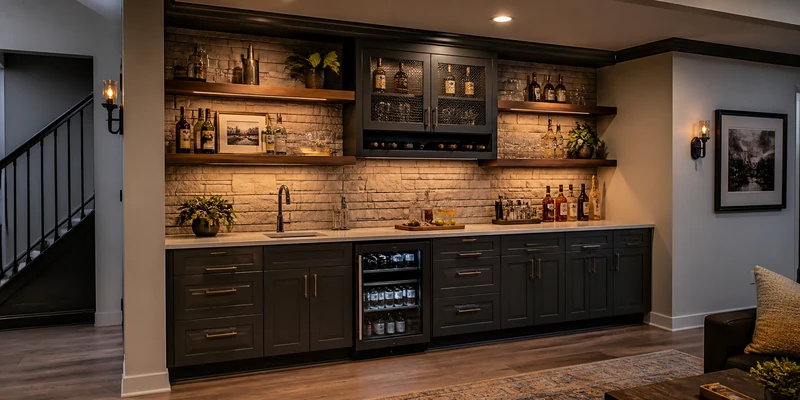
| Dry bar wall with cabinetry | A project | A run of base cabinets and counter along one wall; the built-in look without plumbing |
| Full wet bar | A renovation | Sink, counter, and cabinetry for households that entertain enough to justify the plumbing |
For the furniture-first rows, our best bar cabinet guide is the get-the-look shortcut: it covers the formats, materials, and storage layouts that separate a bar cabinet from a bookshelf with bottles on it.
Work With the Basement, Not Against It
Basements hand you three genuine advantages. They are the coolest floor of the house, which makes them the best free wine storage most homes own; a dark corner downstairs holds bottles at kinder, steadier temperatures than any upstairs closet, a point our wine storage temperature guide explains in full. They are structurally forgiving, so a heavy cabinet or a loaded bottle wall that would worry an upstairs floor is a non-issue on a slab. And they are socially separate, which means a bar down there can be louder, later, and more personal than anything you would put in a living room.
The under-stairs triangle deserves special mention because nearly every basement has one and nearly every basement wastes it. Sloped, useless for furniture, and naturally dark, it is almost purpose-built for bottle storage or a compact pour station, and under stairs wine storage walks through the ways to claim it, from simple racks to fitted shelving.
The Unglamorous Trio: Moisture, Light, and Air
Every failed basement bar failed on one of these three, so handle them before the fun parts. Moisture first: basements run damper than the rest of the house, and standing furniture flat on concrete lets it wick whatever the slab offers. Choose pieces with legs or feet, keep cabinets an inch off exterior walls, and if the space smells musty in summer, run a dehumidifier before you move anything made of wood down there. Cardboard boxes of bar stock on the floor are asking for trouble; shelves are cheap.
Light second: basements start dim, and bars want warmth, not the single ceiling bulb the builder left. Layered small sources beat one bright one: a lamp on the cabinet, a strip under a shelf, something warm behind the bottles. This is the highest-return styling money in the whole project. Air third: a below-grade room that hosts people and a running fridge appreciates airflow, so leave breathing room behind appliances and crack the plan for ventilation if the space is sealed tight. None of this is glamorous, and all of it decides whether the bar feels like a destination or a storage room with stools.
Furnishing the Bar: What Actually Goes Down There
The core kit is shorter than the inspiration boards suggest: one anchor piece of storage furniture, seating for the number of people who realistically show up, cold storage sized to your habits, and a surface to pour on. The anchor is usually a bar cabinet or counter-height console; if your plans include a sink one day, the moisture-hardened thinking in our wet bar cabinet guide applies even before the plumbing exists. Cold storage in a basement can be as simple as a compact fridge in the cabinet run, and beer-forward households eventually eye a kegerator, which the basement accommodates better than any other room in the house.
Then comes the part basements do best: personality. Sports memorabilia, neon, a dartboard, the poster collection that never got wall space upstairs, all of it belongs. The one styling rule worth keeping is zoning: one wall or corner carries the theme hard, while the bar surface itself stays functional and clear. For stocking the shelves once they exist, home bar essentials covers the tools and glassware worth owning before any of the exotic stuff.
Common Basement Bar Mistakes
- Starting with construction instead of furniture. A cabinet corner teaches you how you actually use the space; a built-in guesses. Build the cheap version first.
- Ignoring dampness until the furniture swells. Check summer humidity before wood goes downstairs, and keep everything on legs.
- Lighting the bar like a laundry room. One cold ceiling bulb kills the mood that is the entire point. Layer warm light at bottle height.
- Placing the fridge against a sealed wall. Compressors need airflow; give appliances their clearance gaps.
- Storing good wine next to the heat sources. The corner by the furnace or dryer vent is the one warm, unstable spot in an otherwise ideal floor. Keep bottles away from it.
- Over-theming the whole room. One strong wall reads as character; four read as a restaurant that closed. Zone the personality.
Where to Go From Here
If the furniture-first route fits, the best bar cabinet guide turns this plan into a shortlist. If the sink is genuinely in your future, wet bar cabinet covers the water-adjacent decisions. And if your basement’s best feature is the cool dark corner, under stairs wine storage shows how to turn it into the cellar the house never had.
Frequently Asked Questions
How do I build a basement bar on a budget? Furniture, not framing: a bar cabinet, two stools, warm lighting, and a compact fridge deliver the experience for a fraction of a built-in’s cost. Upgrade to cabinetry later if the corner earns it.
Do I need plumbing for a basement bar? No. A dry bar covers most real-world use, and a water pitcher stands in for the tap. Add a sink only if you entertain often enough that mid-party cleanup genuinely matters.
Is a basement good for storing wine? Usually the best spot in the house: cool, dark, and stable. Keep bottles away from furnaces and dryer vents, and see our wine storage temperature guide for the ranges that matter.
What furniture works in a damp basement? Pieces on legs or adjustable feet, kept off exterior walls, with sealed finishes. If summer humidity runs high, a dehumidifier protects both the furniture and the pour.
What should every basement bar have? Storage furniture, honest seating, cold storage, warm light, and a clear pouring surface. Personality is the bonus layer, and home bar essentials covers the gear worth stocking first.
Can I put a kegerator in a basement bar? Basements suit kegerators well thanks to stable temperatures and forgiving floors. Give the unit ventilation clearance and a level stand, and plan the walking route for keg swaps before choosing the corner.
The Bottom Line
The best basement bar starts with furniture, light, and cold storage, and only graduates to construction once the corner has proven it gets used. Respect the basement’s physics, moisture on the floor, warmth near the furnace, dimness everywhere, and exploit its gifts: space, cool storage corners, and the freedom to be personal. A used Tuesday-night bar beats a photographed one every time.