Last updated: August 12, 2026
A wet bar cabinet has a harder job than any other piece of bar furniture in your house. A wet bar means running water, and running water means splashes, drips, humidity, and the occasional overflowing ice bucket, all happening inches from wood and finish. The cabinet that anchors that space has to look like furniture and shrug off moisture like kitchen cabinetry.
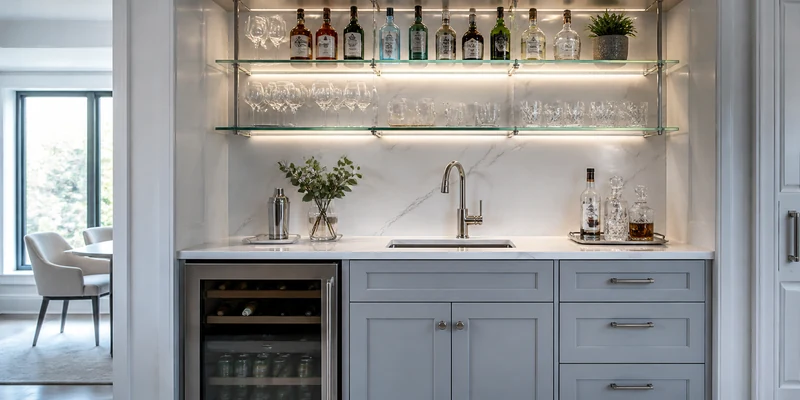
The term covers two different projects, and this guide serves both. If you are building a true wet bar with a sink, the freestanding cabinets here flank and furnish that wall. If you are furnishing a bar corner without plumbing, the same pieces deliver the wet bar look, minus the contractor. Either way, the buying logic is the same: sealed surfaces, real storage, and space planned for the cold stuff.
This article contains affiliate links. If you buy through them, we may earn a commission at no extra cost to you. Learn more.
Quick Answer
What should you look for in a wet bar cabinet?
- A sealed, wipeable top and finish. Water is the whole point of a wet bar, and raw or thin finishes stain, ring, and swell around it.
- Storage for the real inventory: bottles upright, glasses hanging or shelved, and closed space for the gear you do not want on display.
- A plan for refrigeration. Decide up front whether a fridge slides into the cabinet, sits under an adjacent counter, or stands beside it, because that choice drives the size you buy.
What to Check Before You Buy
Wet bar duty adds a few rows that ordinary bar cabinet shopping skips. Everything here can be verified from the listing and your tape measure.
| What to check | Why it matters | What to look for |
|---|---|---|
| Top and finish | Splashes and wet glasses are daily events near a sink | A sealed, laminated, or well-finished top; owner reviews that mention wiping up spills without damage |
| Material honesty | Particleboard swells when water finds a seam | Solid wood or thick, well-edged engineered board; shipping weight is an honest clue |
| Bottle and glass storage | A wet bar serves; it does not just display | Upright bottle space, stemware racks or shelves, and at least some closed storage |
| Refrigeration space | Ice and cold bottles are what make the corner work | An open compartment sized for a compact fridge, or a footprint plan that leaves room beside the cabinet |
| Height and role | Counter-height pieces work as serving stations; tall cabinets are storage anchors | Counter height for mixing and pouring, tall format for maximum storage on a small footprint |
| Ventilation for appliances | Compressor fridges exhaust heat and need airflow | Open backs or clearance gaps if a fridge will live inside or beside the cabinet |
| Floor protection | Basements and bar rooms often have hard floors and the occasional puddle | Adjustable feet or legs that keep the cabinet base off the floor rather than flat on it |
Wet Bar or Dry Bar: Be Honest About the Plumbing
A true wet bar has a sink with running water, which makes rinsing glasses, dumping melted ice, and cleaning up mid-party effortless. It also means plumbing, which means either an existing line, a renovation budget, or a basement layout that happens to cooperate. A dry bar is everything except the sink, and for most homes it delivers most of the experience: the cabinet, the counter, the fridge, and a pitcher of water standing in for the tap.
The honest advice: let the room decide. If a water line is close, a modest sink turns a nice bar corner into the most-used spot in the house. If it is not, skip the plumbing without guilt and put the budget into better furniture and refrigeration. Our basement bar ideas guide shows both versions in the room where wet bars most often land, and the wider cabinet market, including pieces that never pretend to be wet bars, lives in our best bar cabinet hub.
Our Top Wet Bar Cabinet Picks
How we chose: we compared widely available bar cabinets on surface durability, storage layout, appliance compatibility, and how consistently owners report stable assembly and finishes that survive spills. Selections lean on manufacturer specifications and recurring themes in customer reviews rather than any hands-on trial of our own.
A sizing note before the picks: wet bar corners are usually fixed spaces with a wall length that does not negotiate. Measure the wall, subtract space for any fridge, and shop with that number, not a guess.
🏆 Best Overall
A tall bar cabinet with glass and bottle storage up top and closed doors below, the format that anchors a wet bar wall on a modest footprint. A sensible default for most rooms.

💛 Best Value
An industrial-style cabinet with a wine rack and stemware storage that undercuts most of the category while keeping a sturdy frame. A strong starting point for a first bar corner.

🧊 Best for Fridge Integration
A bar cabinet with an open compartment sized for a compact refrigerator, so cold bottles live inside the furniture instead of beside it. Check the compartment dimensions against your fridge before ordering.

Rounding Out the Wall: Upgrade and Appliance Picks
Once the anchor cabinet is chosen, two additions turn a cabinet into a wet bar. The first is a piece with enough furniture credibility to carry a finished room, worth considering when the bar wall is the centerpiece rather than a corner. The second is the cold half of the equation, because a wet bar without refrigeration is a cabinet with a sink. If the fridge will slide under a counter or into cabinetry, our under counter wine fridge guide covers the ventilation rules that decide which units survive enclosure.
⭐ Upgrade Pick
A furniture-grade bar cabinet with the finish and hardware to headline a finished basement or dining room wall. For buyers furnishing a showpiece rather than outfitting a corner.

❄️ Best Cold Companion
A compressor beverage and wine fridge in the compact class that fits beside or inside bar furniture. Front-venting models are the safe choice for enclosed spots.

Living With a Wet Bar: Placement and Upkeep
Wet bars thrive where the evenings happen: finished basements, dens, and the wall between kitchen and living space. Keep the cabinet out of direct sunlight, which fades finishes and warms whatever wine you store upright, and leave a hand’s width of airflow behind any compartment holding a fridge. If bottles will rest in the cabinet for months rather than days, the storage conditions start to matter, and our wine storage temperature guide explains why a spot away from heat and swings keeps those bottles honest.
Upkeep is mostly about respecting the water. Wipe standing drips rather than letting them sit overnight, use a tray under anything that sweats, and re-tighten hardware after the first month of use, since doors near a busy sink get opened with wetter, more hurried hands than any dining room sideboard ever faces. Felt pads under the feet protect hard floors, and a small mat in front of the sink zone saves both the floor and the cabinet base from the inevitable splash.
Common Mistakes to Avoid
- Buying furniture-store delicate for a water zone. A beautiful raw-wood top next to a sink is a ring collection waiting to happen. Sealed surfaces or protective trays, always.
- Forgetting the fridge until after the cabinet arrives. Refrigeration drives the layout. Decide inside, under, or beside before you buy, not after.
- Sealing a compressor fridge into a closed cabinet. Compressors need airflow. Enclosed installs want front-venting units and clearance gaps.
- Overestimating the plumbing appetite. Wet bars stall as half-finished projects when the sink is treated as mandatory. A great dry bar beats a stalled wet one.
- Ignoring floor moisture in basements. Cabinet bases standing flat on occasionally damp concrete wick water. Legs or feet buy insurance.
- Storing good wine above the fridge exhaust. The warm zone behind and above a compressor is the wrong neighborhood for bottles you care about.
Where to Go From Here
If the room itself is still taking shape, basement bar ideas covers layouts from single-wall setups to full entertaining zones. If the cabinet is settled and the cold storage is next, the under counter wine fridge guide handles the built-in question. And for the full market view beyond wet bar duty, our best bar cabinet hub compares every format.
Frequently Asked Questions
What is a wet bar cabinet? A cabinet built or chosen to serve a wet bar, a home bar area with a sink and running water. In practice the term covers both cabinetry flanking a plumbed sink and freestanding bar cabinets durable enough for that splash-heavy zone.
What is the difference between a wet bar and a dry bar? Water. A wet bar has a plumbed sink for rinsing and cleanup; a dry bar has everything else, counter, storage, and usually refrigeration. Dry bars are far cheaper to create and cover most of the same evenings.
Can I put a mini fridge inside a bar cabinet? Yes, if the compartment fits the fridge with clearance and the unit can breathe. Front-venting compressor models are designed for enclosed spots; rear-venting units need open backs and gaps. Check both sets of dimensions before buying either piece.
Where should a wet bar go? Near existing plumbing if you want a real sink, which usually means basements, kitchen-adjacent walls, or laundry-adjacent corners. Without plumbing constraints, put it where guests actually gather.
What goes in a wet bar cabinet? Spirits and mixers upright, glassware on racks or shelves, tools and towels in closed storage, and backup stock low. Cold storage handles the rest; our wine storage temperature guide covers which bottles want cooler homes.
Is a wet bar worth it for resale? Opinions vary by market, and we would not buy plumbing for resale alone. Build it because your household will use it; a well-furnished dry bar delivers most of the appeal at a fraction of the cost.
The Bottom Line
A wet bar cabinet earns its keep with a sealed top, honest materials, storage matched to real bottles and glasses, and a refrigeration plan made before purchase, not after. Whether your bar has a sink or just the look, buy for the water and the wall length. The furniture that survives the splashes is the furniture that makes the corner work.