Last updated: August 12, 2026
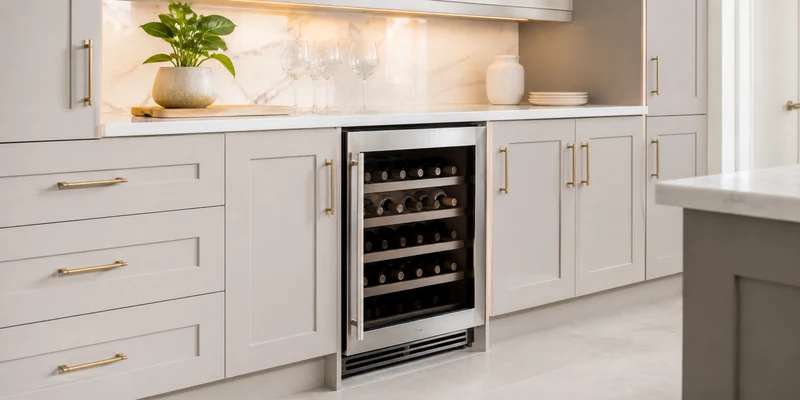
Putting a wine fridge in a cabinet is the move that turns a wall of furniture into a real home bar: bottles behind glass at the right temperature, integrated into the cabinetry instead of humming away in a corner. It is also the install where more wine fridges die young than anywhere else, because a cabinet is a heat trap unless the fridge was designed for one.
This guide covers which fridges can safely live inside cabinetry, how to prepare the opening, and the models owners recommend for furniture and built-in installs. Ten minutes here saves the classic mistake of suffocating a perfectly good freestanding cooler inside a beautiful cabinet.
This article contains affiliate links. If you buy through them, we may earn a commission at no extra cost to you. Learn more.
Quick Answer
Can you put a wine fridge in a cabinet?
- Yes, but only a front-venting, built-in rated model. Freestanding fridges vent through the back and overheat inside enclosed cabinetry.
- The opening needs the clearances from the installation sheet, a grounded outlet within reach, and a floor that carries the loaded weight.
- The easiest route is furniture designed for it: a bar cabinet with a dedicated fridge bay sized for standard 15 or 24 inch built-in units.
The Cabinet Install Checklist
Work through this list before buying either the fridge or the furniture. Every failed cabinet install traces back to one of these rows.
| Requirement | Why it matters | What to confirm |
|---|---|---|
| Front venting | Enclosed cabinets trap exhaust heat | The listing explicitly says built-in or under counter; a front grille is visible below the door |
| Opening size | Fridges need clearance, not a friction fit | The installation sheet’s cutout dimensions, including rear and top clearance, against the cabinet’s interior |
| Power | Cords should not cross open cabinet faces | A grounded outlet inside or directly behind the bay, reachable without extension cords |
| Floor strength | Wine is heavy in bulk | Cabinet base and floor can take the unit plus roughly 3 pounds per bottle |
| Door swing | Furniture doors and fridge doors collide | The fridge door opens fully without hitting cabinet frames; hinge side matches the room |
| Heat neighbors | Ovens and radiators fight the compressor | The bay sits away from heat sources and direct sun |
If you are still choosing between hiding the fridge and letting it stand free, our comparison of freestanding versus built-in wine fridges walks through the trade-offs.
Why Freestanding Units Fail in Cabinets
A freestanding wine fridge sheds heat through its back and sides. Slide it into a snug cabinet bay and that heat has nowhere to go: the air behind the unit warms, the compressor works harder to fight its own exhaust, cooling performance drops, and the machine wears out years early. Several manufacturers state plainly that enclosing a freestanding model voids the warranty, which tells you how often it happens.
Built-in rated models route the whole thermal path through a grille on the front face, below the door. Room air enters, warm air leaves, all on the one surface that stays exposed in a cabinet install. That grille is the single visual cue that separates a fridge you can build in from one you cannot, and it is worth checking in the product photos, not just the title.
Our Top Picks for Cabinet Installs
How we chose: we compared built-in rated models on venting design, installation dimensions, temperature stability, and how consistently owners report successful furniture and cabinetry installs. We work from manufacturer installation specs and recurring owner feedback rather than hands-on trials of our own.
All three are front-venting compressor units; capacity is where they differ. And if you are worried a mail-order fridge cannot match custom cabinetry, the standard 15 and 24 inch widths exist precisely so it can: they are built to the same openings cabinetmakers plan around.
🏆 Best Overall
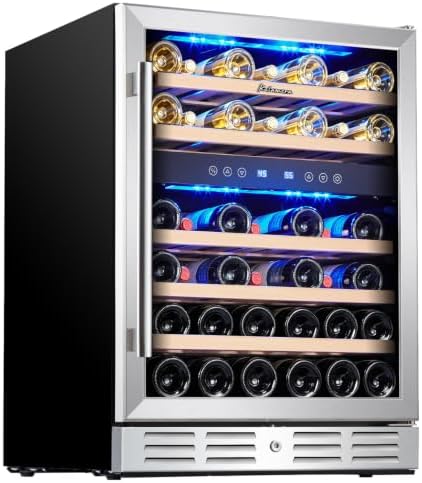
A 24 inch dual zone built-in unit whose front grille and standard width make it the default resident of fridge bays in bar walls and kitchen runs alike. Owners frequently describe flush installs that look factory-made. Full brand detail in our Kalamera review.
💛 Best Value
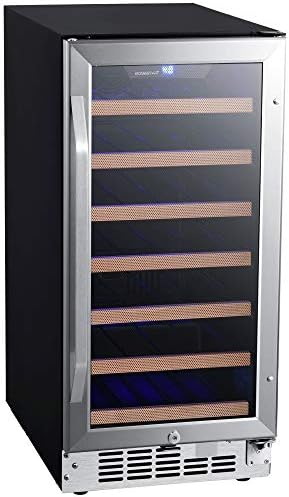
A slim 15 inch built-in cooler for narrow cabinet bays and furniture conversions, where its smaller footprint and front venting fit openings a 24 inch unit never could.
⭐ Upgrade Pick
A 24 inch dual zone unit with premium fit-and-finish and full-extension shelving, for cabinet installs where the fridge face is part of the furniture’s look.

The Furniture-First Route
If the cabinet does not exist yet, flip the order: choose furniture designed around a fridge bay, then drop in a standard-width unit. Purpose-built bar cabinets with fridge space ship with ventilated, correctly sized openings and cord pass-throughs, removing every hazard in the checklist above; our roundup of the bar cabinet with fridge space covers the category, and the broader bar cabinet guide maps the furniture field.
Converting an existing cabinet is workable for confident DIYers: the back panel usually needs cutting away for airflow and cord routing, the base may need reinforcement, and the opening must match a real fridge’s installation dimensions before the saw comes out. Measure the fridge spec first, cut second.
👍 Also Great
A 24 inch front-venting alternative with straightforward controls and a clean stainless frame, regularly mentioned by owners as an uncomplicated drop-in for standard bays.

Installation Day, Step by Step
Let the delivered unit stand upright for the hours the manual specifies before powering on. Confirm the outlet works, slide the fridge partway in, connect power, then push to final position and level the feet so the door seals evenly; an unlevel built-in is the most common cause of doors that drift open. Leave exactly the clearances the sheet asks for, no less because the fit looks nicer tight.
Then set it once, around the commonly recommended mid 50s Fahrenheit for mixed storage with the white zone cooler for serving, and let it stabilize for a day before loading. The reasoning behind those numbers is in our wine storage temperature guide. Twice a year, vacuum the front grille; a dusty grille is the slow-motion version of the blocked-vent mistake.
Common Mistakes to Avoid
- Enclosing a freestanding fridge. The cardinal sin of the category: overheating, poor cooling, early failure, and often a voided warranty. Front-venting or nothing.
- Friction-fitting the opening. Installation sheets specify clearances because the unit needs them. A fit that looks satisfyingly snug is a fit that runs hot.
- Forgetting the outlet until delivery day. Power inside the bay is a ten-minute plan beforehand and an ugly workaround afterward.
- Skipping the weight math. A loaded 46 bottle unit is a substantial object. Confirm the cabinet base and the floor under it are up to the job.
- Ignoring door geometry. A fridge door that cannot open past 90 degrees inside a furniture frame turns every bottom shelf into an argument. Dry-fit the swing before final placement.
Where to Go From Here
For the under-counter version of this install, with its own fit rules, see the under counter wine fridge guide. If you are still sizing the fridge itself, the size guide translates bottle counts into cabinet-relevant dimensions, and the full market overview lives in our best wine fridge roundup.
Frequently Asked Questions
Can any wine fridge go inside a cabinet? No. Only front-venting models rated for built-in use can be enclosed. Freestanding units need open air around their back and sides, and enclosing them causes overheating and early failure.
How much clearance does a built-in wine fridge need? Exactly what its installation sheet specifies, typically a small gap at the rear and top even for front-venting models. The sheet’s cutout dimensions are the numbers to build around, not the unit’s exterior size.
Can I convert an existing bar cabinet to hold a wine fridge? Often yes, if the opening can match a real model’s installation dimensions, the back can be opened for airflow and cords, and the base carries the weight. Furniture with a factory fridge bay is the simpler path.
Does a wine fridge in a cabinet need ventilation? Yes, through its front grille. The install works precisely because the intake and exhaust share the one exposed face, so that grille must stay unblocked and reasonably dust-free.
What size wine fridge fits in cabinets? Built-in units cluster at 15 and 24 inch widths to match standard cabinet openings. Measure your bay against the installation sheet; our size guide covers the classes.
The Bottom Line
A wine fridge in a cabinet works beautifully under three conditions: the fridge is front-venting and built-in rated, the opening matches the installation sheet with power inside, and the structure carries the loaded weight. Choose a 15 or 24 inch built-in unit, or start from furniture with a factory fridge bay, and the result looks custom while running cool for years.