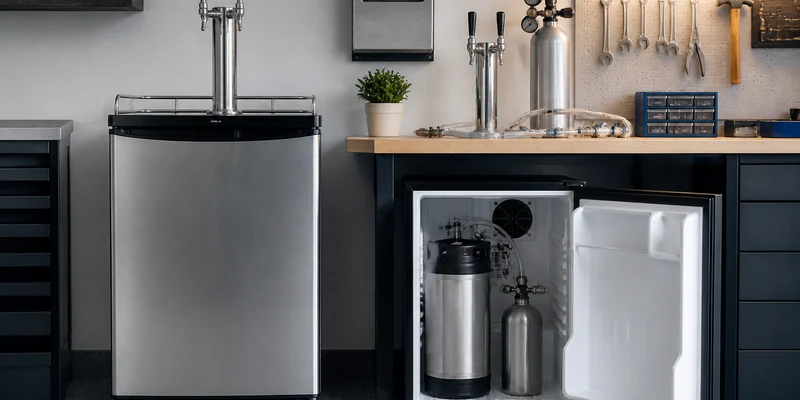
Last updated: August 12, 2026
Every home draft journey hits the same fork: buy a kegerator, or convert a mini fridge with a kit and a drill. Both roads end at the same place, a cold keg pouring through a proper faucet, and both have loud advocates. The kegerator crowd points at engineering; the conversion crowd points at the receipt and the fun of the build.
The honest answer depends on who you are more than on the hardware. This comparison lays the two options side by side, explains where each genuinely wins, and gives a straight recommendation per type of buyer, so you can stop reading forum arguments and start chilling a keg.
Quick Answer
Kegerator or mini fridge conversion: which should you get?
- Buy a kegerator if you want guaranteed keg fit, a warranty, and draft that just works: it is the right call for most non-tinkerers.
- Convert a fridge if you enjoy the project, already own a suitable fridge, or want draft on the smallest budget, and accept the measuring, drilling, and voided warranty that come with it.
- The keg decides for many people: half barrels realistically need a purpose-built unit, while sixtels and corny kegs are conversion-friendly.
The Head-to-Head
This is the whole argument in one table. The rows where your eyebrows move are the rows that should decide it.
| Factor | Purpose-built kegerator | Mini fridge conversion |
|---|---|---|
| Upfront cost | Higher: you pay for cabinet and complete kit together | Lower, especially with a fridge you already own |
| Keg fit | Guaranteed for stated formats, half barrel included | Must be verified; compressor humps rule out many fridges, half barrels rarely fit |
| Effort | An assembly evening | A real project: measuring, drilling, mounting, leak testing |
| Warranty | Covered as sold | Drilling generally ends the fridge’s warranty |
| Temperature control | Designed for draft serving range | Depends on the donor fridge; usually workable, occasionally marginal |
| Looks | Finished appliance with tower and drip tray | From charmingly DIY to surprisingly slick, depending on your effort |
| Flexibility later | Fixed format; upgrades within the unit | Endlessly modifiable; the classic path into homebrew setups |
| Failure modes | Few, covered by support | Yours to troubleshoot, and yours to brag about fixing |
What You Are Really Choosing Between
Strip away the forum noise and the choice is between a product and a project. The kegerator is a product: it arrives with the cabinet, tower, regulator, and coupler engineered as one system, keg fit printed on the listing, and a support line when something misbehaves. The conversion is a project: the kit supplies the draft hardware, but the fit, the drilling, the sealing, and the debugging belong to you. Neither is the wrong kind of fun; they are different kinds.
Money is the argument most people start with, and it is real but narrower than it looks. A conversion with a free or cheap donor fridge undercuts any purpose-built unit convincingly. A conversion where you buy a new mini fridge plus a complete kit closes most of the gap to an entry-level kegerator, and at that point you are paying in effort and warranty rather than saving in cash. Run the real numbers for your situation before the romance of the build decides for you.
The keg question settles many cases
Formats do the deciding more often than philosophy. A half barrel, the full-size keg, fits almost no ordinary mini fridge: the footprint is too wide and the compressor hump too intrusive. Sixtels and Cornelius kegs, tall and narrow, are what conversions are built around. If your local brewery fills sixtels and that is what you will pour, both routes are open; if you dream in half barrels, the decision was made for you before you started reading. The dimensions for every format are in our kegerator size guide.
Which Buyer Are You?
The host who wants it to work: buy the kegerator. You want cold beer at the party, not a debugging session before it; the complete packages in our kegerator guide are sorted by situation, from freestanding to built-in. The tinkerer: convert. The project is half the reward, the result is genuinely good draft, and our conversion kit guide covers the kits and the donor-fridge checks that make it succeed on the first try.
The homebrewer: conversion culture is your native country, and a converted fridge with ball lock fittings is the classic serving setup, though purpose-built homebrew kegerators now compete hard on convenience. The undecided with a spare fridge in the garage: convert cheaply, learn what you value in daily use, and let the fridge teach you whether a purpose-built upgrade is worth it. It is the lowest-risk education in home draft available.
Common Mistakes in This Decision
- Comparing the kegerator’s price to a kit-only price. The honest conversion budget includes the fridge, the complete kit, the CO2 fill, and the hole saw. Compare totals, not headlines.
- Assuming your mini fridge qualifies. Most cube fridges fail on the compressor hump or interior height. Measure against keg-plus-coupler height before buying anything.
- Forgetting the warranty math. Drilling a new fridge trades its warranty for the project. Convert old fridges happily; think twice with new ones.
- Underestimating the finished look you want. If the setup lives in a finished bar rather than a garage, the appliance polish of a purpose-built unit tends to matter more than expected.
- Choosing the project without wanting a project. A conversion that stalls half-drilled in the garage costs more than either finished option. Be honest about your appetite for debugging.
- Ignoring maintenance parity. Both routes need the same line cleaning rhythm forever. Neither choice buys you out of the chore.
Whichever You Choose
The two roads converge on the same responsibilities: steady serving temperature, patient regulator adjustments, and lines cleaned between kegs or every couple of weeks, exactly as laid out in how to clean kegerator lines. A well-kept conversion pours better than a neglected kegerator every time, which is the great equalizer of this debate and the reason the maintenance habit matters more than the badge on the door.
Frequently Asked Questions
Is it cheaper to convert a mini fridge into a kegerator? Usually, and dramatically so with a fridge you already own. Buying a new fridge plus a complete kit narrows the gap to an entry-level kegerator enough that effort and warranty become the real difference.
Can a mini fridge conversion fit a full-size keg? Realistically no: half barrels are too wide for ordinary mini fridges. Conversions are built around sixtels and Cornelius kegs; see our kegerator size guide for the formats.
Does a converted fridge cool beer as well as a kegerator? A healthy donor fridge holds draft serving temperatures for the tall narrow keg formats. Purpose-built units have the edge in stability and in fitting bigger kegs, which is what you are paying for.
Does converting a fridge void its warranty? Drilling generally ends warranty coverage, which is why the ideal donor is an older or secondhand fridge rather than a new purchase.
Which option is better for homebrewing? Both work with ball lock fittings for Cornelius kegs. Conversions are the tradition and the budget route; purpose-built homebrew kegerators trade money for convenience. The deciding factor is your appetite for the project.
The Bottom Line
Buy a kegerator when you want draft as an appliance: guaranteed fit, warranty, and a setup evening instead of a build. Convert a mini fridge when the project appeals, the donor fridge fits a sixtel, and the voided warranty is a fair trade. The beer cannot tell the difference; the difference is which kind of owner you enjoy being.