Last updated: August 12, 2026
A wine decanter is the rare bar accessory that changes what is in the glass, not just how the table looks. Where a whiskey decanter is essentially handsome storage, a wine decanter is a tool: it separates wine from sediment and gives a young, tight red the air it needs to open up before serving. Used at the right moment, it is the cheapest upgrade a bottle can get.
The category confuses people anyway, because the shapes range from simple carafes to swan-necked sculptures, and the advice around decanting swings between “always” and “never”. This wine decanter guide keeps it practical: which type does what, when decanting actually helps, and which vessels are worth owning or giving this holiday season.
This article contains affiliate links. If you buy through them, we may earn a commission at no extra cost to you. Learn more.
Quick Answer
Which wine decanter should you choose?
- For most people: a classic wide-based decanter that holds a full 750 ml bottle with generous air surface. It handles young reds, the most common decanting job.
- Older, sediment-heavy wines want a narrower shape and a careful pour, not maximum aeration.
- Unlike whiskey decanters, wine decanters have no stopper and are not for storage; decant, serve, and wash the same day.
Wine Decanter Types at a Glance
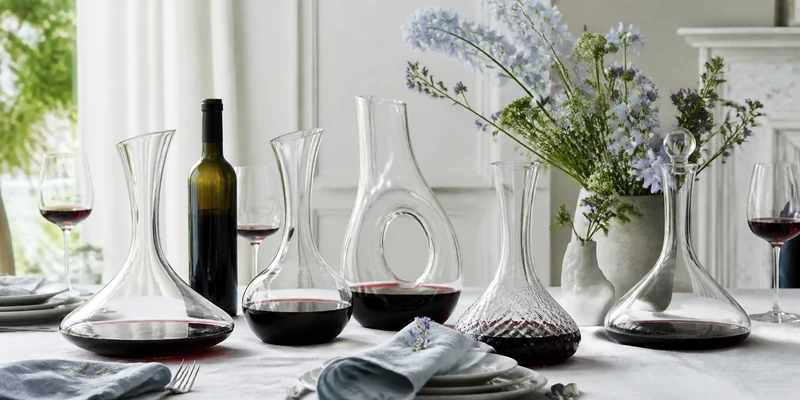
Almost every wine decanter on the market is a variation on one of these shapes. Match the shape to the wine you actually drink and the choice makes itself.
| Type | Shape and purpose | Best for |
|---|---|---|
| Classic / standard | Wide flat base, tapered neck; maximizes air contact | Young reds that need opening up; the all-rounder |
| Swan / duck neck | Curved horizontal body with a long spout | Show-stopping table presence; slow, controlled pours |
| Carafe | Straight-sided vessel, little taper | Casual serving and portioning; minimal aeration |
| Aerating decanter | Built-in aerator or spiraled funnel in the neck | Speeding up the process for weeknight bottles |
| Old-wine decanter | Narrower body, smaller air surface | Mature bottles where sediment removal matters more than air |
Whiskey drinkers in the household should note the rules are completely different on that side of the bar; our best whiskey decanter guide explains why those vessels seal and store instead.
When Decanting Helps (and When to Skip It)
Straight answer: decanting helps most with young, structured red wines, the kind that taste tight or harsh on first pour. Air softens the tannins’ edge and lets aromas unfold; the common recommendation runs from about thirty minutes to a couple of hours depending on the wine’s density. Decanting also serves a second, older purpose: pouring a mature bottle slowly off its sediment so the last glass is as clear as the first.
Skip or shorten decanting for delicate older wines, which can fade quickly with too much air, and treat it as optional for most whites and sparkling wines. There is no prestige in decanting everything; the tool exists for the bottles that benefit. If you keep a range of bottles at home, serving temperature makes at least as much difference as air, and our wine storage temperature guide covers the commonly recommended ranges per style.
Material and Build: What Matters in a Wine Decanter
Because wine spends hours in the vessel rather than months, the leaded-crystal storage caution that dominates whiskey decanter shopping matters far less here; even so, most quality wine decanters today are lead-free crystal or fine glass, which settles the question entirely. What deserves your attention instead is wall thinness and balance. A good decanter pours in one smooth motion without glugging, and thin walls keep it from feeling like a jug.
Check three practical points before buying: the base should fit your table or cart without crowding, the opening should accept a drying stand or bottle brush, and the vessel should hold a full bottle with room to swirl. Sculptural shapes are wonderful until the first wash; the more chambers and curves, the more drying racks and patience you need. Our guide on how to clean a decanter covers the techniques that keep even swan necks spotless.
Wine Decanters Worth Owning
How we chose: we compared widely available wine decanters on pour control, capacity, base stability, ease of cleaning, and the patterns in owner reviews, with attention to how each performs as a gift. Specifications and reviewer consensus, not hands-on testing of our own.
One reassurance for gift-buyers: a classic-shaped decanter is close to a universal fit. Unlike glasses, it does not need to match anything the recipient already owns.
🏆 Best Overall
A classic wide-based decanter from the Austrian house that defined modern wine glassware, in fine lead-free crystal with a clean single-motion pour. The default answer for most tables.

💛 Best Value
A hand-blown lead-free glass decanter that covers the full-bottle, wide-base brief at a fraction of crystal pricing, with an aerating pour built in.
🦢 Best Statement Piece
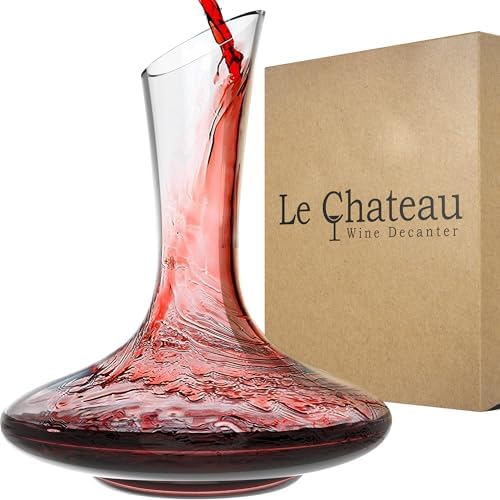
A swan-neck decanter that turns decanting into table theater, with a long spout that naturally slows the pour. The gift pick for hosts who love presentation.

For Enthusiasts and Upgraders
Serious wine households eventually want either more speed or more ceremony. These two picks cover both directions.
⭐ Upgrade Pick
A hand-finished designer decanter from the premium end of the crystal world, bought as much as an object as a tool. For the recipient who already has the classic shape and appreciates glassmaking for its own sake.

💨 Also Great
An aerating decanter or aerator-and-carafe set that shortcuts the waiting for weeknight bottles. Less romance, more practicality, and a popular gift for busy hosts.

Common Mistakes to Avoid
- Storing wine in the decanter. Wine decanters have no seal for a reason. Decanted wine is best finished the same day; after that it fades fast.
- Decanting fragile old wines for hours. Mature bottles can collapse with too much air. Decant them gently for sediment, then serve promptly.
- Buying a shape you cannot clean or dry. Multi-chambered showpieces gather haze in places no brush reaches. Confirm cleaning access first.
- Choosing a decanter that only holds half a bottle. Swirl room matters, but a vessel that cannot take a full 750 ml creates awkward leftovers.
- Running it through the dishwasher. Thin walls and tall shapes rarely survive racks and heat well; handwashing is the norm here too.
- Treating decanting as mandatory. Plenty of wines pour beautifully straight from the bottle. The decanter is a tool, not a ritual obligation.
Building the Wine Corner Around It
A decanter is usually the second purchase in a growing wine setup. Bottles waiting their turn deserve stable, dark storage, which is where our best wine fridge guide comes in, and open-shelf storage is covered in the best wine rack roundup. If the decanter is a present, our gifts for wine lovers guide pairs it with ideas from stocking-size to statement.
Frequently Asked Questions
How long should wine sit in a decanter? Commonly recommended windows run from thirty minutes to about two hours for young reds, with denser, more tannic wines rewarding the longer end. Mature wines need only the pour itself plus a few minutes; taste as you go rather than watching the clock.
Does decanting really make wine taste better? For young, structured reds, air genuinely softens the first-pour harshness, and the effect is widely accepted among wine professionals. For delicate whites and older bottles the benefit shrinks or reverses, so decant with a purpose rather than by default.
Can I use a whiskey decanter for wine? Technically you can pour wine into one, but it does the job poorly: whiskey decanters minimize air exposure and seal shut, the opposite of what young wine needs. The two vessels solve different problems, as our best whiskey decanter guide explains.
How do I dry a wine decanter without water spots? Drain it upside down at an angle on a drying stand so air reaches the interior, then finish the outside with a microfiber cloth. Never towel-dry inside; see how to clean a decanter for the full routine.
Do wine decanters contain lead? Most modern wine decanters are lead-free crystal or plain glass, and wine’s short contact time makes the storage concern far smaller than with whiskey vessels. If you plan to leave liquid in any decanter for long periods, choose an explicitly lead-free piece.
Is a wine decanter a good gift? It is one of the strongest gifts in the wine category: universally useful, visually generous, and available at every budget. A classic shape is the safe choice for a recipient whose taste you do not know in detail.
The Bottom Line
Choose a wine decanter by the wine you actually drink: a classic wide-based vessel for young reds, a narrower shape for mature bottles, and an aerating design if weeknight speed matters most. Prioritize a full-bottle capacity, a controlled pour, and a shape you can clean and dry without gymnastics. Decant when it helps, skip it when it does not, and wash the vessel the same day.