Last updated: August 12, 2026
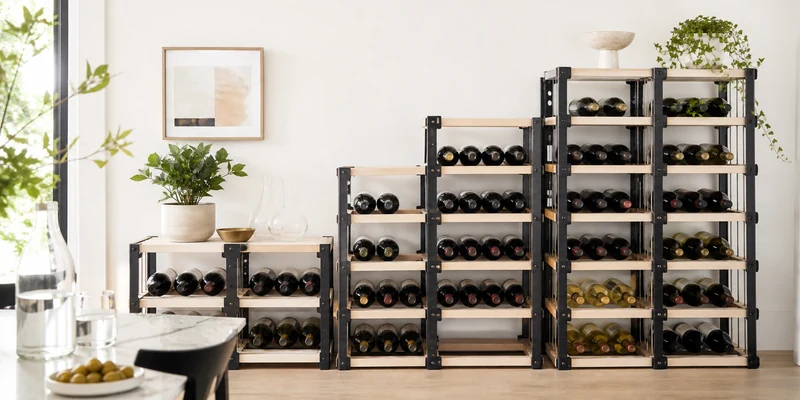
Every wine collection has the same growth curve: a few bottles, then a case, then the moment the rack you bought two years ago is full and the overflow is standing in the pantry. A stackable wine rack is the format designed for exactly that curve. Instead of replacing storage, you add a tier, and the rack grows at the speed you buy.
Stacking wine racks range from polished interlocking sets to bare pine cellar modules, and the choice you make on day one decides how painless year three will be. This guide explains how the systems differ, how high you can safely stack, and which sets we would start a collection on.
This article contains affiliate links. If you buy through them, we may earn a commission at no extra cost to you. Learn more.
Quick Answer
What should you look for in a stackable wine rack?
- A system that interlocks or registers positively between tiers, not modules that merely sit on each other.
- A design likely to stay available, because the whole point is adding matching tiers later; classic pine modules are the safe bet here.
- Sensible stack height: keep freestanding stacks at a height that stays stable when loaded, and secure tall stacks to the wall like any shelving.
Stackable Systems Compared
The word “stackable” covers three genuinely different designs. The differences show up when you add tier four, not on day one.
| System | How it stacks | Best for | Keep in mind |
|---|---|---|---|
| Classic pine modules | Slotted rails that register into the tier below | Cellars, pantries, collections that keep growing | The decades-old standard; unfinished look, easily stained |
| Interlocking finished sets | Pins or grooves lock tiers together | Living spaces where the rack is on show | Buy from a set that will still be sold next year; check tier compatibility |
| Simple stacking cradles | Tiers rest on each other by weight | Short stacks of two or three tiers | Fine low; do not build towers from gravity alone |
Whatever the system, the storage rules do not change: corked bottles lie horizontal, and the stack lives somewhere cool and dark. Our wine storage temperature guide covers the conditions half of that sentence.
The Real Advantage: Buying Storage in Installments
A stackable rack turns a lump purchase into installments matched to your habit. Start with two tiers for the current collection, and when a case of something good follows you home, the fix is one more module rather than a new piece of furniture and a listing for the old one. Per bottle, mature modular systems are among the cheapest storage there is, which is why they have furnished actual cellars for generations.
The catch is commitment: tiers from different systems rarely stack cleanly, so mixing brands later produces a wobbly compromise. Pick a system you can still buy in three years, which argues for generic classics over this season’s design, or buy an extra tier upfront as insurance. If your collection has already stopped growing, a fixed freestanding rack may honestly be the simpler purchase.
How High Can You Stack?
Height is where enthusiasm meets physics. Full bottles run roughly 2.6 to 3 pounds each, so a six-tier stack can be carrying well over a hundred pounds, nearly all of it glass. Low, wide stacks are self-stabilizing; tall, narrow ones become furniture that needs treating like a bookcase. The practical rules: build on a dead-level floor, load every tier bottom-first, and once a stack passes chest height, secure it to the wall with a strap or bracket, exactly as you would shelving of the same height.
Follow the manufacturer’s stated maximum tiers where one is given, and resist the urge to crown a tall stack with loose bottles on top. If you are stacking toward the ceiling in a family home, the wall strap is not optional; it is the difference between storage and a hazard.
Our Top Stackable Picks
How we chose: we compared widely available stackable systems on how positively the tiers connect, material honesty, long-term availability of matching modules, and the stability themes that recur in owner reviews. We rely on specifications and review patterns, not our own testing.
A note on wood: most classic modules ship unfinished, which is a feature, not laziness. Raw pine suits a cellar fine, and an hour with stain matches the modules to any living room before you assemble them.
🏆 Best Overall
Classic slotted pine modules, the format that has stocked home cellars for decades. Cheap per bottle, endlessly extendable, and simple enough that nothing about it can be discontinued.

💛 Best Value
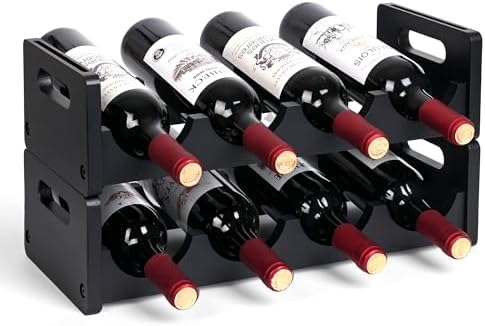
A small two-tier stackable wooden set that starts a collection on a shelf or counter and accepts more tiers when the collection votes. The lowest-commitment entry into modular storage.
🔩 Best in Metal
An interlocking metal stacking system for tighter spots and modern rooms: slimmer rails, positive connections between tiers, and no finishing required.
For the Display-Minded Stacker
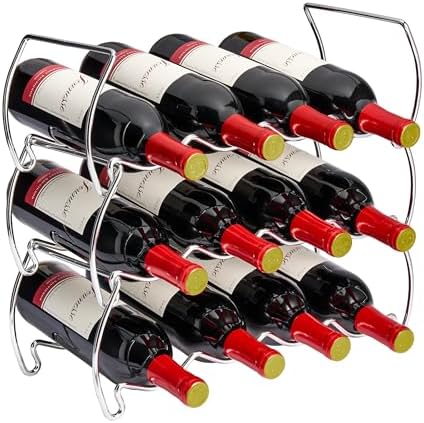
Modular does not have to mean rustic. One more pick for stacks that live in the living room rather than the cellar.
✨ Also Great
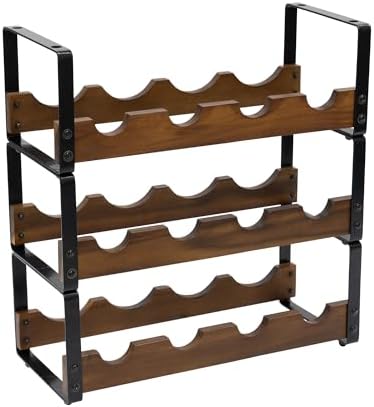
A finished interlocking set in stained wood that reads as furniture while keeping the add-a-tier flexibility. Pair it with matching modules from day one so later additions blend in.
Building a Stack That Lasts
Treat assembly as a five-minute discipline rather than a formality. Level the floor spot first, shimming if the house has opinions, and dry-fit each tier before loading it. Fill from the bottom tier upward so the center of gravity stays low, and keep the heaviest formats, magnums and sparkling bottles, in the lowest rows. Leave a hand’s width of air behind the stack if it stands against an exterior or basement wall.
A growing stack also rewards a little librarianship. Give each tier a loose job, everyday bottles at grab height, keepers low and left alone, open-soon bottles on top, and restocking stays effortless instead of becoming an archaeology project. Some owners tag rows with small clip labels or keep a note on their phone; nothing fancy, just enough that the bottle you are saving does not get opened on a random Tuesday.
Placement follows the usual wine logic: cool, dark, and vibration-free beats convenient. A pantry, a basement corner, or the quiet end of a dining room all work; beside the oven or a sunny window does not. Stacks also make excellent tenants under sloped ceilings and stairs, where standard furniture fits badly, a trick our under stairs wine storage guide takes to its logical conclusion.
Common Mistakes to Avoid
- Mixing stacking systems. Tiers from different designs rarely register cleanly. One system, bought with its future in mind.
- Building tall on gravity alone. Past chest height, strap the stack to the wall like any shelving unit.
- Loading top tiers first. Keep the weight low while you build and while you use it.
- Choosing a boutique system with no restock history. The design you cannot rebuy is a dead end; classics survive.
- Ignoring the floor. An unlevel base multiplies up the stack. Shim first, stack second.
- Forgetting wide bottles. Champagne and Pinot shapes need wider cradles; check spacing before committing the whole collection to narrow slots.
Frequently Asked Questions
Are stackable wine racks stable? Yes, when built low and wide, on a level floor, and loaded bottom-first. Tall stacks are stable only when secured to the wall, the same rule as bookcases of similar height.
How many tiers can I stack? Follow the manufacturer’s maximum where stated. As a practical rule, freestanding stacks are happiest at or below chest height; anything taller should be anchored.
Can I mix different stackable systems? Usually not cleanly. Registration slots, pins, and rail spacing differ between systems, and a stack is only as reliable as its worst joint. Commit to one system.
Do stackable racks store wine properly? They store corked bottles horizontally, which is the commonly recommended position for keeping corks moist. Conditions are up to placement, so give the stack a cool, dark spot; see our wine storage temperature guide.
Should I stain unfinished pine modules? In a cellar or pantry, raw pine is fine and traditional. In living spaces, an hour of staining before assembly makes the stack look like bought furniture; our wood wine rack guide covers finish options.
When is stackable better than one big rack? When the collection is still growing or the space is awkward. If your bottle count has plateaued and the spot is rectangular, a fixed freestanding rack is simpler and often sturdier.
The Bottom Line
A stackable wine rack is storage that grows on your schedule: pick one proven system, build low and level, load from the bottom, and strap anything tall. Favor classics you can still buy tiers for in three years over designs of the moment. Done that way, it is the last wine rack decision you will need to make.