Last updated: August 12, 2026
An outdoor kegerator is the anchor of a serious patio bar: draft beer at the outdoor kitchen, no trips inside, no coolers of melting ice. For anyone who hosts outside through the warm months, it is the single upgrade guests remember.
It is also the category where buying the wrong machine costs the most. A standard indoor kegerator rolled onto a patio faces heat, humidity, rain, and UV that it was never engineered for, and it responds with foamy pours, rust, and an early death. The difference between an outdoor-rated unit and an indoor unit in a stainless costume is real, and it is the core of this guide, along with the picks that hold a steady pour through a hot afternoon.
This article contains affiliate links. If you buy through them, we may earn a commission at no extra cost to you. Learn more.
Quick Answer
What makes a kegerator truly outdoor ready?
- A manufacturer outdoor rating, meaning the compressor, insulation, and electronics are built for outdoor temperature swings and moisture, not just a stainless shell.
- A covered location: even outdoor-rated units want a roof or awning over them, out of direct sun and rain.
- Weatherproof electrical: a grounded outdoor outlet with GFCI protection, never an indoor extension cord across the patio.
Outdoor Rated vs Indoor Kegerator: The Real Differences
The label matters because the engineering underneath it does. This is what an outdoor rating actually buys you compared with a standard indoor unit.
| Feature | Outdoor-rated kegerator | Indoor kegerator outside |
|---|---|---|
| Compressor and cooling | Sized to hold serving temperature in high ambient heat | Struggles or runs constantly on hot days; foamy pours |
| Insulation | Heavier insulation for temperature swings | Standard insulation lets the cabinet warm through |
| Exterior and hardware | Corrosion-resistant stainless, sealed against moisture | Painted steel and mixed hardware that rusts within seasons |
| Electrical | Built for damp outdoor circuits with GFCI | Not designed for outdoor moisture exposure |
| Warranty | Covers outdoor placement | Outdoor use typically voids coverage |
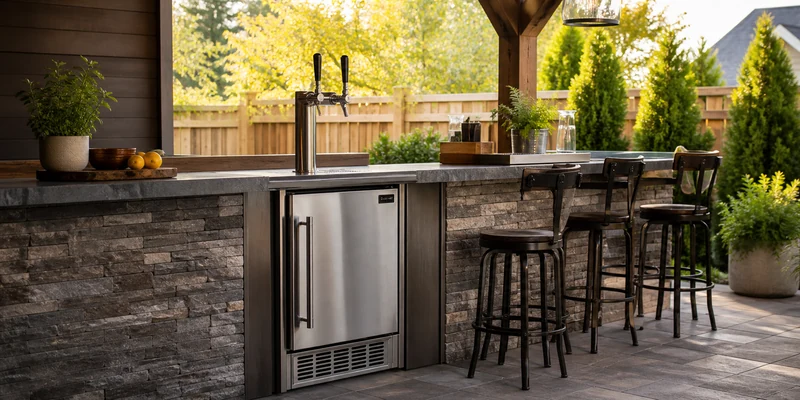
If the unit will slide into an outdoor kitchen island, add one more requirement: front ventilation, the same rule that governs any undercounter kegerator, because an enclosed cabinet traps compressor heat exactly when the summer sun is adding more of it.
Placement: Where Outdoor Draft Succeeds or Fails
Even the toughest outdoor unit is happiest under cover. Direct sun on a stainless cabinet forces the compressor to fight the heat all afternoon, and standing rain finds seams that humidity alone never would. A roofed outdoor kitchen, a covered patio, or a deep awning is the right home; a bare corner of the deck is not. Keep a hand’s width of clearance around any rear-venting unit so air can move, and set it on a level, hard surface so the door seals evenly and the casters do not sink into decking gaps.
Think about the off season at purchase time, not after the first frost. In climates with real winters, most owners either roll the unit into a garage for the cold months or winterize in place: keg out, lines cleaned and dried, water out of the drip tray, and a fitted cover over the cabinet. Casters that roll well and a path wide enough for the cabinet make the autumn migration a five minute job instead of a two person argument.
Outdoor Kegerators Worth Building a Patio Around
How we chose: we compared outdoor-capable kegerators on manufacturer outdoor ratings, cooling performance in high ambient temperatures, corrosion resistance, and how consistently owners report steady pours through summer use. Selections lean on manufacturer specifications and recurring themes in customer reviews rather than any hands-on trial of our own.
A note on the price gap you will notice: outdoor-rated refrigeration is genuinely more expensive to build, so the premium over indoor units is engineering, not branding. If the budget refuses, a standard unit in a garage with a long beer line run is the honest workaround, not an indoor unit on the patio.
🏆 Best Overall
A full-size outdoor-rated kegerator in stainless steel from a premium outdoor refrigeration brand, built to hold serving temperature through hot afternoons on a covered patio. Plan for the tap kit, which is sold separately.

🧱 Best for Outdoor Kitchens
An outdoor-rated undercounter unit with front ventilation, made to build into an island or counter run without overheating. The pick when the draft tower should rise out of the countertop.

🍺 Also Great
An outdoor-capable dual tap unit for patios that host bigger groups, running two sixtels side by side so there are two styles on draft. One tap can be capped when a single half barrel makes more sense.

Running Draft Outside: Temperature, CO2, and the Sun
Outdoor draft asks a little more operational attention than indoor draft, and it repays it. Temperature is the whole game: on hot days the cabinet works harder, and if the interior creeps upward, CO2 comes out of the beer as foam. Give the unit shade, keep the door closed during parties instead of showing off the keg, and pre-chill kegs indoors when you can. Serving pressure stays a regulator conversation, exactly as indoors: start from the manufacturer’s recommendation and adjust in small steps, letting the system settle between changes rather than chasing each pour.
The maintenance rhythm is the indoor one plus weather. Beer lines still need cleaning between kegs or every couple of weeks, as our guide to cleaning kegerator lines lays out, and outdoors you add a wipe-down of the stainless with a cleaner that will not strip the finish, a check that the faucet cap or plug is on when the unit sits idle (insects find beer faucets with impressive speed), and a glance at the door gasket for sun damage each season.
Common Mistakes to Avoid
- Trusting a stainless finish as an outdoor rating. The rating is about the compressor, insulation, and electronics. Look for the manufacturer’s explicit outdoor designation.
- Placing it in direct sun. Even outdoor-rated units lose the fight against full afternoon sun. Cover first, then position.
- Running it from an indoor extension cord. Outdoor refrigeration belongs on a grounded outdoor GFCI circuit. This is a safety point, not a preference.
- Building a freestanding unit into an island. Enclosed installs need front ventilation. A rear-venting cabinet in a masonry island cooks itself.
- Forgetting winter. Decide at purchase whether the unit rolls inside or winterizes in place, and buy the casters and cover accordingly.
- Leaving the faucet open to the patio. Cap or plug faucets between sessions; insects and dust treat an open faucet as an invitation.
Where to Go From Here
An outdoor kegerator rarely stands alone: a rolling outdoor bar cart alongside it carries glassware and the non-draft options, and together they make the patio self-sufficient for a whole evening of hosting. If you are still weighing outdoor placement against a standard setup indoors, the full field of options by situation is in our kegerator guide.
Frequently Asked Questions
Can I use a regular kegerator outside? Not for long. Indoor units are not built for outdoor heat, moisture, or temperature swings; performance suffers quickly and outdoor use typically voids the warranty. A covered porch in a mild climate is the only gray area, and even there an outdoor rating is the safe answer.
Does an outdoor kegerator need to be under a roof? Yes, ideally. Outdoor ratings handle ambient conditions, not direct rain and full sun. A covered patio, awning, or outdoor kitchen roof extends both performance and lifespan.
What size keg fits an outdoor kegerator? Full-size outdoor units generally take a half barrel, with sixtels and quarter barrels fitting easily; compact and undercounter outdoor models may be limited to smaller formats. Check listed interior dimensions against our kegerator size guide.
What happens to an outdoor kegerator in winter? In freezing climates, either roll it into a garage or winterize it in place: remove the keg, clean and dry the lines, empty the drip tray, and cover the cabinet. Compressors and water do not enjoy hard freezes.
Why does my outdoor kegerator pour foam on hot days? Almost always temperature: the cabinet interior has crept above serving temperature, so CO2 breaks out of the beer. Add shade, limit door openings, and let the unit recover before adjusting pressure.
The Bottom Line
An outdoor kegerator is worth the premium only when it is genuinely outdoor rated, placed under cover, and plugged into a proper outdoor circuit. Get those three right, keep up the same line cleaning rhythm as indoors, and plan for winter at purchase time. Do that and the patio becomes the easiest place in the house to host.