Last updated: August 12, 2026
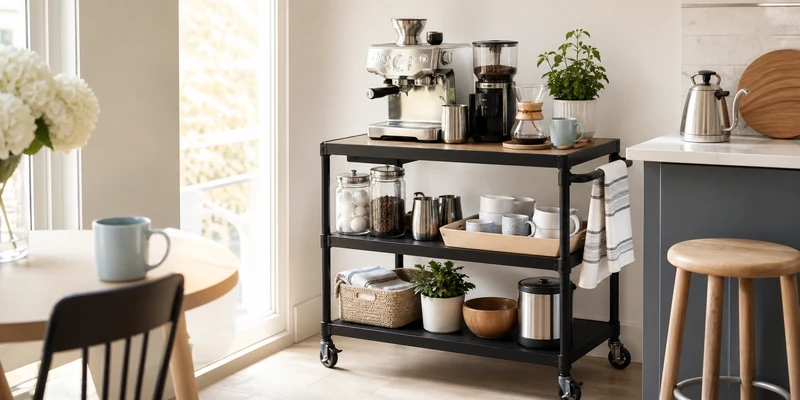
A coffee bar cart takes the most used appliance corner in the house and gives it a proper home. Instead of a coffee maker wedged between the toaster and the fruit bowl, you get a rolling station with the machine on top, mugs and beans below, and the whole morning routine in one place. It frees counter space in the kitchen, and it can live anywhere with an outlet: the dining room wall, the home office, even a bedroom corner.
But a coffee cart carries a different load than a cocktail cart, literally. Espresso machines are heavy, kettles steam, grinders vibrate, and everything involved drips. That changes what to look for: solid tops instead of glass, real weight capacity, wipeable surfaces, and a sensible relationship with the nearest outlet. This guide covers those differences, the layouts that work, and our picks from compact rolling carts to storage heavy stations.
This article contains affiliate links. If you buy through them, we may earn a commission at no extra cost to you. Learn more.
Quick Answer
What should you look for in a coffee bar cart?
- A solid, wipeable top rated for your machine’s weight. Espresso machines and full kettles are heavier than a shelf of bottles.
- Storage that matches your routine: mug hooks or a shelf, room for beans and filters, and ideally a drawer for the small stuff.
- A spot within reach of an outlet. Cords stretched across walking routes are how carts, and machines, come down.
Coffee Cart vs Bar Cart: What Changes
The formats look identical in photos, but the daily job is different. Here is what a coffee station demands that a cocktail cart does not.
| Requirement | Why coffee is different | What to look for |
|---|---|---|
| Top surface | Machines are heavy, hot, and vibrate; drips and grounds are daily | Solid wood, laminate, or metal top with a stated capacity; skip glass |
| Power | The station only works next to an outlet | A parking spot near power; some carts include a cord management hole |
| Water and mess | Refills, drips, knocked grounds, and steam are routine | Wipeable finishes, a tray under the machine zone, nothing precious up top |
| Storage | Mugs, beans, filters, pods, and cleaning bits need daily access | Hooks or a mug shelf, an enclosed bin or drawer, space sized to your gear |
| Mobility | Mostly parked, occasionally rolled for cleaning or hosting | Locking casters so the cart never migrates mid pour |
| Height | You work at this surface every morning | Counter-ish height beats coffee table height for daily use |
If your dream setup leans more furniture than trolley, with closed doors and a hutch for display, that is the cabinet version of this idea, and our coffee bar cabinet guide covers that field. The cart wins on price, footprint, and the ability to move house with you.
Weight First: The Machine Decides the Cart
Start with your heaviest item, because it rules out more carts than any style preference. A drip machine or pod brewer is light enough for almost anything stable. A burr grinder plus kettle setup wants a rigid top that does not bounce while the grinder runs. A proper espresso machine is the demanding case: these are dense appliances, and with a full water tank the total climbs further, so the top shelf’s stated capacity is the specification to check before anything else. Reviews consistently mention wobble under espresso machines as the reason budget carts go back.
Vibration is the quieter issue. A grinder on a thin metal shelf becomes a morning alarm for the whole house, while a thicker wood or laminate top damps it. If your routine includes grinding, favor solid tops and frames with cross bracing, and lock the casters as a habit, since a rolling cart amplifies every vibration a parked one absorbs.
Our Top Coffee Cart Picks
How we chose: we compared carts on top surface strength and material, storage layout, build stability under appliance weight, caster locks, and how consistently owners report using them long term as daily coffee stations. Selections lean on manufacturer specifications and recurring themes in customer reviews rather than any hands-on trial of our own.
One planning note before the list: measure your machine with its lid or hopper open. Bean hoppers and water tank lids need clearance, and a cart that fits the machine closed but not open earns a daily sigh.
🏆 Best Overall
A dedicated coffee bar cart with a solid top, enclosed storage below, and hooks or a shelf for mugs. Designed around the coffee routine rather than adapted to it, which shows in the details.

💛 Best Value
A compact three tier rolling cart with a removable serving tray, the flexible budget answer. Machine on top, mugs in the middle, beans and filters below, and it rolls to wherever the outlet is.

💪 Best for Heavy Machines
A kitchen serving cart with a thick solid top, a lower shelf, and a frame built for real appliance weight. The pick for espresso setups, where rigidity and capacity outrank looks.

If You Want More Storage or More Style
Once the basics are covered, the upgrades run in two directions: enclosed storage that hides the visual clutter of pods and cleaning gear, or a warmer piece that makes the coffee corner part of the room’s decor. Both exist in cart form before you graduate to a full cabinet.
🚪 Best with Enclosed Storage
A farmhouse style coffee cart with a small cabinet base, which keeps the working surface up top and everything unphotogenic behind a door. A half step toward the full coffee bar cabinet.

✨ Also Great
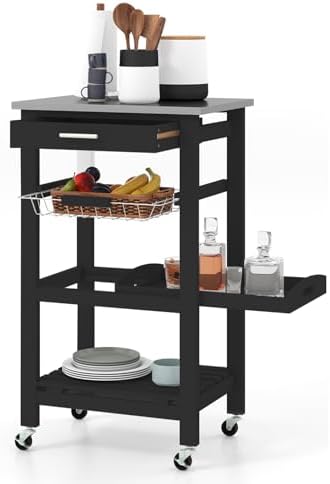
An industrial wood and metal cart with a drawer, which adds the one storage feature most carts miss: a home for spoons, filters, and the small stuff that otherwise lives in a mug.
Setting Up a Coffee Cart That Works Daily
Layout beats decoration on a working cart. Top shelf: machine, grinder, and a small tray that catches drips and grounds, because the tray takes the abuse the finish would otherwise take. Middle zone: mugs where you can grab them one handed, plus the beans or pods in sealed containers, which look better and keep fresher than open bags. Bottom shelf: water, backup supplies, and the cleaning cloth you will actually use because it is in reach. Keep the cord short and along the wall, never across a walking line.
Then let it be pretty, because a coffee cart is decor you use every day. A consistent mug palette, a small plant, and a print above the cart turn a parking spot into a corner, and our coffee bar ideas piece is full of arrangements to borrow. The styling logic is the same as for a cocktail setup, covered step by step in how to style a bar cart, just with a kettle where the shaker would go.
Common Mistakes to Avoid
- Putting an espresso machine on a glass shelf cart. Wrong tool for the load. Heavy machines want solid tops with stated capacity.
- Ignoring the outlet. A coffee cart is furniture with a cord. Pick the parking spot before you pick the cart.
- Buying without measuring the machine open. Hoppers, lids, and tank refills need clearance above the machine, not just around it.
- Skipping the drip tray. Grounds and drips are daily. A tray under the machine zone saves the finish and halves the cleaning.
- Storing beans in the open bag. Sealed containers keep the cart tidy and the coffee fresher. Open bags do neither.
- Letting the cart roll free. Lock the casters and leave them locked. A station that shifts mid pour is a spill schedule.
Where to Go From Here
If the corner deserves real furniture, the coffee bar cabinet guide covers the doors and hutch version of this idea. For inspiration on making the station part of the room, browse our coffee bar ideas. And if the cart might moonlight as a hosting cart on weekends, the main bar cart guide shows what the format can do after dark.
Frequently Asked Questions
Can I use a regular bar cart as a coffee cart? Often, yes, if the top is solid and rated for your machine’s weight. Glass shelf carts and heavy appliances are the combination to avoid; beyond that, the formats overlap heavily.
How much weight can a coffee cart hold? It varies by build, which is why a stated capacity matters more here than anywhere else in the cart world. Espresso machines are dense, so check the top shelf rating specifically, not just the total.
Where should I put a coffee bar cart? Against a wall near an outlet, out of the main walking route, at a comfortable working height. Kitchens, dining rooms, and home offices are the classic spots; anywhere with power works.
What goes on a coffee bar cart? Machine and grinder on top with a drip tray, mugs and sealed bean storage in easy reach, water and backups below. Our coffee bar ideas piece covers layouts and looks in detail.
Is a coffee cart or coffee cabinet better? The cart wins on price, footprint, and mobility; the cabinet wins on storage, looks, and hiding clutter behind doors. Daily-use setups with lots of gear tend to outgrow carts, which is when the cabinet guide becomes the better read.
The Bottom Line
A coffee bar cart is a working station first and decor second, so buy it like an appliance stand: solid top, stated weight capacity, storage that fits your actual routine, and a parking spot next to power. Get those right and the styling, the mugs, the plant, the print above it, turns a corner into the favorite part of the morning. Start with the machine’s weight and the rest of the choice makes itself.