Last updated: August 12, 2026
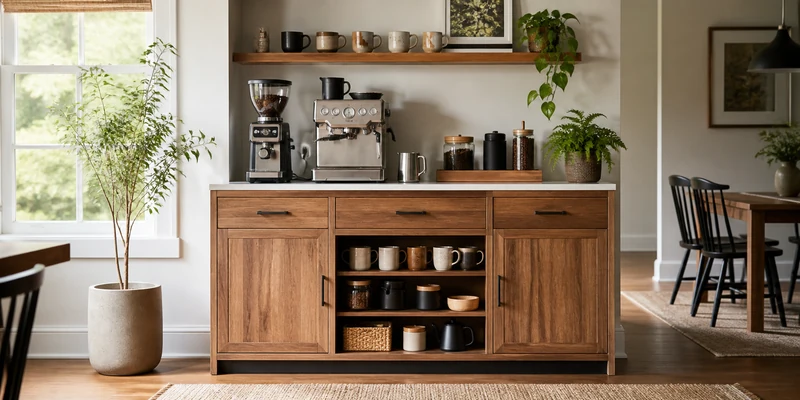
A coffee bar cabinet turns the messiest corner of your kitchen counter into a piece of furniture you actually like looking at. The espresso machine, the grinder, the mugs, the pods, the syrups that multiply on their own: all of it gets a dedicated home with a work surface on top and storage below, and your kitchen counter goes back to being a kitchen counter.
The category has grown fast, and the listings blur together: buffets, sideboards, hutches, and barn-door cabinets all now market themselves as coffee bars. The differences that matter are practical ones, like whether your machine fits under the hutch and where the cords go. This guide walks through those checks, then gives our picks for different kitchens, budgets, and styles.
This article contains affiliate links. If you buy through them, we may earn a commission at no extra cost to you. Learn more.
Quick Answer
What should you look for in a coffee bar cabinet?
- Clearance first. Measure your tallest machine with its lid or bean hopper open, then check it against the space between countertop and hutch shelf. This is the spec people miss most.
- A wipeable, sturdy top. Coffee gear is heavy and drippy; you want a surface that shrugs off water rings and holds a machine without flexing.
- Cord and storage logic. Look for cord holes or open backs near outlet height, plus a mix of closed storage for clutter and open shelves for the things you grab daily.
What to Check Before You Buy
Every row in this table is something you can verify from a product listing before spending anything. Run your shortlist through it and most contenders eliminate themselves.
| What to check | Why it matters | What to look for |
|---|---|---|
| Counter-to-hutch clearance | Espresso machines and pod brewers need room above them to open lids and refill water tanks | Listed shelf clearance that beats your tallest machine in its open position, with a couple of inches to spare |
| Top surface | Coffee means drips, steam, and hot carafes every single day | A sealed or laminated top you can wipe, not raw or lightly finished wood that stains and swells |
| Weight handling | A full espresso setup with a grinder is heavier than most decor a sideboard expects | Solid construction, a stated top capacity where available, and no wobble reports in reviews |
| Cord management | Two or three appliances mean two or three cords fighting for one outlet | Pre-cut cord holes or an open back section, and a spot near a wall outlet in your home |
| Storage mix | Mugs, pods, beans, syrups, and filters all want different homes | Closed doors or drawers for the clutter, open shelving or hooks for mugs and daily gear |
| Footprint and height | Coffee stations often land in dining rooms, nooks, and hallways, not just kitchens | Check the listed width and depth against your wall, and the total height against anything above it |
| Assembly quality | Nearly everything in this category ships flat | Reviews that mention clear instructions and hardware that lines up; shipping weight as an honest materials clue |
Hutch, Buffet, or Barn Door: Picking Your Format
Most coffee bar cabinets fall into three formats, and the right one depends on your gear and your wall. A hutch-style cabinet gives you a framed coffee station with shelves above the counter for mugs and jars; it looks the most intentional but demands that clearance measurement. A buffet or sideboard keeps everything below counter height, leaving unlimited headroom for tall machines and a long styling surface on top; it is the flexible choice, and it can migrate to dining room duty later. A barn-door or accent cabinet trades some practicality for personality, which is why it anchors so many farmhouse coffee corners.
If you are still deciding between a fixed cabinet and something you can roll away, a cart is the third path, and our coffee bar cart guide covers when wheels beat furniture. For layout inspiration before you commit to a format, coffee bar ideas shows how real corners, walls, and nooks get turned into stations.
Our Top Coffee Bar Cabinet Picks
How we chose: we compared widely available coffee bar cabinets on clearance and storage layout, top surface durability, cord management, and how consistently owners report solid assembly and stability. Selections lean on manufacturer specifications and recurring themes in customer reviews rather than any hands-on trial of our own.
One note before the list: whatever you choose, plan an assembly afternoon. Owners across this category report that patience with the bolts is the difference between a cabinet that feels like furniture and one that feels like a kit.
🏆 Best Overall
A hutch-style coffee bar cabinet with shelves above the counter, closed storage below, and cord holes where they belong. The complete station look most buyers are actually picturing.

💛 Best Value
A compact buffet-format cabinet that undercuts most of the category while keeping adjustable shelves and a usable top. A strong first coffee station that can move rooms later.

🚪 Best Farmhouse Style
A barn-door cabinet in a rustic finish that makes the coffee corner the warmest spot in the kitchen. Choose it for the look, and give tall machines the top rather than an inside shelf.

Picks for Small Kitchens and Upgraders
Not every home has a spare wall for a full buffet, and not every buyer wants entry-level pricing. These two round out the field for the tight-on-space crowd and for anyone furnishing a room where the coffee station has to look like it was always part of the plan. If your whole bar setup is squeezing into a small footprint, our guide to small home bar ideas pairs well with the slim pick below.
🏙️ Best for Small Spaces
A narrow cabinet that fits hallway nooks and apartment kitchens where a full sideboard will not. Less counter, same principle: machine on top, clutter behind doors.
⭐ Upgrade Pick
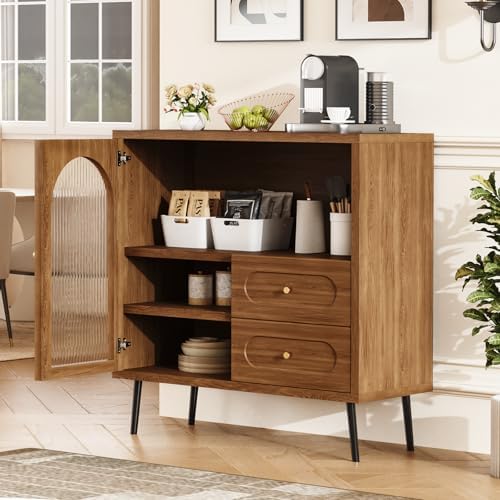
A furniture-grade sideboard with the joinery and finish to hold its own in a dining room, not just a kitchen corner. For buyers who want the coffee station to read as real furniture first.

Setting Up the Station: Placement and Daily Use
The best spot for a coffee bar cabinet is against a wall with an outlet, out of the main kitchen work triangle, and ideally near where mornings actually happen. Dining room walls, breakfast nook corners, and the dead wall between kitchen and living room are the classic wins. Leave the top zoned like a tiny counter: machine and grinder on one side, a small tray for daily-use items in the middle, and a corner for the things that make it feel like yours. Keep a waterproof mat or tray under the machine, because every coffee setup drips eventually, and even a sealed top appreciates the help.
Inside the cabinet, the winning pattern owners describe is simple: heavy backup stock low, daily refills at hand height, and one drawer or bin dedicated to the small chaos of filters, scoops, and pod varieties. If your station will double as an evening drinks spot, our home bar essentials checklist covers the crossover gear, and the full-size version of that idea lives in our best bar cabinet guide.
Common Mistakes to Avoid
- Skipping the open-lid measurement. A brewer that fits closed but cannot open under the hutch shelf gets refilled at arm-wrenching angles forever. Measure the machine open.
- Buying for the photo, not the gear. Styled listing photos show two mugs and a plant. Inventory your actual equipment first, then match storage to it.
- Ignoring the outlet. A cabinet on a wall with no outlet means extension cords across a walkway. Pick the wall before you pick the cabinet.
- Underestimating weight. An espresso machine plus grinder plus a full water tank adds up fast. Thin-shelved bargain cabinets sag under it.
- Choosing all-open storage. Open shelving looks great on day one and cluttered by month two. You want at least some doors or drawers.
- Forgetting the drip reality. Raw wood tops stain and swell around coffee spills. A sealed top or a protective tray saves the finish.
Where to Go From Here
If you are still shaping the corner itself, coffee bar ideas walks through layouts from single shelves to full hutch walls. If mobility matters more than mass, the coffee bar cart roundup covers the rolling alternative. And if your ambitions run past coffee into a full drinks setup, the best bar cabinet guide is the natural next stop.
Frequently Asked Questions
What is a coffee bar cabinet? A piece of freestanding furniture, usually a buffet, sideboard, or hutch cabinet, set up as a dedicated coffee station: machines on the work surface, mugs and supplies in the storage below and above. It moves the coffee operation off your kitchen counter.
How much clearance do I need for a coffee maker? Measure your tallest machine in its open position, lid up or hopper open, and add a couple of inches for comfortable refilling. Compare that number to the listed clearance between countertop and hutch shelf, or choose a hutch-free buffet for unlimited headroom.
Can I use a regular sideboard as a coffee bar? Yes, and many people should. A sideboard offers a long top with no clearance limits and generous closed storage. You give up the built-in look of a hutch and may need to add your own cord routing.
Where should a coffee bar cabinet go? Against a wall with an outlet, outside the main cooking zone: dining rooms, breakfast nooks, and kitchen-adjacent walls are the usual winners. Morning traffic flow matters more than room labels.
What goes in a coffee bar cabinet? Machines and grinder on top; mugs, beans, pods, syrups, filters, and backup stock inside, with daily items at hand height. One tray or bin for small accessories keeps the drawer chaos contained.
Is a coffee bar cabinet worth it in a small kitchen? Often more so, because it reclaims scarce counter space. Slim cabinets and narrow sideboards fit hallway nooks, and our small home bar ideas guide shows how tight corners still work.
The Bottom Line
The best coffee bar cabinet is the one your tallest machine fits in with its lid open, standing on a wall with an outlet, with a wipeable top and a sensible mix of open and closed storage. Formats are a style choice; clearance, cords, and surface are the real decisions. Get those right and the coffee corner runs itself.