Last updated: August 12, 2026
A bar cart for small spaces has to earn its floor area twice over. In a studio or a compact apartment, every square foot is contested, and a cart that just holds bottles is a luxury; a cart that holds bottles, works as a side table, and rolls out of the way when friends come over is furniture that pays rent. The good news is that the small format is where the cart idea shines brightest, because the alternative, a full cabinet, is exactly what a tight room cannot spare.
The trick is knowing which small formats actually work. Slim rectangles slide into gaps beside sofas, round carts soften tight corners and shave off shin catching corners, and vertical three tier builds store upward what they cannot store outward. This guide covers how to measure, which shapes suit which spots, and our picks for rooms where inches are the whole conversation.
This article contains affiliate links. If you buy through them, we may earn a commission at no extra cost to you. Learn more.
Quick Answer
How do you pick a bar cart for a small space?
- Measure the gap first: beside the sofa, under a window, or the corner behind the door, then buy to the smaller dimension, not the average.
- Store vertically: a slim three tier cart holds as much as a wide two tier one in a fraction of the footprint.
- Make it multitask: a cart at side table height, or a clear acrylic build, serves the room all week and hosts on weekends.
Small Space Formats and Where They Fit
Small rooms are won by shape, not just by shrinking. Each of these formats solves a specific spot most homes have.
| Format | Best spot | Why it works |
|---|---|---|
| Slim rectangle | The gap beside the sofa or between window and wall | Narrow depth slides into leftover strips of floor no other furniture uses |
| Round two tier | Tight corners and walking routes | No corners to catch shins; reads smaller than its actual diameter |
| Vertical three tier | Any spot with a normal footprint but unused height | Adds a full shelf of capacity without adding an inch of floor |
| Acrylic or glass | Rooms that feel visually full | Transparency stores a whole bar without adding visual weight |
| Side table hybrid | Next to the seating, doing double duty | One piece of furniture, two jobs; the small space ideal |
| Folding or tray-top | Homes that host rarely | Sets up for the evening, then shrinks or disperses afterward |
Measure before you fall in love. Note the width of the gap, the depth to the walking line, and any sill or radiator height the cart must clear, then shop with those three numbers in hand. Owners who buy on looks and return on dimensions are the most common storyline in reviews of this category.
Vertical Thinking: Small Footprint, Real Capacity
The math of small carts favors height. Going from two shelves to three adds half again the storage on the identical footprint, which is why the slim tower format has taken over apartment listings. Look for a rail or lip on every shelf, since narrow carts are easier to tip a bottle from, and check the clearance between tiers against your tallest bottle, because compact builds cheat vertical space more often than full size ones do.
Weight discipline matters more on a narrow cart, too. A slim footprint means a higher center of gravity relative to its base, so the habit of loading heavy bottles low and glassware high is not just styling advice here, it is stability. Locking casters, at least two, finish the job: a light cart on a wood floor migrates when bumped, and small rooms bump furniture more.
Our Top Small Space Picks
How we chose: we compared compact carts on true footprint, shelf clearance, capacity per square foot, rail and edge design, caster locks, and how consistently owners in apartments report them fitting where standard carts did not. Selections lean on manufacturer specifications and recurring themes in customer reviews rather than any hands-on trial of our own.
A reassurance before the list: small does not have to mean starter quality. The best compact carts use the same materials as their full size siblings; they just spend the inches more carefully.
🏆 Best Overall
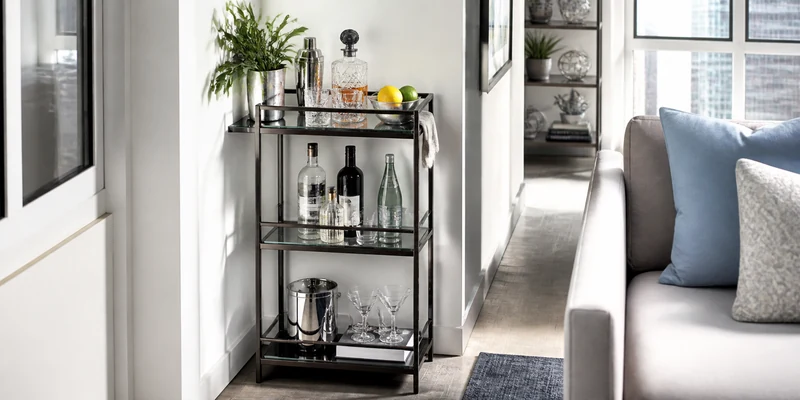
A slim three tier rolling cart with built in wine and glass holders, narrow enough for the sofa side gap and tall enough to hold a complete starter bar. The format that made small space carts a category.

💛 Best Value
A compact round two tier cart in a gold tone finish, the corner friendly shape at an entry price. Small enough for a tight corner, festive enough to be the room’s one glam moment.

🍷 Best with Built-In Storage
A narrow serving cart with wine bottle holders and stemware storage worked into the frame, so the specialized storage that normally needs a cabinet fits in a strip of floor.

The Invisible Option for Rooms That Feel Full
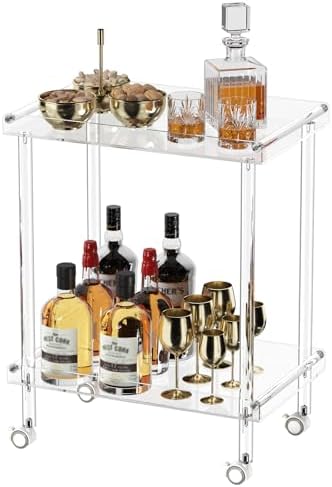
Sometimes the constraint is not floor space but visual space: the room technically has the square feet, it just cannot take another block of furniture without feeling stuffed. That is the case transparent furniture was made for, and it is common enough in small homes that we gave the material its own guide in the acrylic bar cart guide.
👻 Also Great
A clear acrylic two tier cart that holds a full setup while barely registering in the room. For studios and visually busy rooms, transparency is the biggest space trick there is.
Making One Cart Do Two Jobs
In a small home, the cart that survives is the one with a weekday job. Parked at sofa arm height it is a side table; under the window it is a plant stand with a bar shelf below; in the kitchen gap it is overflow counter space. Keep the top shelf half empty on weekdays so it can hold the coffee cup and the book, and let the lower shelves be the bar. When guests come, the cart rolls to the action and the top clears for service, which is a thirty second transformation owners consistently rate as the format’s best feature.
Editing is the other discipline. A small cart curates; it does not archive. Keep the bottles you actually offer guests, the glassware you use in a normal month, and one or two good looking tools, and let the backups live in a kitchen cupboard. The full method for making a small cart look intentional instead of crowded is in how to style a bar cart, and the sensible shopping list is in bar cart essentials.
Common Mistakes to Avoid
- Buying on looks, returning on dimensions. Measure the gap, the depth, and the clearance heights before browsing, and buy to the smaller number.
- Ignoring shelf clearance. Compact carts trim vertical space first. Check the gap between tiers against your tallest bottle.
- Loading a narrow cart top heavy. Slim formats tip more easily. Heavy low, light high, always.
- Skipping rails on a small cart. Less shelf area means bottles live closer to the edge. Every tier needs a lip or rail.
- Treating it as storage instead of a station. Overstuffed small carts read as clutter, not as a bar. Curate hard; store backups elsewhere.
- Forgetting the second job. In a small home, a cart that only hosts on Saturdays loses its floor space argument. Give it a weekday role.
Where to Go From Here
If the whole home bar has to fit in a small footprint, not just the cart, our small home bar ideas piece covers layouts from bookshelf bars to closet conversions. When closed storage matters more than mobility, the compact end of the cabinet world is covered in the small bar cabinet guide. And for the full field across every style and space, start at the main bar cart guide.
Frequently Asked Questions
How small can a bar cart be and still be useful? A cart the size of a side table holds a surprising amount if it has three tiers and rails: a handful of bottles, glassware for four, and tools. Below that, a tray on a shelf does the same job with even less floor.
Where do you put a bar cart in a small apartment? The classic spots are the gap beside the sofa, under a window, the corner behind the door, and the dead strip at the end of a kitchen run. Measure the spot first and buy to it, not to the product photo.
Round or rectangular bar cart for a small room? Round carts suit corners and walking routes because they have no shin catching edges and read smaller than they are. Slim rectangles store more per inch and fit gaps. Let the actual spot decide.
Can a bar cart double as a side table? Yes, and in small homes it should. Pick one at seating arm height, keep the top shelf half clear on weekdays, and the cart earns its footprint all week instead of only on weekends.
Is a small bar cabinet better than a small cart? A compact cabinet hides more and holds more, but it cannot move and costs more floor presence. If you host rarely and hate visual clutter, see the small bar cabinet guide; if flexibility wins, the cart does.
The Bottom Line
The right small space bar cart is bought with a tape measure: fit the gap, store vertically, insist on rails and locking casters, and load heavy things low. Give the cart a weekday job as a side table or plant stand and it justifies every inch it occupies. Small rooms do not need less of a bar, just a smarter shape for it.