Last updated: August 12, 2026
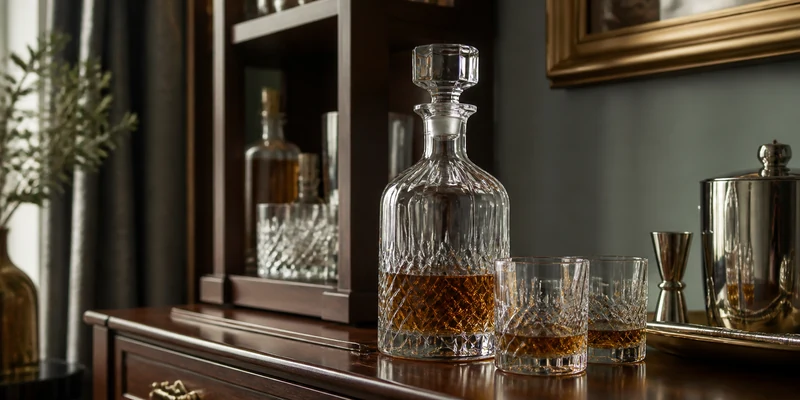
A crystal whiskey decanter is the piece most people picture when they imagine a proper home bar: heavy in the hand, sharp-cut facets throwing light, a stopper that lands with a satisfying weight. Crystal earns that image honestly. It refracts light more than ordinary glass, takes deep decorative cuts without weakening, and simply feels more substantial on a cabinet or cart.
But crystal is also the corner of the decanter market where marketing gets slippery. The word covers everything from traditional leaded crystal to modern lead-free formulations to plain glass with an optimistic product title, and the differences matter for how you can actually use the vessel. This guide sorts the terminology out honestly, then gives you crystal picks that hold up in daily use and under a Christmas tree.
This article contains affiliate links. If you buy through them, we may earn a commission at no extra cost to you. Learn more.
Quick Answer
Which crystal whiskey decanter should you choose?
- Choose lead-free crystal if the whiskey will live in the decanter. Common guidance advises against storing spirits in leaded crystal for extended periods.
- Leaded crystal is best treated as serveware: beautiful for an evening pour, then emptied or reserved for display.
- Whatever you choose, it is handwash only. Dishwashers cloud crystal permanently.
Crystal Types at a Glance
This table is the short version of the material question. If a listing does not say which of these categories it falls into, assume the least flattering one until the description or reviews prove otherwise.
| Type | What it is | Best use |
|---|---|---|
| Leaded crystal | Traditional crystal containing lead oxide; maximum sparkle, weight, and ring | Serving and display; common guidance says not for long-term spirit storage |
| Lead-free crystal | Modern crystal using barium, zinc, or potassium compounds instead of lead | The all-rounder: near-crystal brilliance plus worry-free storage |
| Crystalline / crystal glass | Marketing terms for clear glass with modest mineral content | Everyday use; durable and inexpensive, less fire in the light |
| Soda-lime glass | Standard glassware material, sometimes sold under crystal-adjacent names | Daily-driver decanters; safe, sturdy, easiest to care for |
The storage question deserves more than a table row, so we wrote a full guide to the lead free crystal decanter category, including how to tell what a listing is actually selling you.
The Lead Question, Answered Honestly
Traditional crystal contains lead oxide, often around a quarter of the material by weight in the classic formulations, and that is exactly what gives it the brilliance and heft people love. The catch is equally well established: when spirits sit in leaded crystal for long periods, trace amounts of lead can migrate into the liquid. That is why the commonly repeated advice from health authorities is to avoid storing whiskey, wine, or any beverage in leaded crystal for weeks or months at a time. Serving from a leaded decanter over the course of an evening is generally regarded as a much smaller exposure, which is why heirloom crystal still comes out at holidays.
Lead-free crystal changed the calculation. By swapping lead oxide for minerals like barium, zinc, or potassium compounds, manufacturers kept most of the optical drama while removing the storage concern entirely. Honest assessment: side by side in bright light, top-shelf leaded crystal still has a touch more fire. In normal room light, on a normal bar cabinet, almost nobody can tell, and the lead-free piece is the one you can leave filled year round.
What Cut and Shape Say About Quality
Deep, precise cutting is where crystal shows off, and it is also a quick quality signal. On well-made pieces the facets are sharp-edged, symmetrical, and polished inside the grooves; on cheap ones the pattern looks softened, as if slightly melted, because it was molded rather than cut. Weight is the second signal. Crystal formulations are denser than plain glass, so a genuinely crystal decanter has a heft that surprises people picking it up for the first time.
Shape is more forgiving, but two rules hold. A wide, stable base matters more for a whiskey decanter than for wine, because this vessel lives on a cart or cabinet full time rather than appearing at dinner. And the neck should accept a cleaning brush or a rolled cloth, since crystal’s cuts hide water spots and residue more than smooth glass does. Our guide on how to clean a decanter shows how to keep the facets brilliant without scratching them.
Crystal Picks Worth the Shelf Space
How we chose: we compared widely available crystal decanters on material transparency (what the maker actually claims), stopper fit, cut quality, stability, and recurring themes in owner reviews, especially around gifting and long-term clarity. No hands-on testing of our own, just specifications and the patterns in thousands of customer experiences.
All three picks below are lead-free, because for most buyers the whole point of a decanter is leaving whiskey in it. If you own inherited leaded crystal, keep using it for what it does beautifully: the pour, not the storage.
🏆 Best Overall
The classic diamond-and-wedge cut executed in non-leaded crystal, with real weight and a stopper that seats snugly. Reads as traditional heirloom crystal without the storage caveat.

💛 Best Value
A lead-free crystal decanter sold as a boxed set with matching cut glasses, undercutting most standalone crystal pieces. Owners consistently mention it presents far above its price bracket.

⭐ Upgrade Pick
A sculptural, angular crystal decanter for bars that lean modern. Faceted like a gem rather than a Victorian sideboard piece, and heavy enough to feel like the upgrade it is.

Worth knowing at the top end: names like Waterford represent the heritage leaded-crystal tradition, and a piece like that is bought as an heirloom and serveware rather than a storage vessel. Beautiful, giftable, and a different category from the everyday decanters above.
Caring for Crystal So It Stays Brilliant
Crystal’s needs are simple but strict. Handwash only, in warm rather than hot water, with a mild unscented detergent used sparingly; strong fragrances linger in the vessel and reach the next pour. Never twist a hand or brush hard against the interior, and never subject crystal to sudden temperature swings, which can crack it. Dry upside down at an angle on a rack or drying stand so air circulates, then finish the outside with a microfiber cloth to keep the facets sharp under light.
Storage matters too. Keep the stopper seated when the decanter is filled, but leave an empty decanter unstoppered so trapped moisture cannot turn musty. And place crystal where sunlight will not hit the whiskey for hours a day; the light show is tempting, but sun degrades the spirit inside.
Common Mistakes to Avoid
- Storing whiskey in leaded crystal indefinitely. The commonly repeated guidance exists for a reason. Serve from leaded crystal; store in lead-free.
- Trusting the word “crystal” in a title. Look for an explicit material statement such as “lead-free crystal” or “non-leaded”. Vague listings usually mean plain glass.
- Dishwashing it even once. Detergent and heat etch crystal into permanent cloudiness. There is no polishing that back.
- Grabbing a decanter by the neck with wet hands. Most breakage happens at the sink. Support the body with both hands.
- Storing an empty decanter stoppered. Trapped moisture turns stale and musty. Let empty vessels breathe.
- Ignoring stopper reviews. A rattling stopper on a crystal decanter undermines the whole purchase. Reviews expose loose fits fast.
Where Crystal Fits in the Bigger Picture
A crystal decanter tends to anchor whatever it stands on, so give it a stage worth anchoring. Our overview of the best whiskey decanter options puts crystal in context against glass and novelty designs, and if the decanter is a gift, the boxed options in our whiskey decanter set guide arrive ready to wrap. For the room itself, a proper bar cabinet gives crystal the backdrop and the safe storage it deserves.
Frequently Asked Questions
How can I tell if a decanter is real crystal? Weight and optics are the giveaways: crystal is noticeably heavier than glass of the same size, refracts light into more fire, and rings when gently tapped. On listings, look for an explicit material claim rather than the word crystal in the title alone.
Is it safe to use a leaded crystal decanter? Common guidance treats serving from leaded crystal during an evening as a small exposure, while advising against storing spirits in it for weeks or months. If you want a permanently filled decanter, choose lead-free; our lead free crystal decanter guide lists the good ones.
Why is crystal handwash only? Dishwasher heat and abrasive detergent micro-etch the surface, which shows as permanent cloudiness. Crystal also tolerates temperature swings poorly. Warm water, mild soap, and air drying keep it clear for decades.
Does whiskey taste different from a crystal decanter? No credible difference comes from the crystal itself in normal serving use. The appeal is visual and ritual: the weight, the clarity, and the presentation of the pour.
What makes crystal sparkle more than glass? Added minerals, traditionally lead oxide and in modern lead-free crystal compounds like barium or zinc, raise the refractive index so light bends and splits more inside the material. Deep cutting multiplies the effect.
Is a crystal decanter a good gift? It is one of the most reliably impressive home bar gifts, particularly as a set with glasses. Favor lead-free crystal so the recipient can store whiskey in it without caveats, and see our gifts for whiskey lovers roundup for pairing ideas.
The Bottom Line
Buy lead-free crystal if whiskey will live in the decanter, reserve leaded crystal for serving and display, and treat any crystal as handwash-only regardless of price. Judge quality by explicit material claims, sharp cutting, real weight, and a stopper that seats snugly. Do that and a crystal decanter is a purchase, or a gift, that outlasts trends by decades.