Last updated: August 12, 2026
Coffee bar ideas usually start the same way: a photo saved from someone else’s kitchen, a machine that deserves better than the corner it lives in, and a vague sense that your mornings could feel more intentional. The good news is that a home coffee bar is one of the most forgiving interior projects there is. It can be a single shelf or a full hutch wall, and the difference between charming and cluttered is planning, not budget.
This guide walks through the setups that actually work, from rental-friendly nooks to dedicated cabinet stations, with honest notes on how much space and effort each one wants. Along the way you will find the layout rules that make any version function: water, power, and a surface that can take a drip.
Quick Answer
What are the best coffee bar ideas for a home?
- Match the format to your space: a tray or shelf station in tight kitchens, a cart in rentals, a sideboard or dedicated coffee bar cabinet where you have a wall to give.
- Every version needs the same three things: an outlet, a wipeable surface, and storage within arm’s reach of the machine.
- Start smaller than the inspiration photos. A tidy tray station gets used every morning; an overbuilt hutch becomes a display shelf.
Coffee Bar Formats Compared
Every coffee bar is one of these six formats wearing different decor. Find your row by the space you can honestly give up, then build from there.
| Format | Space needed | Best for |
|---|---|---|
| Tray station on the counter | Two feet of countertop | Renters, tight kitchens, and anyone testing whether they will actually use a coffee corner |
| Floating shelves over a counter zone | One wall section, no floor space | Small kitchens that need storage to go up instead of out |
| Rolling coffee cart | A slot roughly two feet wide | Rentals and multi-use rooms, since the whole station can relocate |
| Sideboard or buffet conversion | A four-to-five-foot wall | Dining rooms and open plans; doubles as serving furniture when guests come |
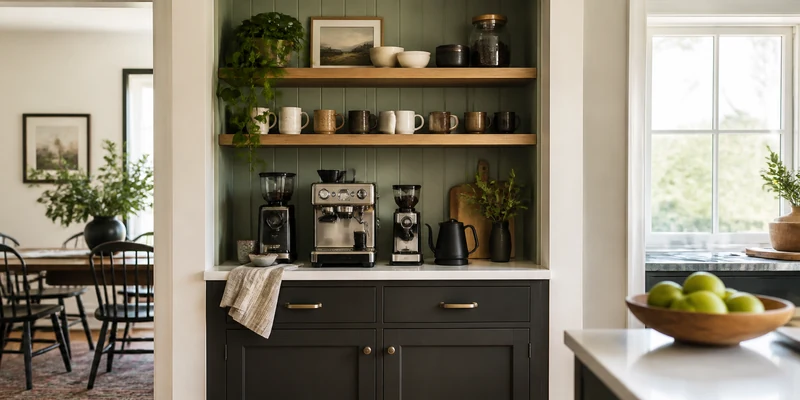
| Dedicated coffee bar cabinet with hutch | A four-foot wall plus height | Households that want the full framed-station look with everything in one piece |
| Closet or nook build-in | An existing recess or unused closet | Homes with a dead corner to reclaim; the most custom-feeling result |
If the cabinet route is calling, our guide to the best coffee bar cabinet covers what to check before buying one, from machine clearance to cord holes. Consider that the get-the-look shortcut for four of the six rows above.
The Three Rules Every Coffee Bar Shares
Format is taste; function is universal. First, power: the station lives where the outlet is, and no amount of styling survives an extension cord across a doorway. Count your plugs, too, since a machine, grinder, and kettle can outnumber a single duplex outlet fast. Second, surface: coffee drips, steams, and scatters grounds daily, so the working top needs to be sealed, laminated, or protected by a tray you can carry to the sink. Third, reach: everything used every morning, beans, mugs, filters, spoons, belongs within one step of the machine. Backup stock can live anywhere; daily gear cannot.
There is a quiet fourth rule about water. You will refill a tank or carafe every day, so the distance between station and sink is a real cost. Beside the kitchen is effortless; across the house means a carrying routine you should picture honestly before committing the far wall of the den.
Ideas by Room: Where Coffee Bars Actually Land
In the kitchen, the winning move is usually consolidation: pick the stretch of counter farthest from the stove, mount a shelf or two above it, and let that zone own everything coffee. In the dining room, a sideboard conversion is the classic, machines at one end, cups and carafes behind doors, and the same piece serves dinner parties. An entryway or hallway console can host a surprisingly good station if an outlet cooperates, and it turns dead space into the most-visited spot in the house.
Small homes and rentals
Apartments reward the cart and the tray. A rolling cart holds a full setup, tucks beside the refrigerator, and moves out when you do; the same logic that powers our coffee bar cart guide. If even a cart is too much footprint, a handsome tray on the counter is a complete coffee bar in miniature, and it teaches you what you actually use before you invest in furniture. For the wider challenge of fitting drinks stations into tight floor plans, small home bar ideas applies the same thinking to the evening version.
The nook build-in
The most magazine-worthy coffee bars tend to be reclaimed recesses: a shallow closet with the door removed, the alcove beside a chimney, the awkward gap at the end of a cabinet run. Add a counter-height surface, an outlet, and shelves above, and the architecture does the styling for you. This is the highest-effort format, but it is also the one that looks built with the house.
Styling Without the Clutter
The difference between a coffee bar and a pile of appliances is editing. Give the station one visual anchor, usually the machine itself, and group small items onto a tray or into canisters so the surface reads as three objects instead of fifteen. Matched storage jars for beans and pods earn their keep both visually and practically. Mugs are decor when they are chosen and clutter when they are simply all present; six good ones on hooks or a shelf beat the full cupboard inventory. A small plant, a framed print, or a lamp softens the gear, but keep anything fragile out of the splash-and-steam zone directly beside the machine.
Lighting deserves one deliberate choice. Coffee bars get used at the darkest hour of the household day, and a small lamp or under-shelf light turns the 6 a.m. visit into the coziest moment the kitchen has. It is the cheapest upgrade on this entire page.
Common Coffee Bar Mistakes
- Building for the photo instead of the routine. If your real order is one pod at 6:40 a.m., a four-canister syrup display is set dressing. Build for the coffee you drink.
- Ignoring the outlet map. The prettiest wall in the room is irrelevant if the power is on the other side. Outlets first, styling second.
- Choosing all-open storage. Open shelves demand daily tidiness. Doors and drawers forgive; give the clutter somewhere to hide.
- Putting raw wood under the drip zone. Rings and stains arrive within weeks. Seal it or tray it.
- Placing the station in the cooking triangle. A coffee guest standing in front of the stove at breakfast is a traffic jam. Move the bar out of the work zone.
- Skipping the trial period. Run a tray version for a month before buying furniture. Your habits will tell you exactly what to buy.
Where to Go From Here
If a dedicated piece of furniture is the next step, our best coffee bar cabinet guide translates these ideas into a shopping checklist. If flexibility wins, the coffee bar cart roundup covers the rolling route. And if the coffee corner is part of a bigger plan for drinks and hosting at home, home bar essentials maps the full toolkit.
Frequently Asked Questions
What do I need for a home coffee bar? A surface near an outlet, your brewing gear, storage for beans, mugs, and filters within arm’s reach, and a wipeable top or tray. Everything else, from hutches to syrup dispensers, is optional layering.
Where should a coffee bar go in a house? Near power, reasonably near water, and out of the main cooking zone. Kitchen side counters, dining room walls, and reclaimed nooks are the classic spots; morning traffic flow matters more than the room’s name.
Can I make a coffee bar in a small apartment? Easily. A tray station or a slim rolling cart delivers the full function in two feet of space, and both leave with you at the end of the lease. See small home bar ideas for the same tricks applied to tight floor plans.
What furniture works as a coffee bar? Sideboards, buffets, console tables, and dedicated coffee bar cabinets all work; the requirements are a stable, sealed top and storage below. Purpose-built cabinets add machine clearance and cord holes, which is what our best coffee bar cabinet guide compares.
How do I keep a coffee bar from looking cluttered? Edit to one visual anchor, corral small items on a tray or in matched canisters, limit displayed mugs to a chosen few, and give everything else closed storage. Clutter is almost always a storage-mix problem, not a space problem.
The Bottom Line
A great home coffee bar is a format matched to your space, an outlet, a surface that forgives drips, and daily gear within one step of the machine. Start with a tray or cart, learn your routine, and graduate to a sideboard or dedicated cabinet when the habit has proven itself. The best station is the one that makes tomorrow morning slightly better, not the one with the most canisters.