Last updated: August 12, 2026
Sooner or later every decanter owner meets the same sight: a haze on the inside of the glass that a rinse will not shift, or a wine stain blooming in the base of a vessel whose opening your hand will never fit through. Knowing how to clean a decanter properly is the difference between glassware that stays brilliant for decades and a once-loved piece that slowly turns cloudy at the back of a cabinet.
The good news is that decanter cleaning is a solved problem. A handful of gentle techniques, most using things already in your kitchen, handle everything from routine rinsing to stubborn red wine residue and hard-water film. This guide walks through the routine, the rescue methods, and the mistakes that scratch or cloud glass permanently.
Quick Answer
How do you clean a decanter?
- Routine: rinse with warm water right after use and dry upside down at an angle. No dishwasher, ever.
- Stains and haze: swirl warm water with coarse salt and crushed ice, or use a vinegar soak for mineral film.
- Unreachable interiors: cleaning beads or a soft bottle brush do the scrubbing your hand cannot.
The Routine Clean, Step by Step
This is the after-use routine that prevents ninety percent of decanter problems. It takes five minutes while the glasses soak.
- Empty and rinse immediately. Residue that dries overnight becomes tomorrow’s stain. A warm-water rinse straight after the evening ends does more than any rescue method later.
- Use warm, never hot, water. Sudden temperature swings can crack crystal and fine glass. Aim for comfortably warm to the touch, and let a cold decanter adjust before filling.
- Skip the soap when you can. Plain warm water handles fresh residue. If you must use detergent, pick an unscented one and use a drop; fragrance clings to glass interiors and reaches the next pour.
- Swirl, do not scrub. Fill the vessel a third full, swirl vigorously in both directions, and repeat with fresh water until it runs clear.
- Drain upside down at an angle. Prop the decanter tilted in a drying rack or on a dedicated stand so air can circulate inside; a decanter dried mouth-down flat on a towel traps moisture and dries spotty.
- Finish the outside with microfiber. Once bone dry, a lint-free cloth brings up the shine and removes fingerprints. Only then does the stopper go back in, and only on a filled decanter.
That last point matters more than it seems: an empty decanter stored with its stopper seated traps humidity and develops a musty smell that takes days of airing to remove.
Rescue Methods for Stains, Haze, and Film
When the routine clean is not enough, escalate gently. Each method below targets a specific problem, and all of them avoid the abrasives that permanently scratch glass.
| Problem | Method | How it works |
|---|---|---|
| Red wine or whiskey residue | Coarse salt plus crushed ice, swirled dry or with a splash of water | The ice carries the salt across the glass as a gentle scouring slurry |
| Hard-water film and cloudiness | White vinegar soak, one to several hours, then rinse well | Mild acid dissolves the mineral deposits that read as haze |
| General grime in tight shapes | Stainless cleaning beads swirled with warm water | Beads reach curves and bases no brush can, without scratching |
| Musty or stale smell | Baking soda solution overnight, then air dry unstoppered | Neutralizes odor compounds absorbed by residue in seams |
| Neck and shoulder buildup | Soft-bristle bottle brush, used straight in and out | Targets the zone hands and swirling both miss |
Uncooked rice is the folk-remedy stand-in for cleaning beads and works in a pinch, though beads are reusable, more effective, and cannot swell in a wet seam the way a stray grain can. Denture-cleaning tablets are another commonly used shortcut for stained bases: drop, fizz, soak, rinse thoroughly.
Tools That Reach What Your Hand Cannot
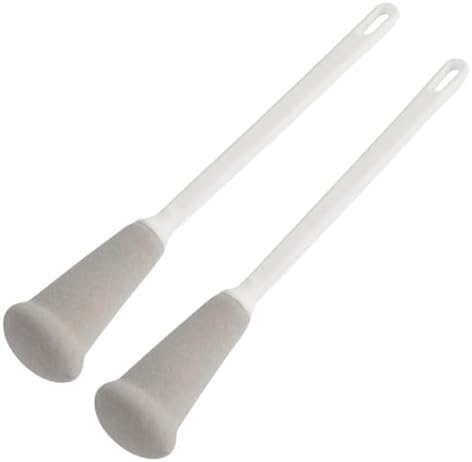
Two inexpensive items turn the routine above from a wrestling match into a short job, and both last for years of regular use.

Why the Dishwasher Is Never the Answer
Straight answer: dishwashers ruin decanters, and they do it permanently. The combination of high heat and abrasive detergent micro-etches glass surfaces, which shows up as an all-over cloudiness that no amount of vinegar or polishing will reverse. Crystal, including lead-free crystal, is the most vulnerable, but even sturdy soda-lime glass loses its clarity over repeated cycles. Add the physical risk, since tall vessels rarely fit racks and knock against tines, and the machine offers nothing but downside.
The same etching logic applies to abrasive tools by hand. Scouring pads, stiff brushes forced against the interior, and gritty powder cleansers all leave scratch patterns that catch light exactly where a decanter is supposed to sparkle. If a method feels aggressive, it is; every effective technique in this guide works by soaking, swirling, or gentle contact.
Drying and Storing Between Uses
Water spots form when droplets evaporate and leave their minerals behind, so the goal of drying is simple: get water out before it can evaporate in place. Tilted, mouth-down draining with airflow does most of the work. For spotless results in hard-water areas, do a final rinse with distilled water, which leaves nothing behind, or slide a rolled paper towel into the vessel for an hour to wick out the last moisture, making sure no fragment stays behind.
Store the decanter empty and open, or filled and stoppered, but never empty and sealed. Keep it out of direct sunlight, partly for the contents and partly because sun-baked dust films onto glass surprisingly fast. Cut crystal deserves one extra habit: an occasional exterior wipe with microfiber keeps the facets sharp, since the cuts collect dust that flattens their light. The material background on why crystal rewards this care lives in our crystal whiskey decanter guide.
Why a Stand Beats a Towel
Drying is where most water spots are made. A stand holds the decanter at an angle so air moves through it, which is exactly what a folded towel prevents.

Common Mistakes to Avoid
- Letting residue dry overnight. The five-minute rinse after use prevents the hour-long rescue later.
- Hot water into a cold decanter. Thermal shock cracks fine glass and crystal. Warm water, gradual changes.
- Scented dish soap. Perfume residue clings to interiors and taints the next fill. Unscented, and sparingly.
- Scouring pads and stiff brushes. Scratches are forever on glass. Soak and swirl instead of scrubbing.
- Towel-drying the interior. Lint, pressure, and trapped moisture all work against you. Air dry at an angle.
- Storing it sealed while empty. Trapped humidity means mustiness. Empty means unstoppered.
Keeping the Rest of the Ritual Sharp
A clean decanter is half the serving equation. The other half is what goes into it and when: our wine decanter guide covers which wines benefit from decanting and which shapes suit them, and wine kept at home deserves the storage conditions outlined in the wine storage temperature guide. And if the vessel you are scrubbing is past saving, or you are ready for a second one, see what to look for in a quality piece in our best whiskey decanter guide.
Frequently Asked Questions
How do you clean a decanter you cannot reach inside? Use motion instead of hands: swirl coarse salt with crushed ice for stains, soak with vinegar for film, or roll stainless cleaning beads around the interior. All three scrub by contact without anything entering but water.
How do you get red wine stains out of a decanter? Start with the salt-and-ice swirl; for set-in stains, soak with a denture tablet or a baking soda solution overnight, then rinse thoroughly. Repeat rather than escalate to abrasives.
Why is my decanter cloudy? Two causes look identical: mineral film from hard water, which a vinegar soak removes, and permanent etching from dishwashers or scouring, which nothing removes. If vinegar does not clear it, the cloudiness is in the glass itself.
Can you put a decanter in the dishwasher? No. Heat and detergent etch glass and crystal permanently, and tall vessels rarely survive the racks physically either. Every decanter, regardless of price, is a handwash item.
How often should you clean a whiskey decanter? Rinse and dry it every time it is emptied, and give it a deeper clean before refilling with a different whiskey so old residue does not carry over. A decanter kept topped up with the same spirit needs only the occasional exterior wipe.
How do you dry a decanter without water spots? Drain it tilted upside down with airflow, and in hard-water areas finish with a distilled-water rinse. Spots are minerals left by evaporation, so the fix is either removing the water faster or using water with nothing in it.
The Bottom Line
Clean a decanter with patience instead of force: rinse warm right after use, swirl salt and ice or soak with vinegar for the stubborn jobs, and dry tilted and open to the air. Keep it away from dishwashers, abrasives, and scented soap, and store it unstoppered when empty. Glass cared for this way outlives its owner; glass scrubbed and machine-washed clouds within a year.